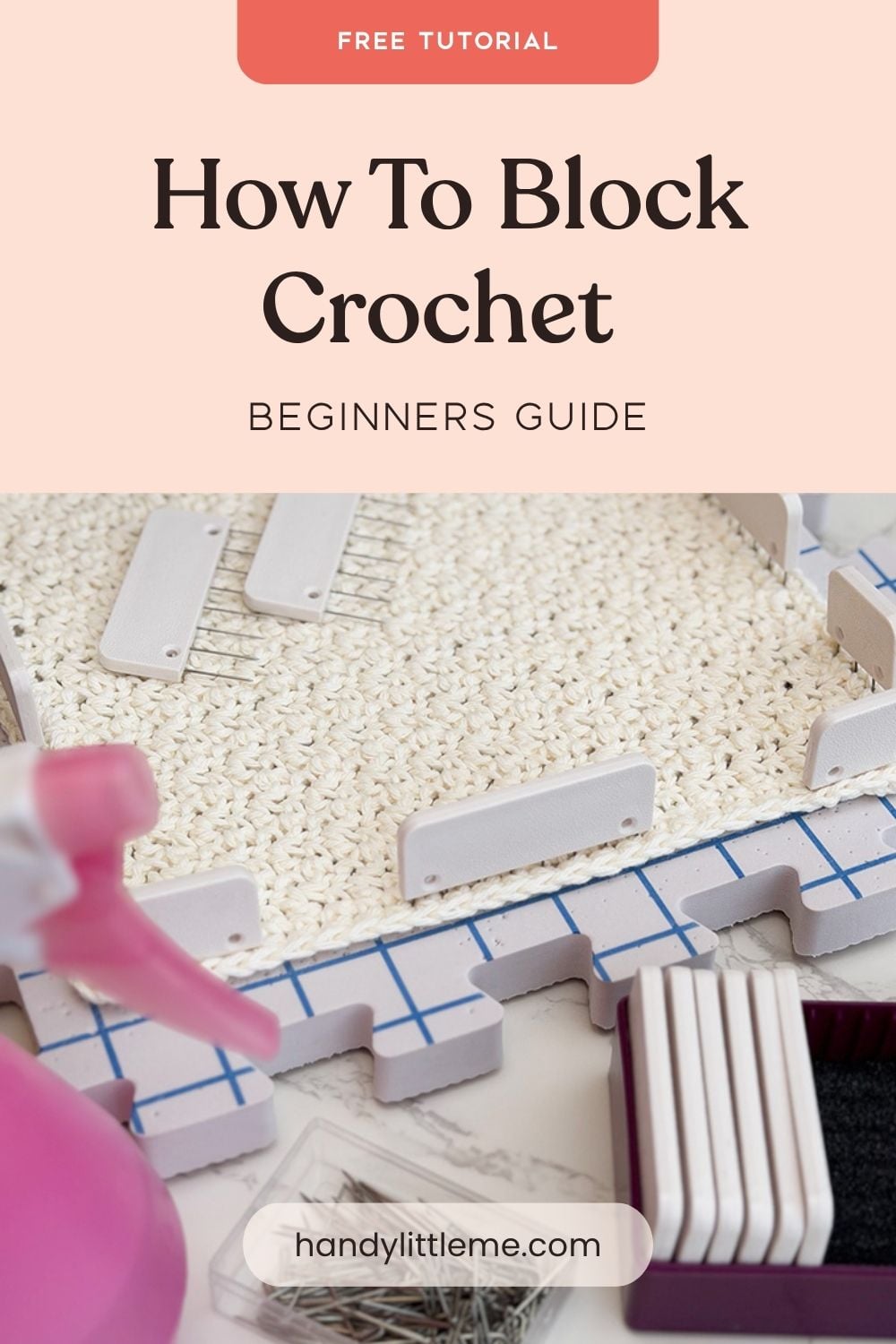
How To Block Crochet (Beginner’s Guide)
THIS ARTICLE CONTAINS AFFILIATE LINKS THAT SUPPORT HANDY LITTLE ME CONTENT AND FREE PATTERNS.Blocking is the “magic” finishing step that transforms crochet from crinkled or uneven to smooth, polished, and professional.
It improves drape (especially for lace), helps squares and motifs line up, and makes any crocheted garment fit closer to its desired dimensions.
Whether you’re making a lacy shawl, a granny square blanket, or a crochet sweater, blocking helps everything look neater and fit better.
In this blog post, you’ll learn what blocking is, the main methods, and how to do it safely with tools you already have at home.
Save this article
Enter your email address and we'll send it to your inbox.
By entering your email, you agree to receive patterns, tutorials, and updates from Handy Little Me. Unsubscribe at any time.
Before You Get Started
- Fibre matters (US: fiber): Blocking works best on natural fibres like wool, merino, cotton, linen, silk, and blends. Mohair and other delicate fibers benefit too—handle gently.
- Acrylic: You can block acrylic using steam (carefully). Too much heat can “kill” acrylic—permanently changing the texture and flattening stitches.
- Swatch first: Always test a small gauge swatch, especially with novelty yarns or delicate lace.
- Not just for fancy makes: Even simple squares, dishcloths, or rugs block beautifully and lie flatter.
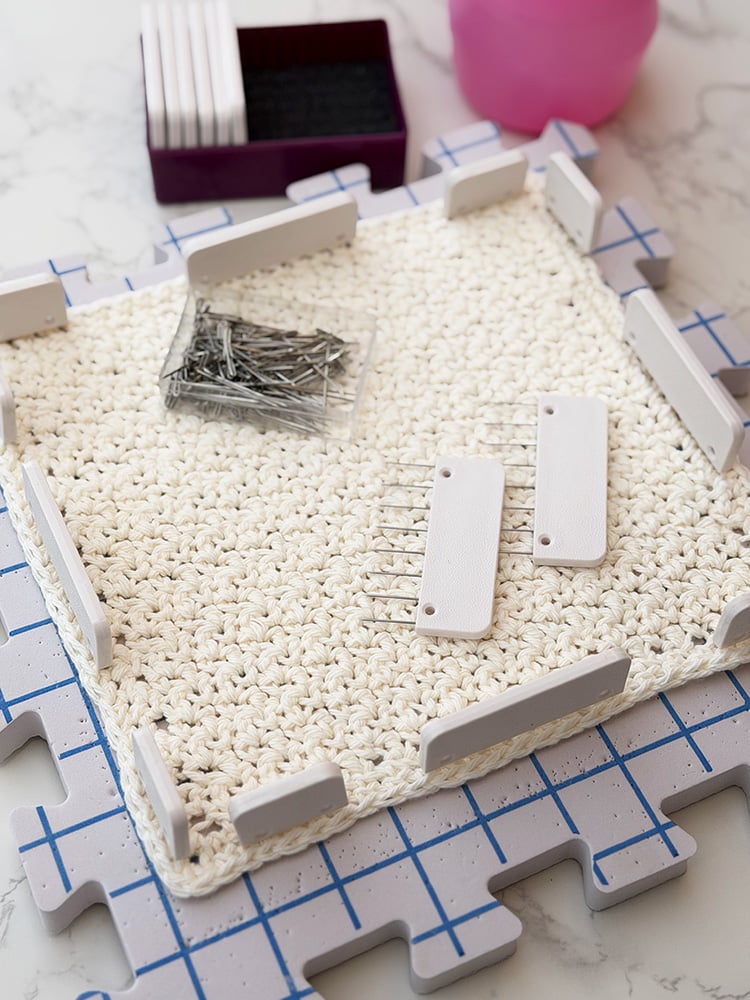
- Basic kit: A flat surface, pins, and either water or steam—that’s it. A mild wool wash/detergent is optional for wet blocking.
Tools/Materials Needed
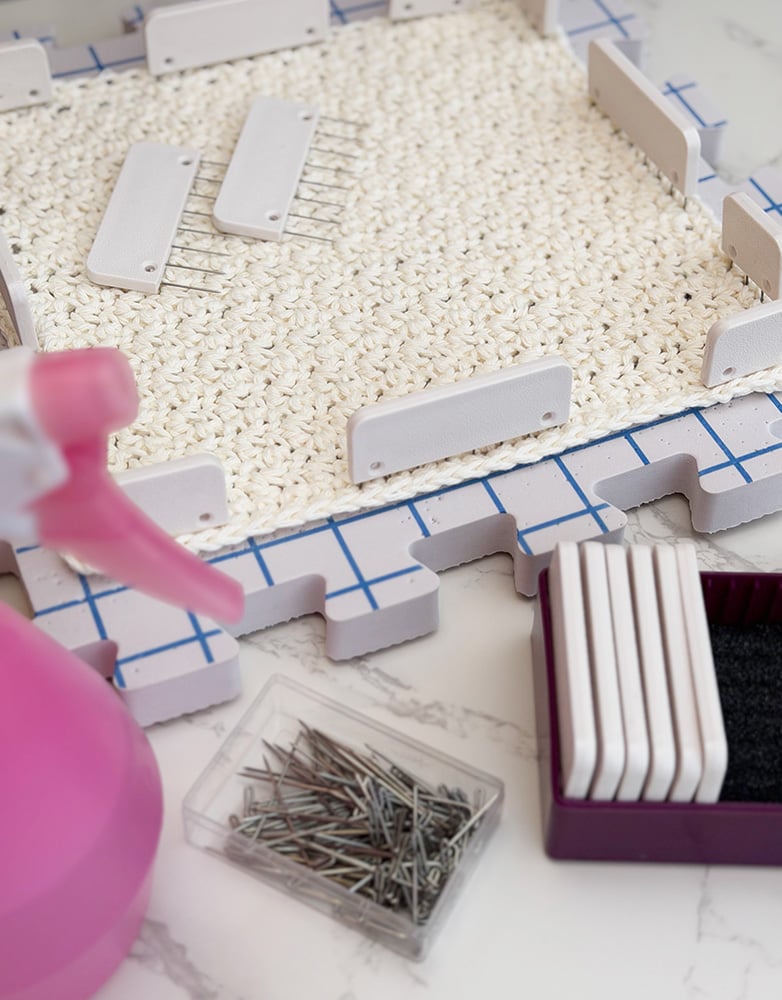
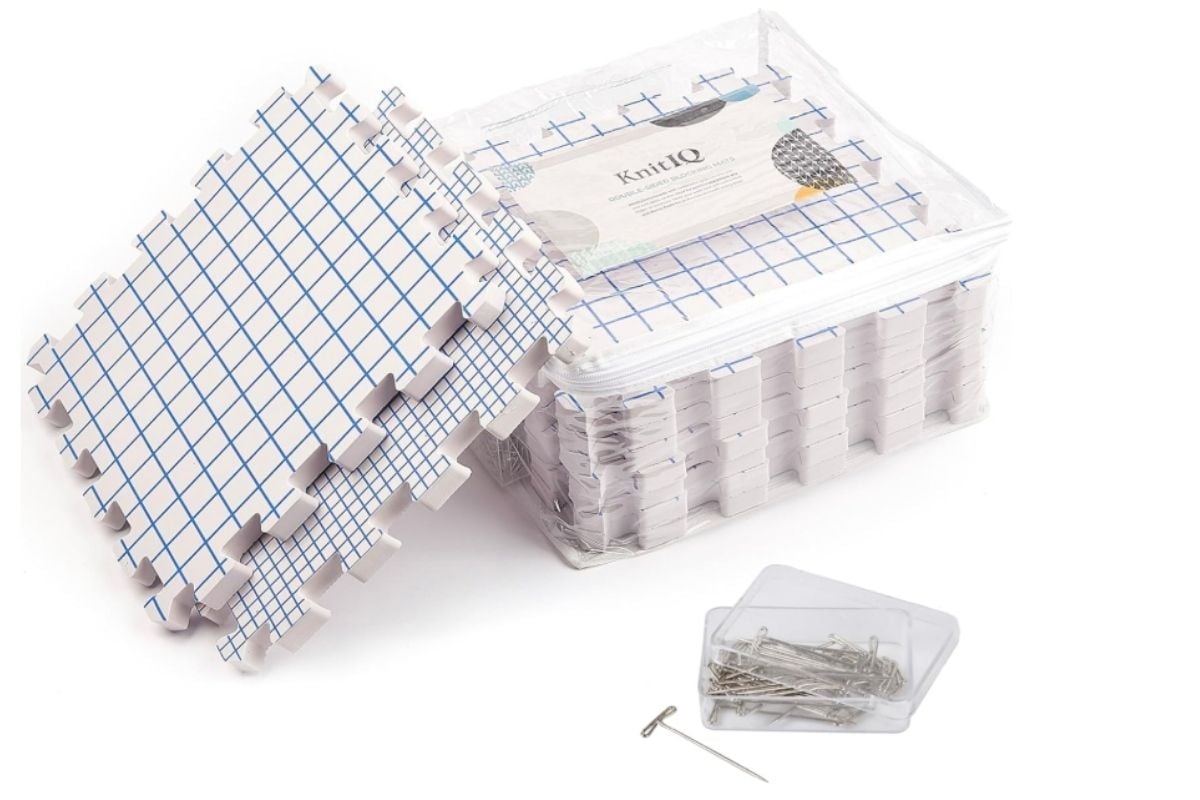
- T-pins or rust-proof pins
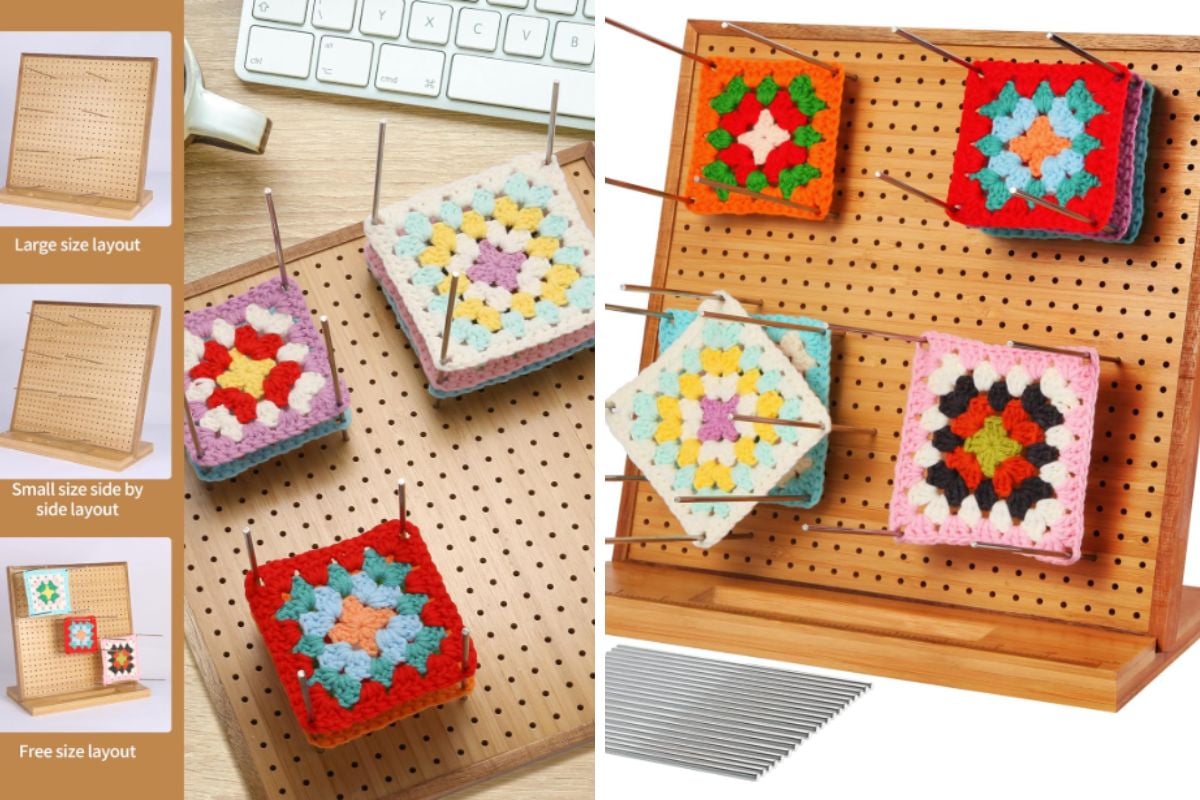
- Blocking mats / blocking board (or a thick towel on a bed/sofa)
- Spray bottle (for mist/spray blocking) or a steamer/iron (for steam blocking)
- Ruler or tape measure (to hit your desired dimensions)
- Yarn label (check fibre content + care)
- Optional: mild detergent/wool wash for wet blocking
How to Block Crochet: Step-by-Step
There are three main types of blocking methods: wet blocking, spray (mist) blocking, and steam blocking.
1) Wet Blocking
Best for: wool, merino, cotton, linen, silk, mohair, and most natural fibres
- Fill a clean sink or basin with lukewarm water (a drop of mild detergent if you want to freshen).
- Gently soak your crochet for 10–20 minutes.
- Press out excess water—do not wring. Roll in a towel to remove more moisture.
- Lay flat on a blocking mat/board (or towel).
- Pin to your desired dimensions, gently stretching lace to fan it open.
- Let the drying process finish completely (often up to 24 hours).
Tip: Use a ruler/tape to keep edges straight and square.
2) Spray (Mist) Blocking
Great for: light adjustments, squares/motifs, and acrylic where you want minimal stretch
- Lay your project flat on a blocking surface.
- Pin into shape with T-pins.
- Lightly mist with a spray bottle until damp.
- Allow to dry fully before removing pins.
Tip: Ideal when you only need a touch of smoothing—not a full stretch.
3) Steam Blocking
For quick results, common for acrylic
- Lay flat and pin in place.
- Hover a steamer or steam iron a few inches above—do not touch the fabric.
- Move slowly, letting steam relax the stitches.
- Allow to cool and dry before removing pins.
Warning: Too much steam/heat can kill acrylic, permanently changing the fabric (sometimes useful for ultra-drape in lace, but irreversible).
FAQs & Extra Tips
What is the best way to block crochet?
It depends on the fibre and project:
- Natural fibres (wool/merino/cotton/linen/silk/mohair): Wet blocking gives the most control and long-lasting set.
- Acrylic yarn: Steam blocking (hover, never press) is safest.
- Minor tweaks / motifs: Spray blocking is quick and gentle.
How to block crochet items without a blocking board?
Use what you have: interlocking foam floor tiles, a thick towel on a bed/sofa, a yoga mat, or cardboard covered with plastic (to protect from moisture).
Pin into the surface and measure to your desired dimensions.
Can I block crochet with just water?
Yes. That’s exactly what wet blocking (soak + dry) and spray blocking (mist + dry) are—no special solutions needed.
A drop of mild detergent or wool wash during wet blocking can freshen fibres.
Is blocking worth it to crochet?
Absolutely. Blocking improves drape, evens out tension, sharpens stitch definition (amazing for lace), and helps pieces seam together cleanly—especially for motifs, blankets, and any crocheted garment like a crochet sweater.
Extra pointers
- For mohair and silk, be extra gentle—support the fabric fully, avoid aggressive stretching, and let the drying process finish completely.
- For rugs or heavy items, block flat on a firm surface and use extra pins for stability.
- For granny squares/motifs, block each piece to size first for perfect joins.
Want to Learn More?
- How to Crochet a Granny Square – Perfect for practicing blocking!
- Crochet Blanket Patterns – Use blocking to assemble perfectly aligned squares.
Crochet Projects
- Carnival Confetti Crochet Granny Square (Free Printable)
- Ocean Breeze Granny Square (Free Stashbuster Pattern + Printable)
- Berry Patch Granny Square Crochet Pattern (Free Printable)
- Sunset Square (Stashbuster Granny Square Pattern + Free Printable)
- Pop Art Granny Square Pattern (Free Printable)
- Retro Bloom Granny Square Crochet Pattern (Free Printable)
- Granny Square Crochet Bookmark Pattern (Free Printable)