
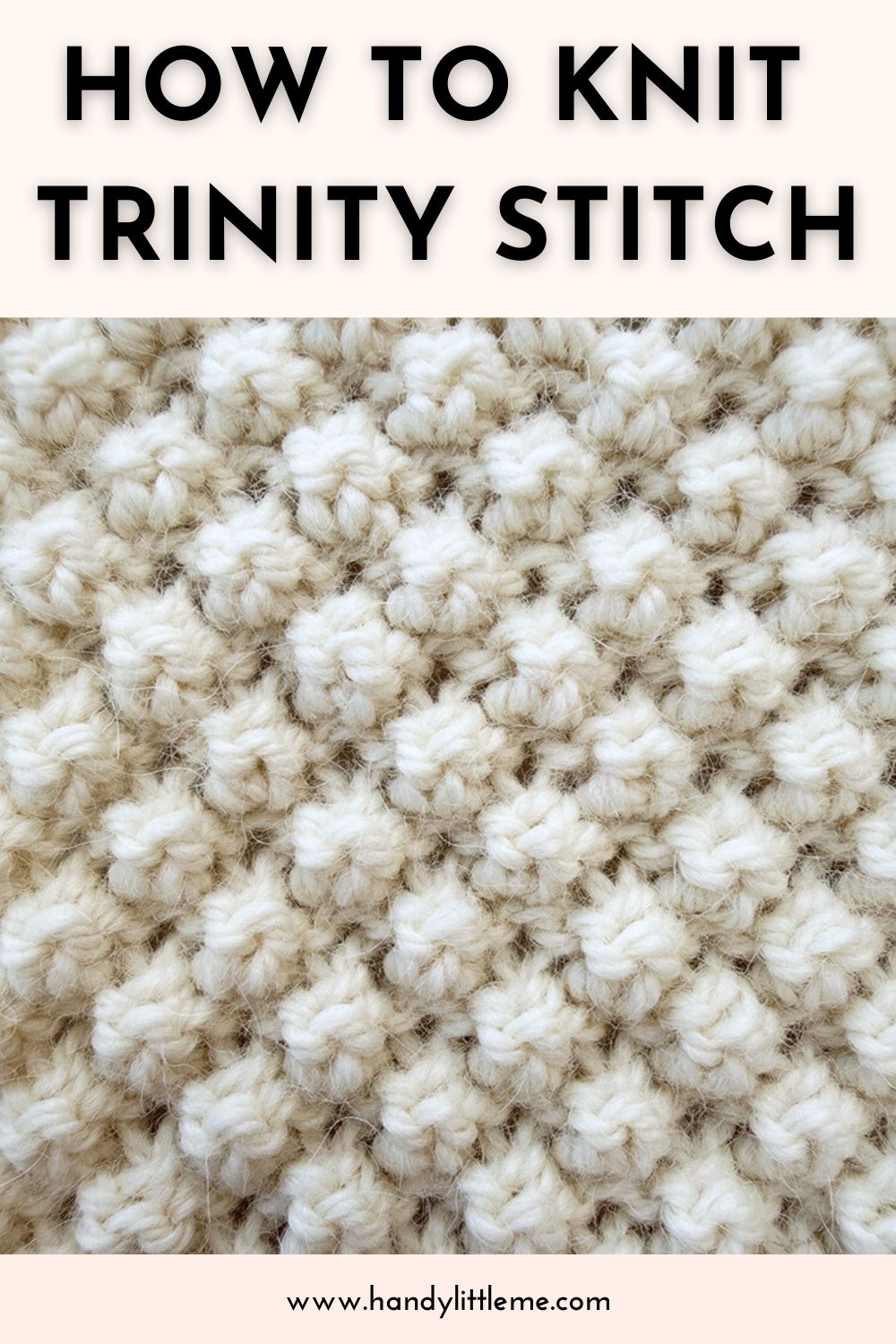
How To Knit Trinity Stitch
THIS ARTICLE CONTAINS AFFILIATE LINKS THAT SUPPORT HANDY LITTLE ME CONTENT AND FREE PATTERNS.If you love a bouncy, berry-like texture, you’re going to have fun with this knit trinity stitch pattern.
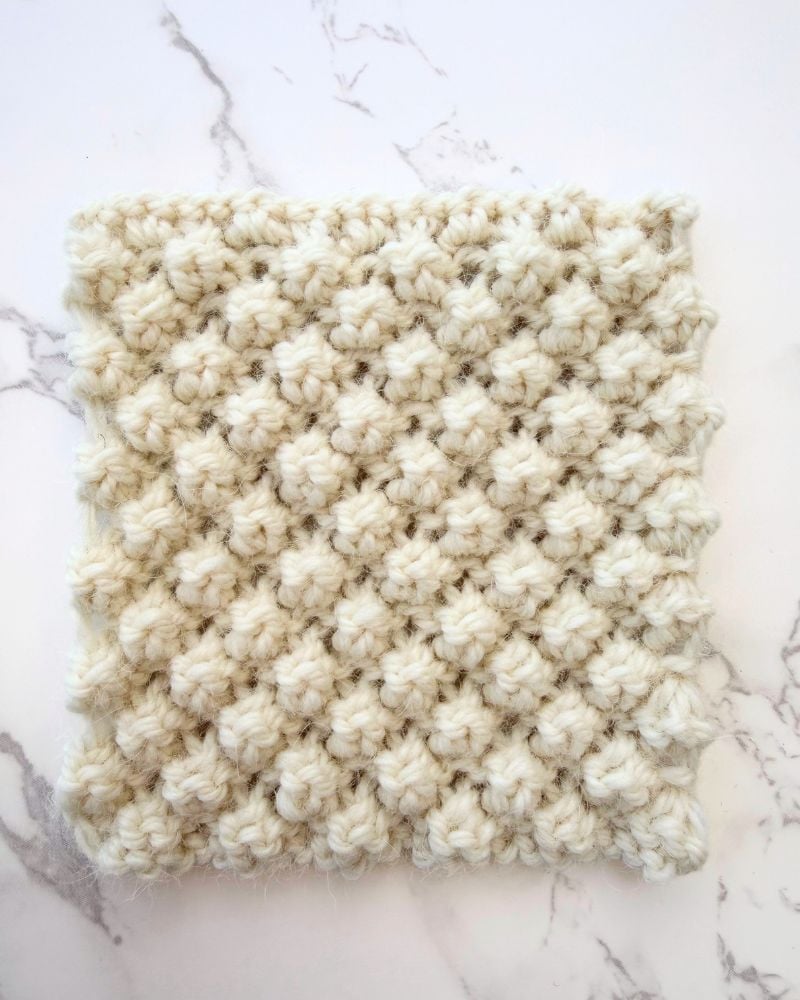
It’s also known as the bramble stitch (and sometimes a cluster stitch), and it looks way more complex than it actually is.
If you want to scroll straight to the instructions, you’ll find them below.
Save this article
Enter your email address and we'll send it to your inbox.
By entering your email, you agree to receive patterns, tutorials, and updates from Handy Little Me. Unsubscribe at any time.
The Trinity Stitch’s Role In Aran Sweaters
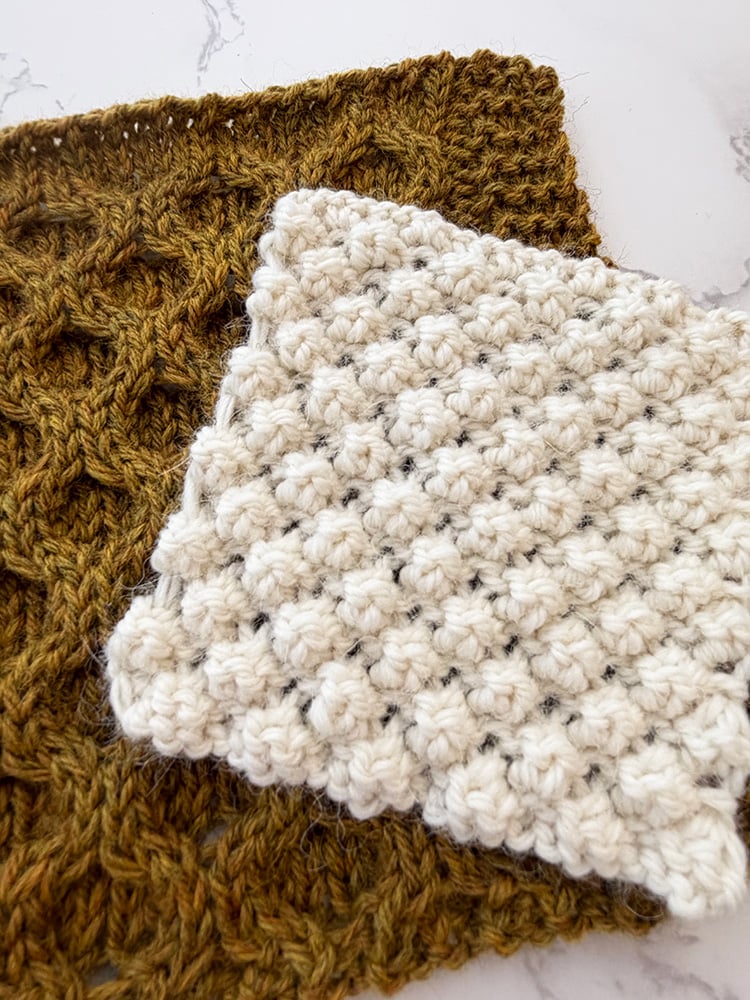
This stitch is especially popular in Aran sweater patterns because it adds bold, raised detail that looks beautiful alongside cables and other traditional motifs.
In classic Aran design, knitters didn’t use heavily textured stitches only for decoration, they used them to tell a story and share symbolic meaning.
Different regions and families interpret the motifs in their own way, but many connect bumpy, berry-like stitches with abundance, a good harvest, and prosperity, so they feel like a meaningful choice for cozy heirloom knits.
Before You Get Started
- This design is worked over a multiple of 4 and creates small gathered “buds” on every other row.
- For a cleaner finish, you can add 2 edge stitches (one at each end) that you work in garter stitch.
- The gauge isn’t critical for this swatch, but if you’re using it in a garment, make a bigger sample and measure after blocking.
Materials Needed
- Scrap yarn from Drops Nepal (aran weight)
- 5mm / US 8 needles
- Scissors
Sample Size
- Cast on 24 for the sample (this is the number of stitches shown in the instructions).
- Square size = 4 x 4 inches / 10 x 10 cm
Abbreviations
- K = knit
- P = purl
- P3tog = purl 3 together
- rep = repeat
- rs = right side
- WS = wrong side
Pattern Instructions
Cast on a multiple of 4 stitches.
Cast on 24 for the sample.
- R1: P across.
- R2: * (K1, P1, K1) all in the same stitch, P3tog; repeat from * to end.
- R3: P across.
- R4: * P3tog, (K1, P1, K1) all in the same stitch; repeat from * to end.
Repeat Rows 1–4 for the pattern.
Tip: Keep your tension relaxed on the “(K1, P1, K1) in the same stitch” step so you can easily work into the next stitch without fighting it.
FAQ
Why does my fabric look bumpy and uneven at first?
Totally normal, those little gathered buds settle in after a few repeats, and blocking helps everything relax.
Can I use this for scarves or blankets?
Yes! It makes a dense, cozy fabric.
However, just remember it uses more fiber than plain stockinette.
Does this stitch curl?
Overall, it’s generally sturdier than stockinette, but swatch if you’re planning a project where edges matter.
What’s the best way to keep track of the rows?
Place a marker or use a row counter, Rows 2 and 4 are the “bud rows,” and Rows 1 and 3 are the plain rows.
More Patterns
Check out more stitch patterns with texture to try below.
- How To Knit The Honeycomb Cable Stitch (Free Pattern)
- 8 Cable Stitch Knitting Patterns
- 12 Traditional Irish Aran Knitting Stitches And Meanings
- 30 Textured Knitting Stitches (Free Stitch Patterns)
- 31+ Free Cable Stitch Patterns To Knit (+ Tutorials)
- Celtic Cable Dishcloth Knitting Pattern (+ Free PDF)
- Highlander Cable Knit Hat Pattern
- Chunky Cable Knit Blanket Pattern (Free Easy Throw)
- Cable Hat Free Knitting Pattern | The Bordeaux
- How To Knit A Simple Cable Pattern (+ Video Tutorial)