15 Free Crochet Hoodie Patterns (Cozy & Stylish!)
THIS ARTICLE CONTAINS AFFILIATE LINKS THAT SUPPORT HANDY LITTLE ME CONTENT AND FREE PATTERNS.Looking for a cozy crochet hoodie pattern?
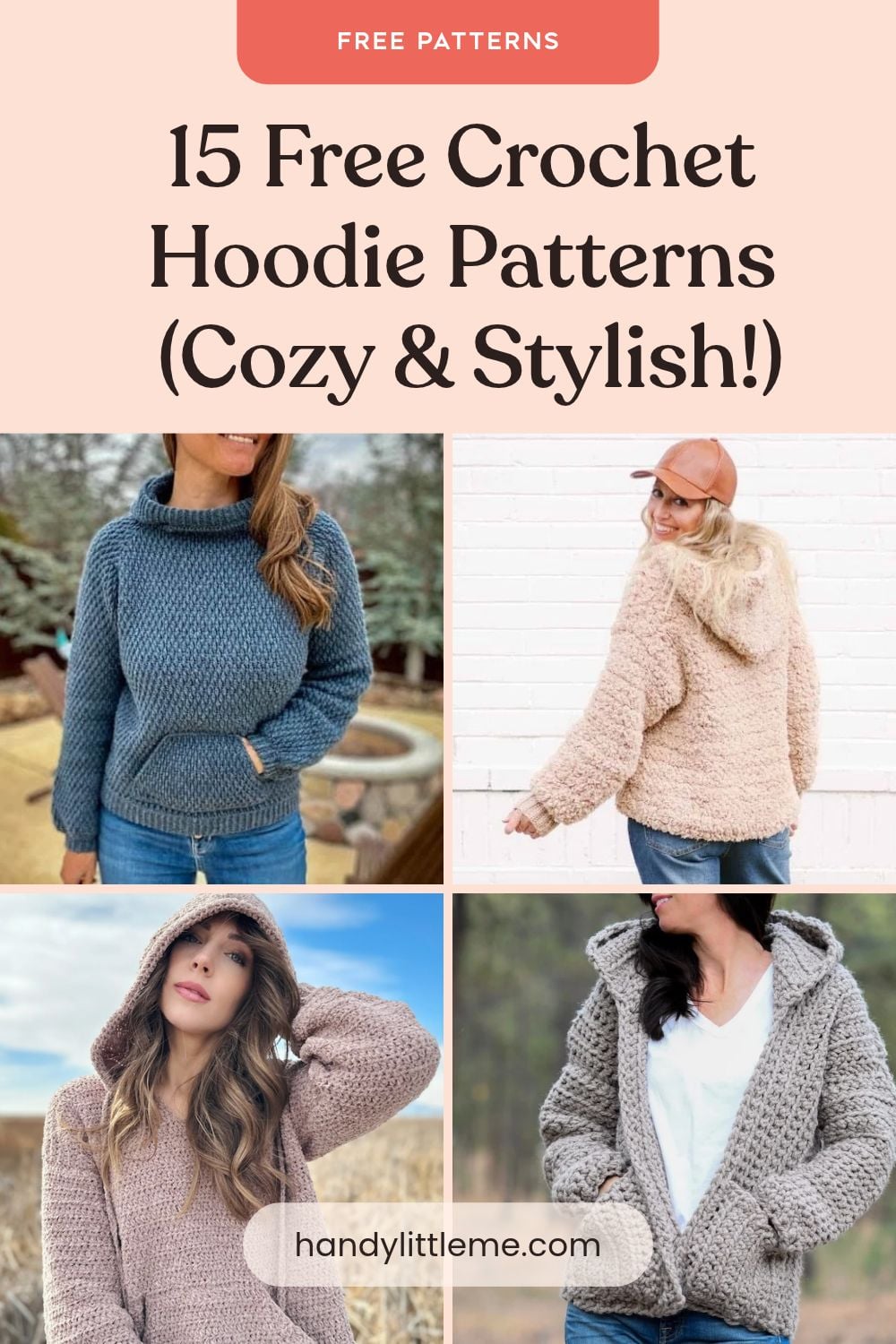
In this collection, you’ll find 15 free patterns, from oversized pullovers and chunky hoodies to lightweight hooded sweaters perfect for layering.
With different styles, yarn weights, and skill levels to choose from, there’s something for everyone!
15 Free Crochet Hoodie Patterns
Ready to make your own crochet hoodie? Browse the free patterns below and find a style you'll love wearing.
Whether you prefer a chunky winter hoodie or something lighter for everyday wear, there's plenty of inspiration here.
Happy crocheting!
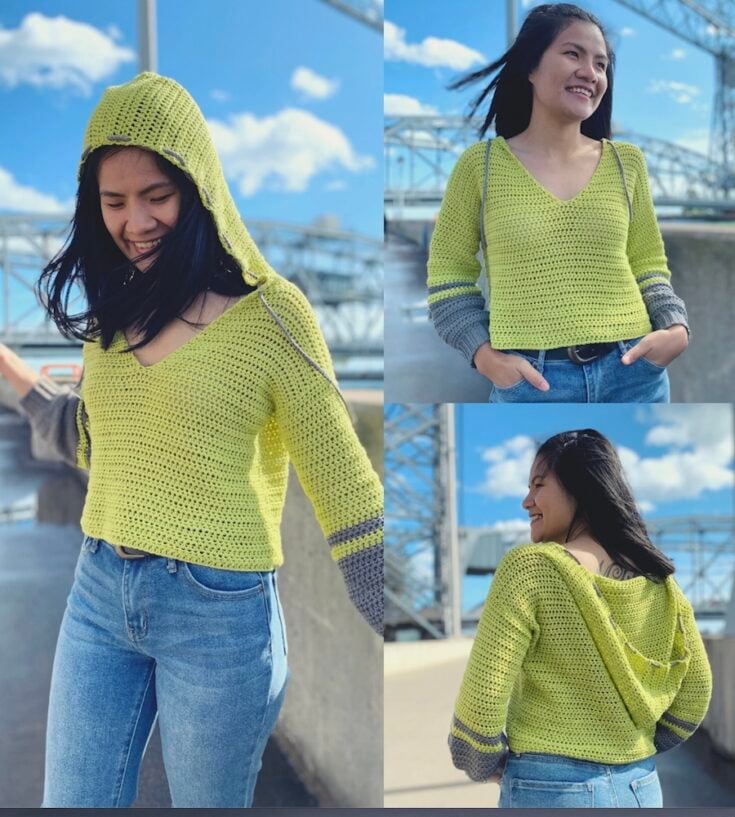
Crochet Hoodie by Knitcro Addict
This relaxed pullover hoodie is worked from the bottom up in separate front, back, and sleeve panels before the hood is added.
It uses mostly simple half double crochet stitches, with ribbed cuffs and a contrasting color for extra detail, making it a good option for newer garment makers.
Yarn weight: Light/DK weight yarn (3)
Hook: 5 mm (US H-8)
Skill level: Beginner-friendly
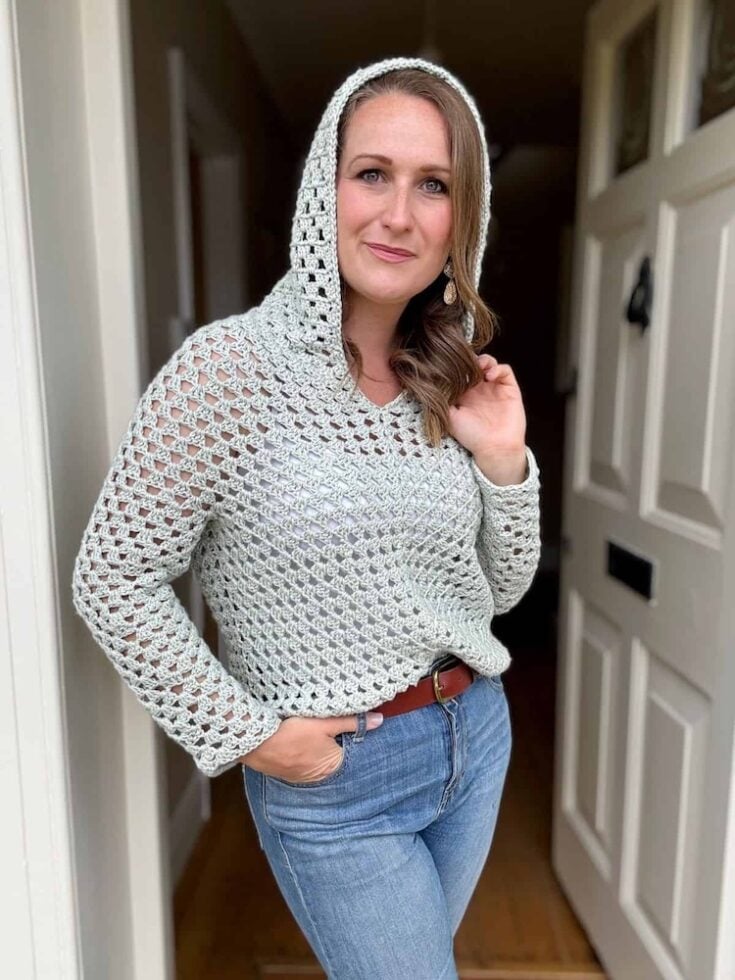
Granny Stitch Crochet Hoodie by HanJan Crochet
This versatile hoodie uses the classic granny stitch and has a seamless, top-down construction.
You can customize the length and make it with short or long sleeves, making it a great option for different times of the year.
- Yarn weight: Worsted weight yarn (4)
- Hook: 4.5 mm (US G+)
- Skill level: Advanced beginner
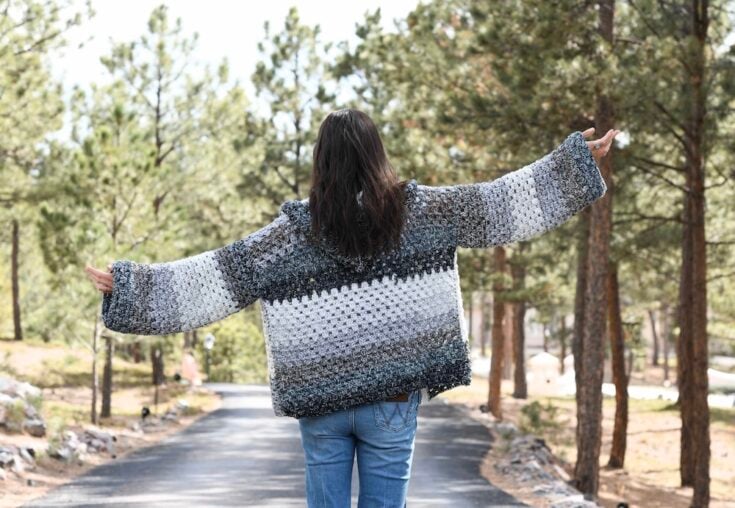
Riptide Granny Hoodie by Mama In A Stitch
This airy granny stitch hoodie has a relaxed, oversized fit that's easy to layer over a tank or tee.
The simple rectangles can be seamed into a classic pullover hoodie or left open for a hooded cardigan style.
- Yarn weight: Worsted weight yarn (4)
- Hook: 6 mm (US J-10)
- Skill level: Easy
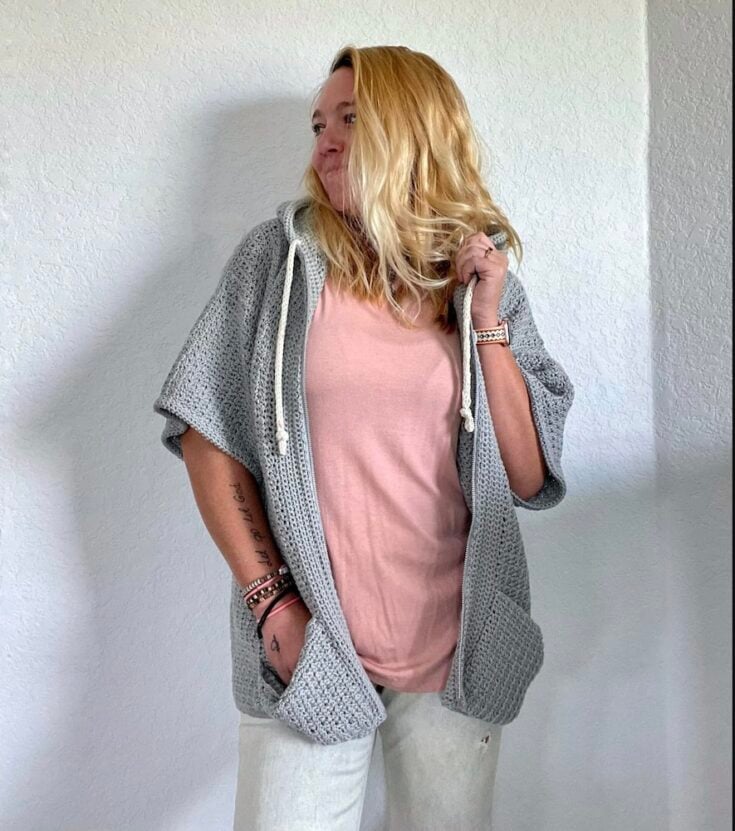
Taylen Crochet Hoodie by Cactus & Lace Designs
The Taylen Hoodie has an oversized fit with plenty of thoughtful details, including cuffed sleeves, an enclosed drawstring, and the option to add a zipper.
Despite the polished look, the main panels use simple single crochet and chain stitches.
- Yarn weight: DK/light weight yarn (3)
- Hook: 6 mm (US J-10)
- Skill level: Beginner-friendly
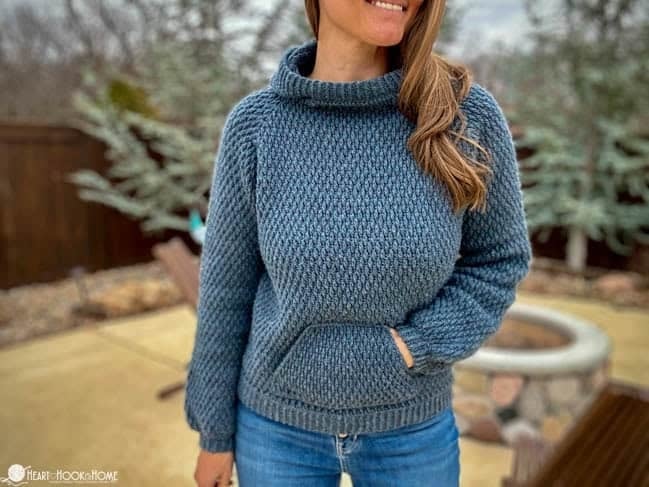
Atlas Hoodie by Heart Hook Home
This size-inclusive hoodie is worked from the top down and features the beautifully textured Alpine stitch.
It has a roomy hood, a large front pocket, and interchangeable sleeve options so you can customize the finished sweater.
- Yarn weight: Sport weight yarn (2)
- Hook: 4.5 mm
- Skill level: Advanced beginner
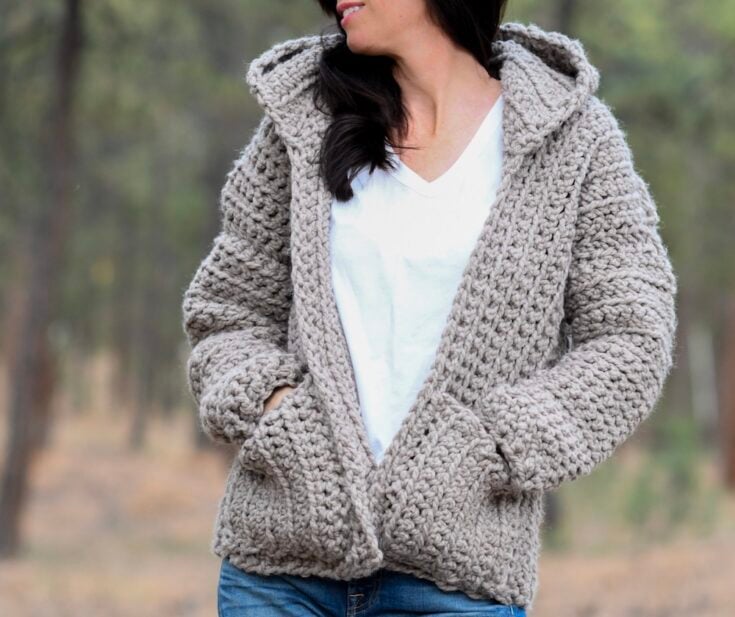
Alamosa Crochet Hoodie Pattern
If you're looking for a seriously cozy cold-weather project, the Alamosa Hoodie is made with super bulky yarn for plenty of warmth.
It features an oversized hood, cozy pockets, and beginner-friendly stitches worked into simple panels.
- Yarn weight: Super bulky weight yarn (6)
- Hook: 11.5 mm (US P)
- Skill level: Easy+
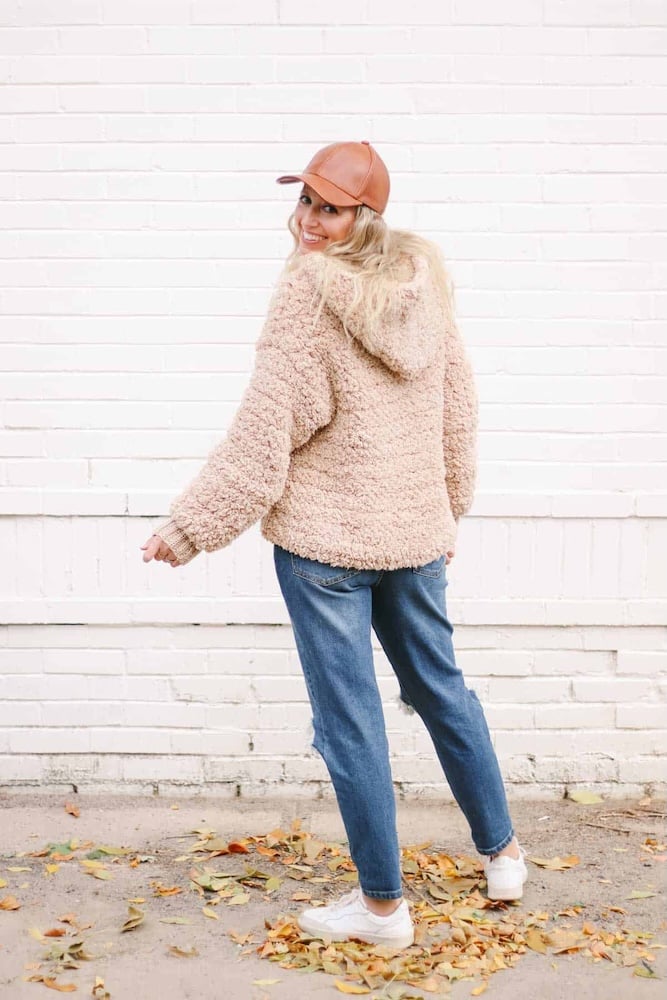
Sherpa Crochet Hoodie by Make & Do Crew
This oversized crochet hoodie creates a soft, fleece-like fabric using fluffy jumbo yarn and simple stitches.
You can finish it with an oversized hood or a split mock turtleneck for two different cozy looks.
- Yarn weight: Jumbo weight yarn (7), with worsted weight yarn (4) for the ribbing
- Hook: 15 mm (US Q) for the body; 5 mm (US H-8) for the ribbing
- Skill level: Advanced beginner
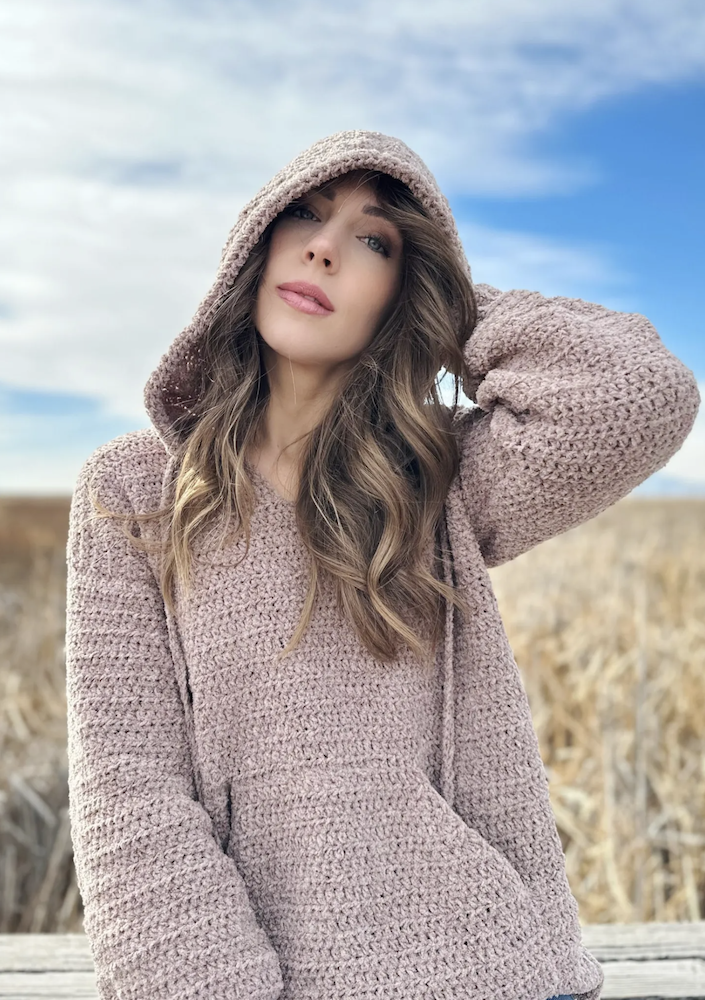
Hawthorn Hoodie by Evelyn And Peter Crochet
The Hawthorn Hoodie has roomy balloon sleeves, an oversized hood, and a classic kangaroo pocket.
Most of the sweater is worked in half double crochet, creating a soft and cozy fabric with relatively simple shaping.
- Yarn weight: Worsted weight yarn (4)
- Hook: 5 mm (US H-8)
- Skill level: Intermediate
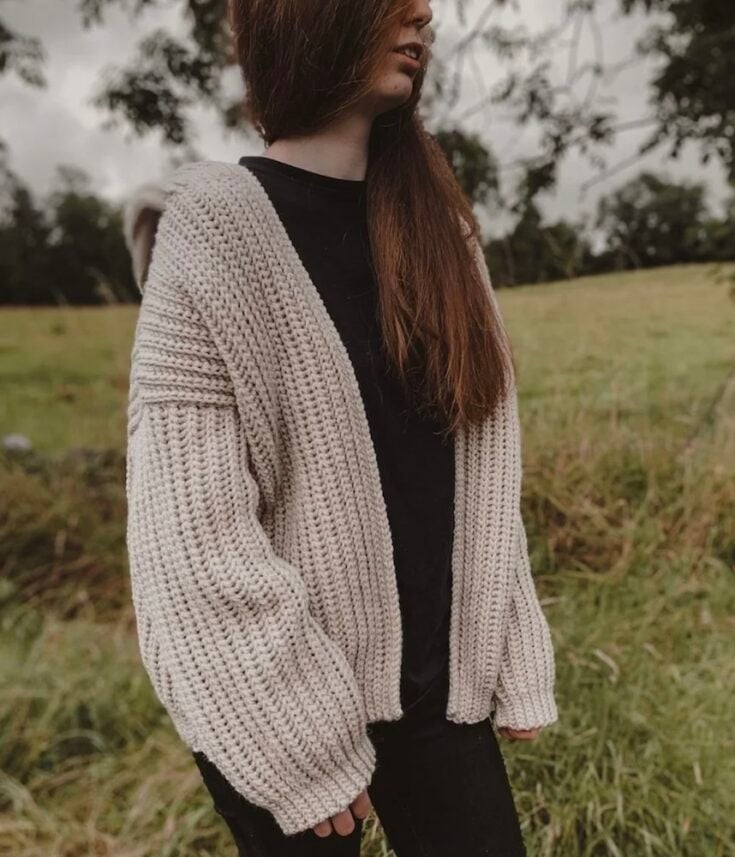
Oversized Hood Cardigan by Crochet With Carrie
This chunky hooded cardigan is designed with an oversized fit and a ribbed texture that gives the crochet fabric a knit-like look.
The huge hood and bulky yarn make it a particularly cozy choice for fall and winter.
- Yarn weight: Bulky/chunky weight yarn (5)
- Hook: 6.5 mm (US K-10.5)
- Skill level: Easy
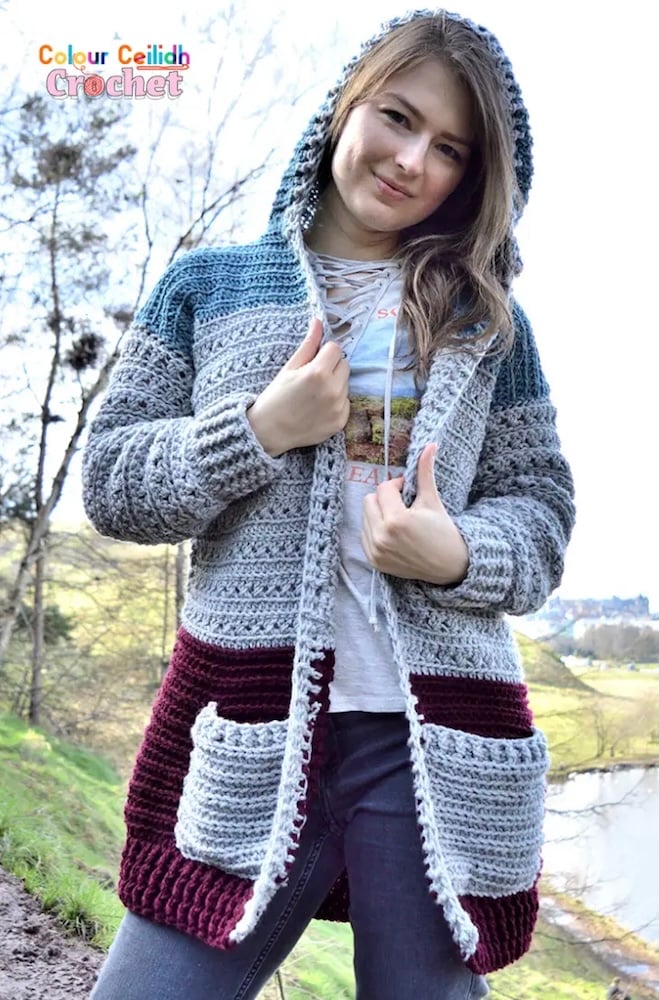
Crochet Cross Stitch Hoodie by Color Ceilidh Crochet
This long hooded cardigan combines practical pockets with a textured crossed double crochet stitch.
It's constructed from simple rectangles and includes a video tutorial to help with assembly and finishing.
- Yarn weight: Medium/Aran weight yarn (4)
- Hook: 9 mm (US M/N-13)
- Skill level: Easy
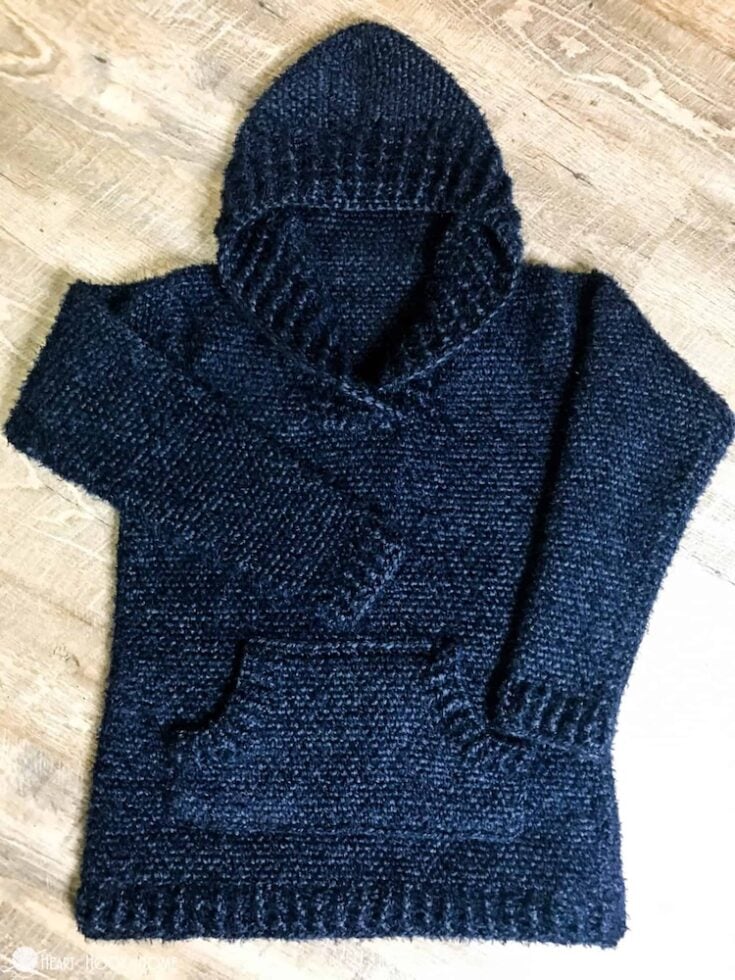
Hibernation Hoodie by Heart Hook Home
The Hibernation Hoodie is a warm, textured sweater designed for serious cozy-season wear. Although the finished fabric looks detailed, the stitch pattern is based on variations of single crochet, and the pattern includes step-by-step photos.
- Yarn weight: Bulky weight yarn (5)
- Hook: 7 mm
- Skill level: Beginner
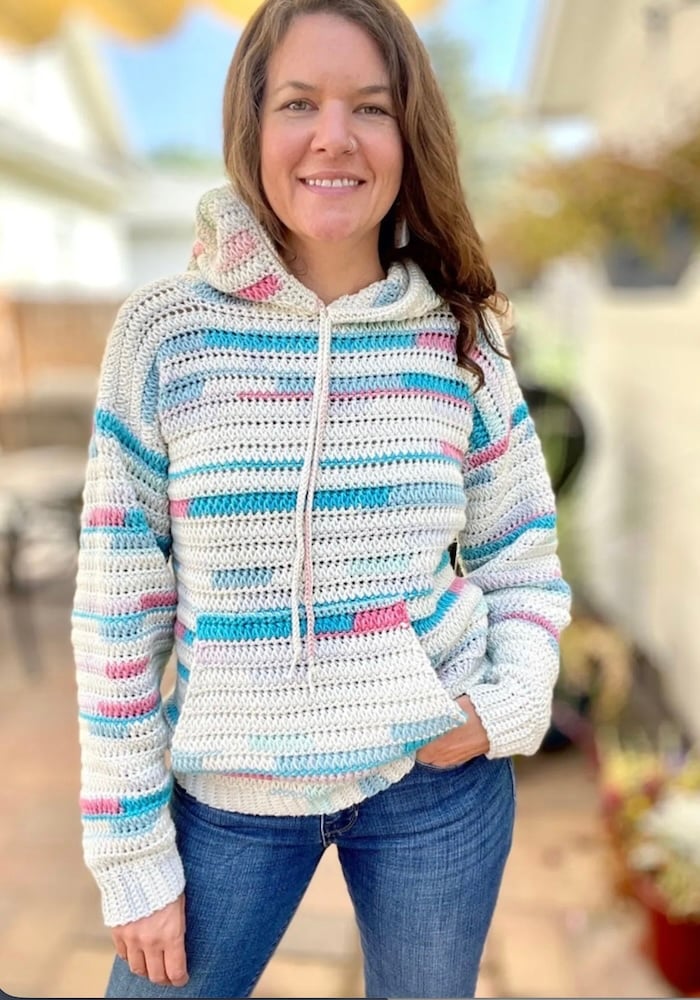
Solara Crochet Hoodie by Off The Beaten Hook
The Solara Hoodie is a cozy pullover with a relaxed fit and a textured two-row stitch pattern.
Worked from the bottom up, it combines single crochet with forked cluster stitches and comes with a step-by-step video tutorial.
- Yarn weight: Worsted weight yarn (4)
- Hook: 5 mm (US H-8) and 5.5 mm (US I-9)
- Skill level: Advanced beginner
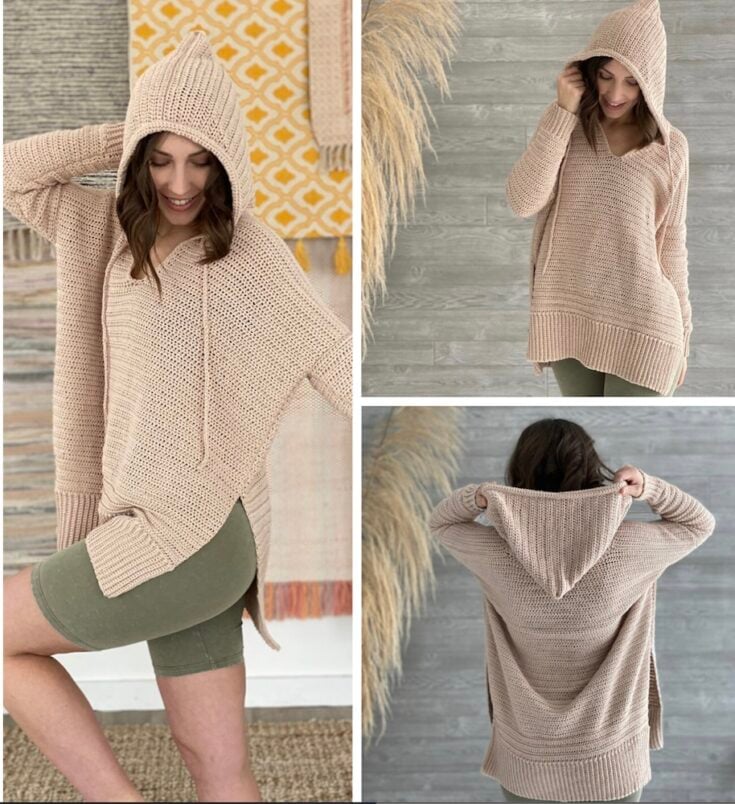
Happy At Home Hoodie by Evelyn And Peter Crochet
This lightweight oversized hoodie is ideal for layering on cool summer evenings or during the transition into fall. Wide ribbing, side slits, and a relaxed silhouette give it a comfortable, modern look.
- Yarn weight: DK/light weight yarn (3)
- Hook: 4 mm (US G-6)
- Skill level: Intermediate
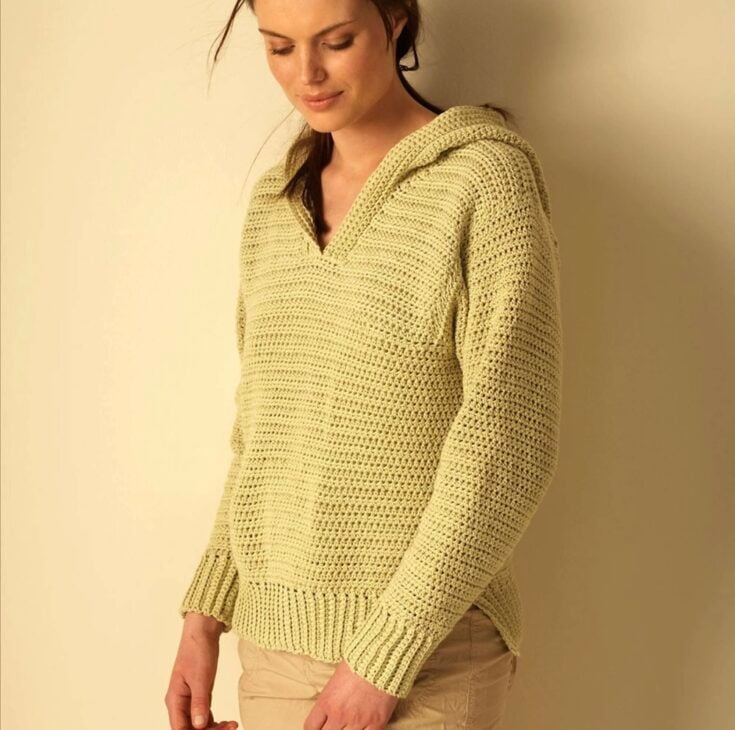
Bernat Crochet Hoodie by Yarnspirations
This lightweight hooded pullover is a versatile sweater for cooler summer days and easy layering.
The pattern uses simple half double crochet and is available in sizes from XS/S through 4XL/5XL.
- Yarn weight: Worsted weight yarn (4)
- Hook: 5 mm (US H-8)
- Skill level: Easy
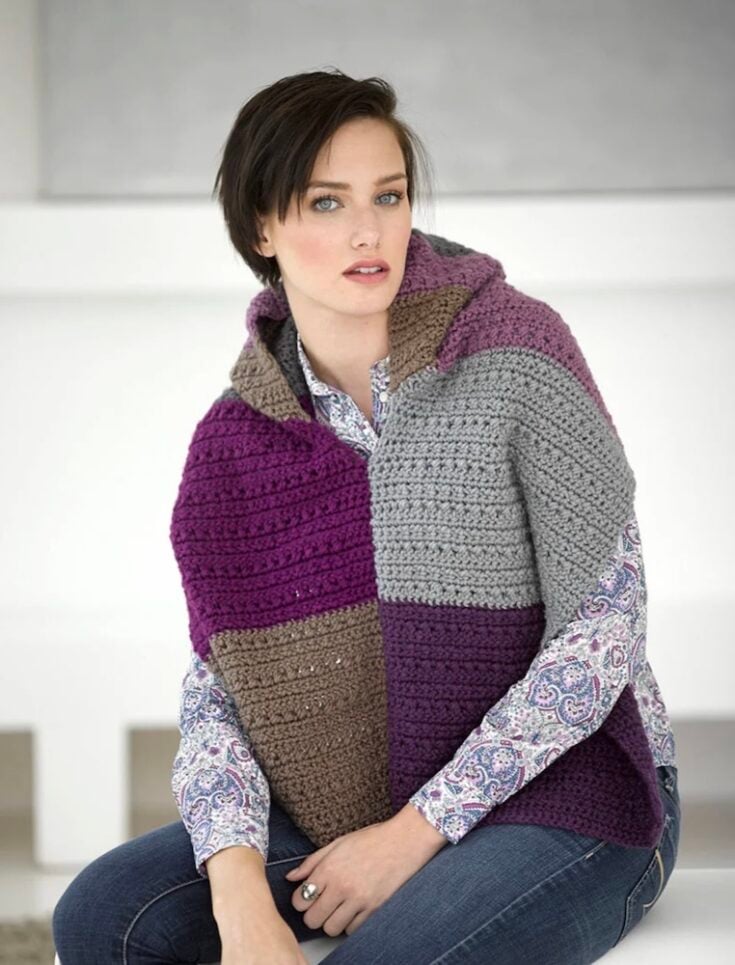
Crochet Color Blocked Hoodie by Lion Brand
This color-blocked crochet hoodie is a simple way to add a little more personality to a classic sweater.
The design uses a textured cross-stitch pattern and medium-weight yarn, while still being rated as an easy, beginner-plus project.
- Yarn weight: Medium/worsted weight yarn (4)
- Hook: 6 mm (US J-10)
- Skill level: Easy (Beginner+)
What Is The Best Yarn For A Beginner Crochet Hoodie?
Worsted weight yarn is a particularly good choice for beginners because the stitches are easy to see and the fabric builds relatively quickly.
It also works with a wide range of simple crochet stitches, making it suitable for an easy sweater or your first crochet hoodie.
Chunky or bulky yarn can work up even faster, but the finished garment will normally be heavier.
When choosing yarn, consider:
- Yarn weight – Worsted weight is versatile, while bulky yarn creates a warmer, more oversized look.
- Fiber content – Acrylic and acrylic blends are easy to care for, while wool and wool blends offer extra warmth.
- Texture – Smooth yarns make it easier to see the stitch pattern, while textured yarns can create an extra-cozy fabric.
- Care instructions – Machine-washable yarn can be useful for something you plan to wear regularly.
Before substituting yarn, compare the recommended yarn weight and gauge rather than choosing yarn based only on appearance.
Making a gauge swatch will help you determine whether your chosen yarn and hook size will give you the correct measurements.
Helpful resources
What Is The Best Crochet Stitch For A Hoodie?
There isn’t one stitch that works for every crochet hoodie, but half double crochet is one of the best all-around choices.
It creates a fabric that is warm and substantial while still having enough flexibility and drape for a wearable garment.
Other good options include:
- Single crochet – Creates a dense, warm fabric. Single crochet stitches can also be worked through the back loop to create ribbing for the hem and cuffs.
- Half double crochet – A good balance between density, texture, and drape.
- Double crochet – Double crochet stitches create a softer, lighter fabric and work up quickly.
- Moss stitch – Creates a flexible fabric with subtle texture.
- Ribbed stitches – Excellent for cuffs, hems, and other areas where you want a little stretch.
- Tunisian crochet – A good option if you want a more structured, knit-like fabric.
A simple stitch pattern is often best for a larger garment because it makes it easier to maintain the correct stitch count throughout the front panel, back panel, and sleeve pattern.
Check out more crochet stitches here. – 50 Crochet Stitches For All Skill Levels (Free)
Tips For Crocheting A Hoodie
Crocheting a hoodie is a larger project than making a scarf or hat, but breaking it into sections makes the process much more manageable.
1. Make a gauge swatch
This is one step you shouldn’t skip when making crochet garments.
Even a small difference in gauge can dramatically change the bust circumference, sleeve length, and finished fit.
Make your gauge swatch using the same yarn and hook size you plan to use for the project.
2. Choose your size before you begin
Check the pattern’s size chart rather than automatically choosing your usual clothing size.
Look at the finished bust circumference and compare it with your own measurements.
Also pay attention to the amount of positive ease included in the design. An oversized hoodie will intentionally have a more relaxed fit than a fitted sweater.
If the pattern includes sizes from XS through XL, XXL, or larger sizes, make sure you are following the stitch counts and instructions for your selected size throughout.
3. Read through the entire pattern
Before starting your new project, read the instructions from beginning to end.
Look for information about:
- Yarn weight and hook size
- Gauge
- Skill level
- Finished measurements
- Stitch abbreviations
- Construction, hood construction, seaming
- Pockets, cuffs and hem
If a schematic diagram is included, use it to understand how the different pieces fit together.
Learn how to read a crochet pattern here – How To Read Crochet Patterns For Beginners (A Guide)
4. Keep track of your stitch count
Garments rely on accurate measurements, so count your stitches regularly.
Pay particular attention after increasing, decreasing, or completing a repeat row.
If the pattern tells you to repeat a row several times, using a row counter or making notes can help prevent mistakes.
Stitch markers are also useful for marking the first and last stitches, right side, wrong side, armholes, or other important points.
5. Check the length as you work
If the pattern says to continue until the piece measures a certain length, measure your work rather than relying only on the number of rows.
Everyone’s row gauge can vary slightly.
This is particularly useful for the main panels and sleeves, where a small difference can affect the overall fit.
6. Take your time with the sleeves
Sleeves can be one of the trickier parts of a crochet sweater.
Check the sleeve pattern carefully and make sure both sleeves have the same number of rows.
If you are making a drop-shoulder or oversized hoodie, the sleeves may have relatively simple shaping. More fitted designs may require increases or decreases.
7. Try the hoodie on before final seaming
If the construction allows it, pin or loosely seam the pieces together and try the garment on.
Check the body length, sleeve length, armholes, and fit around the bust before finishing all of the seams.
It is much easier to make adjustments at this stage.
8. Use neat, flexible seams
Many crochet garments can be joined with a whip stitch seam using a yarn needle.
A simple whip stitch is beginner-friendly and works particularly well when joining a front panel to a back panel or attaching sleeves.
Some patterns may use slip stitches, single crochet, or another joining technique instead.
Avoid pulling the seam too tightly, as this can make the garment feel stiff.
9. Pay extra attention to the hood
The hood is the defining feature of a crochet hoodie.
Some patterns create the hood separately and sew it around the neck of the cardigan or sweater. Others continue crocheting directly from the neckline.
A simple hood may be worked as a large rectangle. Once the piece reaches the correct length, you fold the hood and seam the top of the hood closed.
For a more fitted shape, the pattern may include shaping around the upper portion of the hood or collar.
10. Finish the hoodie carefully
Once your hoodie is assembled, weave in every long tail securely with a yarn needle.
Add the cuffs, hem, edging, pockets, drawstrings, or other finishing details included in the pattern.
Blocking can also help even out the stitches and improve the overall shape of your finished hoodie.
Crochet Hoodie FAQ
1. Are crochet hoodies beginner-friendly?
Yes. Many free crochet hoodie patterns are suitable for an advanced beginner, particularly designs made from simple rectangles or basic panels.
If you are making your first garment, choose an easy pattern with basic stitches, minimal shaping, and clear construction instructions.
A free crochet pattern that includes photo tutorials or a step-by-step video tutorial can also be helpful.
Check out more beginner-friendly crochet patterns here – 30 Minute Crochet Projects For Beginners
2. How much yarn do you need to crochet a hoodie?
The amount of yarn required depends on the yarn weight, stitch pattern, garment size, sleeve length, hood size, and whether the design includes features such as cozy pockets.
An oversized hoodie in XL or XXL will naturally require more yarn than a cropped or fitted design in a smaller size.
Always check the yarn needs listed in the pattern before buying your yarn. Patterns may list the amount by skein, ball, yds, or meters.
Buying a little extra yarn is usually a good idea, particularly if you are adjusting the body or sleeve length.
3. What crochet hook size should I use for a hoodie?
Use the hook size recommended in the pattern as your starting point.
However, the right hook is ultimately the one that helps you match the pattern gauge.
You may need to move up or down a hook size depending on your personal crochet tension.
For example, a pattern may recommend a particular mm hook or US hook size, but your gauge swatch will tell you whether that size gives you the best results.
Learn more about crochet hooks here – Crochet Hook Sizes Chart (A Free Conversion Guide)
4. Can you crochet a hoodie with single crochet?
Yes.
Single crochet creates a dense and durable fabric that is particularly useful for warm hoodies, cuffs, ribbing, pockets, and structured sections.
However, an entire sweater worked in single crochet can feel heavier and take longer to complete than one made with taller stitches.
Combining sc ribbing with half double crochet or double crochet stitches for the main body is another great option.
5. How do you crochet a hood?
One of the simplest methods is to crochet a rectangular panel that is wide enough to sit comfortably around the neckline.
Continue working rows until the hood reaches the required height. Fold the hood in half and join the top edge with a whip stitch seam or another seaming method.
The lower edge is then attached around the neckline.
Other patterns shape the hood as you crochet for a more fitted finish, so always follow the construction instructions provided with your pattern.
6. Should a crochet hoodie be oversized?
It doesn’t have to be.
Some designs intentionally have an oversized fit with dropped shoulders and a large hood, while others are designed like a more traditional fitted sweater.
Check the finished measurements and recommended ease before selecting your size.
If you want a relaxed fit, don’t automatically make a larger size. The designer may already have included plenty of positive ease in the pattern.
7. Can I add pockets to a crochet hoodie?
Yes.
Patch pockets are one of the easiest styles to add because they can simply be crocheted separately and sewn onto the front of the finished garment.
Some designs include large cozy pockets, while others use a kangaroo-style pocket across the front of a pullover hoodie.
If you are adding your own pockets, position them before sewing and try the hoodie on to make sure they sit at a comfortable height.
8. Can I substitute a different yarn?
Usually, but choose the replacement carefully.
The perfect yarn for another project may not necessarily be the right yarn for a hoodie because the finished fabric needs to balance warmth, comfort, drape, and weight.
9. What is the easiest crochet hoodie construction?
Panel construction is often one of the easiest methods for beginners.
The body can be created from a back panel and one or two front panels, with sleeves crocheted separately.
The main panels are then joined at the shoulders and sides before the sleeves and hood are attached.
This type of construction is easy to visualize and often involves fewer complicated shaping techniques.
10. Can I make a crochet hoodie without sewing?
Yes. Some crochet patterns are constructed seamlessly or almost seamlessly.
For example, the body may be worked from the top down, with the sleeves and hood added directly to the garment.
However, patterns made from separate panels can be easier for a beginner because the construction is straightforward.
11. How do I know if a crochet hoodie pattern is the right skill level for me?
Check the listed skill level and then look through the techniques used in the pattern.
A beginner or advanced beginner pattern will often use basic crochet stitches and straightforward construction.
If you are comfortable with chains, single crochet, double crochet, increasing, decreasing, counting stitches, reading a repeat row, and simple seaming, you should be able to tackle many beginner-friendly crochet hoodie patterns.
More advanced designs may include complex shaping, textured stitch patterns, colorwork, Tunisian crochet, or detailed garment construction.
12. How do you style a cozy crochet hoodie?
A cozy hoodie is an easy piece to work into your everyday wardrobe, especially during fall and winter.
For a simple casual look, pair an oversized crochet hoodie with high-rise jeans and ankle boots or sneakers.
If the hoodie has a more relaxed fit, fitted jeans or leggings can help balance the shape.
You can also layer a crochet hoodie over a basic tee or tank and add a coat on colder days.
Neutral shades are easy to mix with the rest of your wardrobe, while brighter colors or textured stitches can make the hoodie the main feature of the outfit.
Want To Learn More?
- Crochet Lessons (For Beginners + Video Tutorials) – If you are new to the craft and need help with the basics, explore this collection of beginner-friendly crochet tutorials.
- Handy Little Me YouTube Channel – Watch step-by-step crochet and knitting video tutorials to help you learn new stitches and techniques.
- Handy Little Me Knitting + Crochet Community – Join our Facebook group to connect with other makers, ask questions, and share your projects.
- You can also find Handy Little Me on all social media platforms like Ravelry, Pinterest, Instagram, Twitter, Etsy, and TikTok for more patterns, tutorials, and crafting inspiration.
More Free Crochet Garments To Try Out
- 17 Easy Crochet Sweater Patterns For Beginners
- 13 Free Men’s Crochet Sweater Patterns
- 45 Crochet Sweaters To Make For Fall (Free Patterns)
- 25 Free Crochet Cardigan Patterns To Make For Fall
- 10 Free Crochet Hexagon Cardigan Patterns
- 21 Free Crochet Baby Sweater Patterns (Easy + Cute)
- 27 Free Crochet Vest Patterns For Every Style