
35 Free Tunisian Crochet Stitches (Easy Tutorials)
THIS ARTICLE CONTAINS AFFILIATE LINKS THAT SUPPORT HANDY LITTLE ME CONTENT AND FREE PATTERNS.In this blog post, 35 free Tunisian crochet stitches (easy tutorials).
Whether you’re a beginner just starting out or an experienced crafter looking to expand your repertoire, this collection has something for everyone.
Tunisian crochet, with its unique combination of knitting and crocheting techniques, results in beautiful, textured fabrics that are perfect for a variety of projects.
From simple stitches like the Tunisian simple stitch to more intricate patterns like the Tunisian honeycomb, each tutorial will guide you step-by-step.
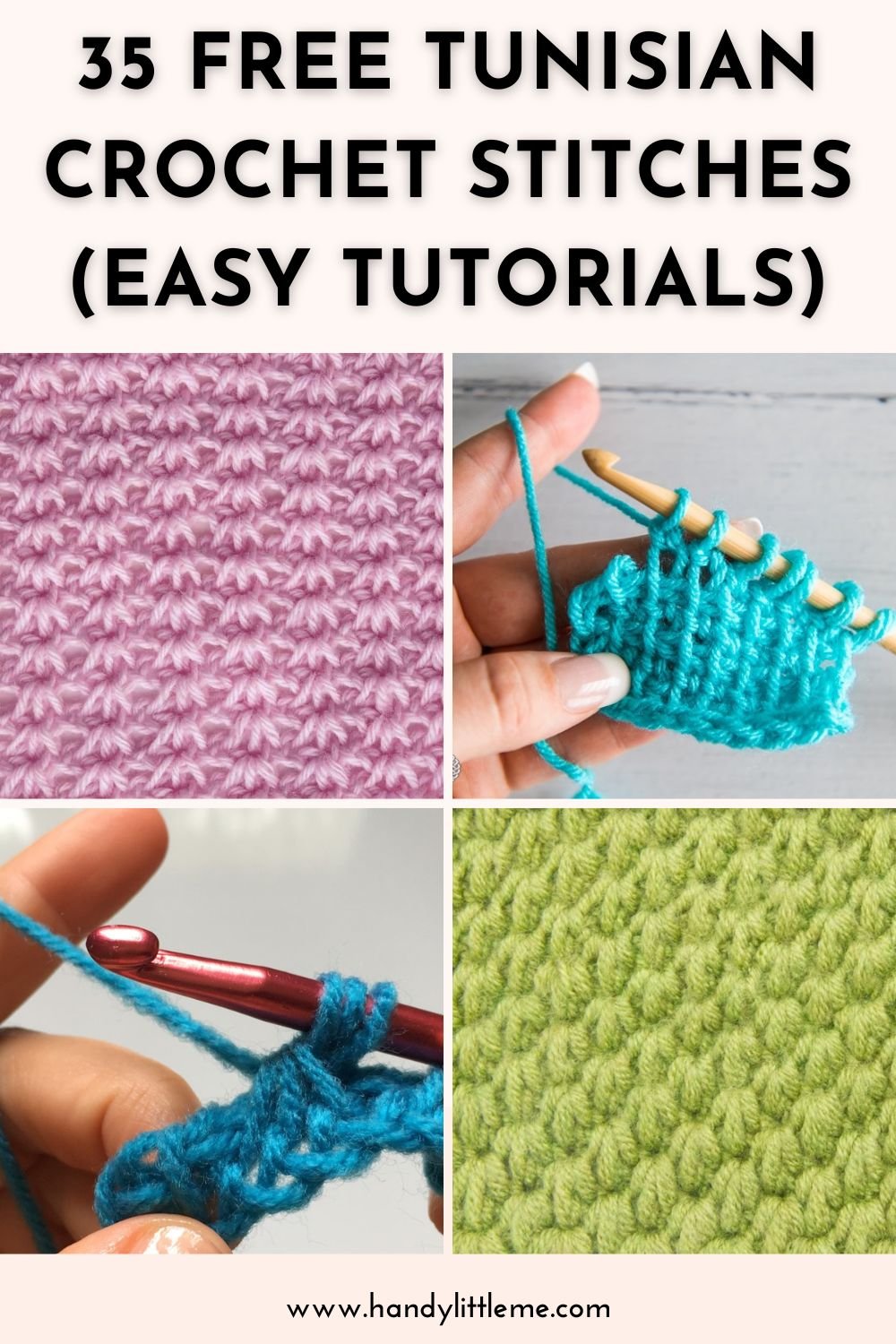
Save this article
Enter your email address and we'll send it to your inbox.
By entering your email, you agree to receive patterns, tutorials, and updates from Handy Little Me. Unsubscribe at any time.
35 Tunisian Crochet Stitches
If you're ready to dive into the world of Tunisian crochet, check out the tutorials below.
The list includes 35 different Tunisian stitches, basic crochet stitches, intermediate, lace, and textured stitches.
Happy Crocheting!
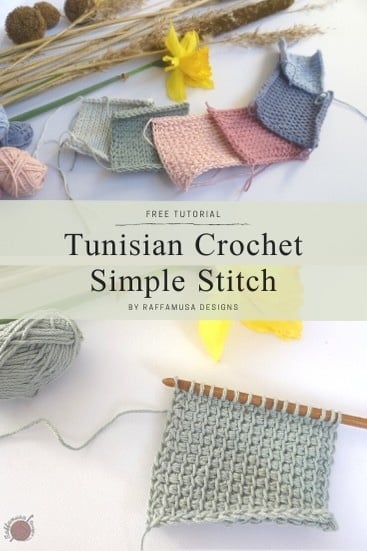
Tunisian Simple Stitch Tutorial (TSS) by Raffamusa Designs
The Tunisian simple stitch is the most basic and widely used Tunisian crochet stitch, perfect for beginners.
It creates a smooth, grid-like texture that looks slightly woven and lies flat with minimal curling.
TSS is great for dishcloths, scarves, and blankets, offering a sturdy and consistent fabric. If you are crocheting for the first time, this is the first stitch you will learn.
The tutorial includes step-by-step photos.
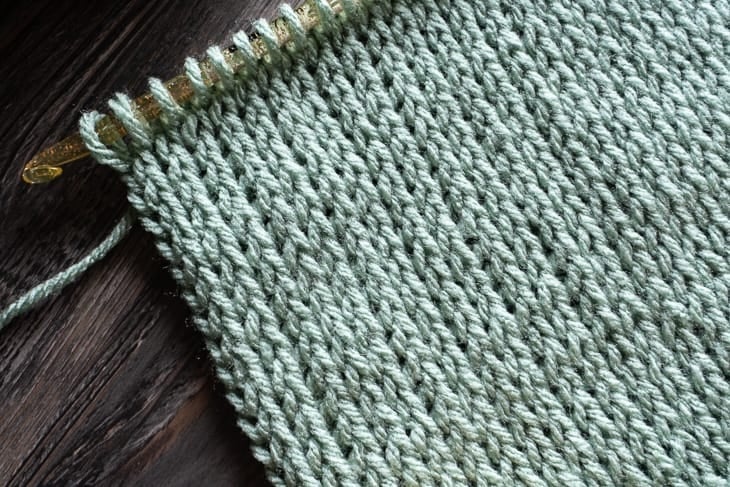
Tunisian Knit Stitch Tutorial (TKS) by Heart Hook Home
The Tunisian knit stitch mimics the look of knitted stockinette, with V-shaped stitches that resemble traditional knitting.
It’s an intermediate stitch, requiring you to insert the hook through the front vertical bar and the loop behind it.
This stitch is ideal for sweaters, hats, and accessories where you want a knit-like appearance with crochet flexibility.
The post includes a video tutorial to help you along.
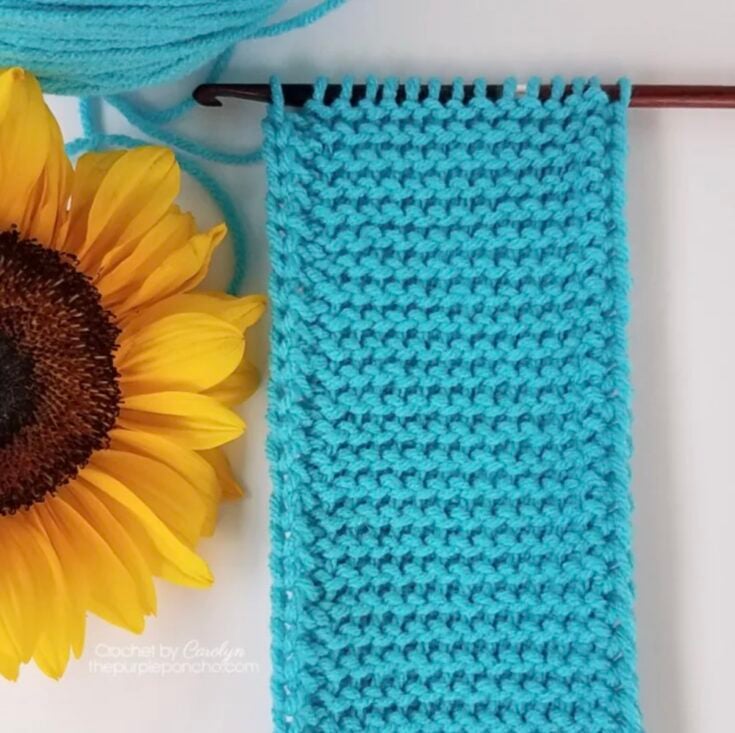
Tunisian Purl Stitch Tutorial (TPS) by The Purple Poncho
The Tunisian purl stitch creates a soft, textured fabric with horizontal ridges, similar to the purl stitch in knitting.
It’s an intermediate-level stitch that adds contrast and depth when paired with TKS or TSS.
TPS is great for scarves, cowls, and textured patterns that need dimension or a cozy, stretchy feel.
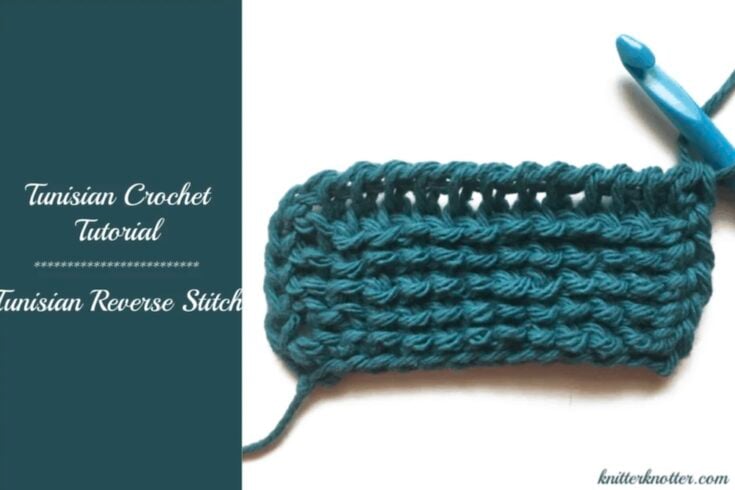
Tunisian Reverse Stitch Tutorial (TRS) by Knitter Knotter
The Tunisian reverse stitch is worked from the back of the fabric, creating a subtle ribbed texture and excellent elasticity.
This intermediate stitch helps reduce curling, making it a good choice for edgings and panels.
TRS is ideal for blankets, cuffs, and sweaters that need flexibility and structure.
The post includes step-by-step photos and two video tutorials.
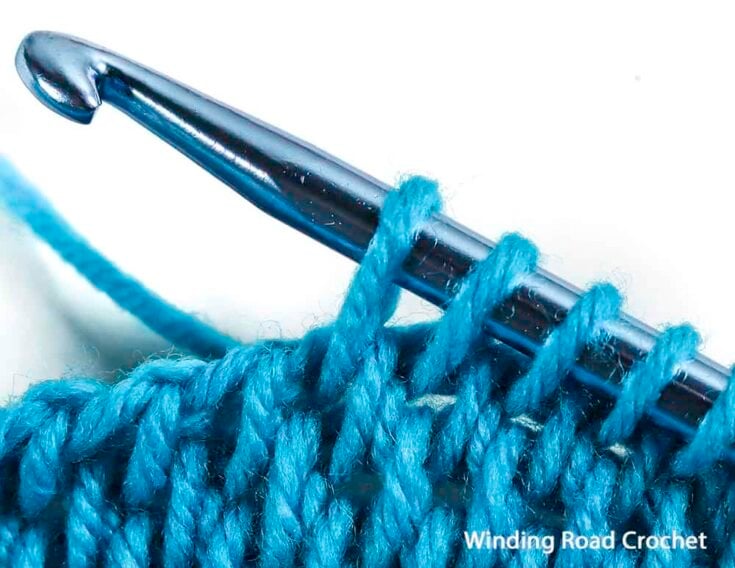
Tunisian Full Stitch (TFS) by Winding Road Crochet
The Tunisian full stitch (gobelin stitch) is created by alternating vertical bars between stitches, giving an airy, open look.
It’s an intermediate stitch that works up quickly and drapes beautifully.
It's a great choice for lightweight shawls, summer tops, or lacy scarves where you want a breathable, textured fabric.
The post includes photos and a video tutorial.
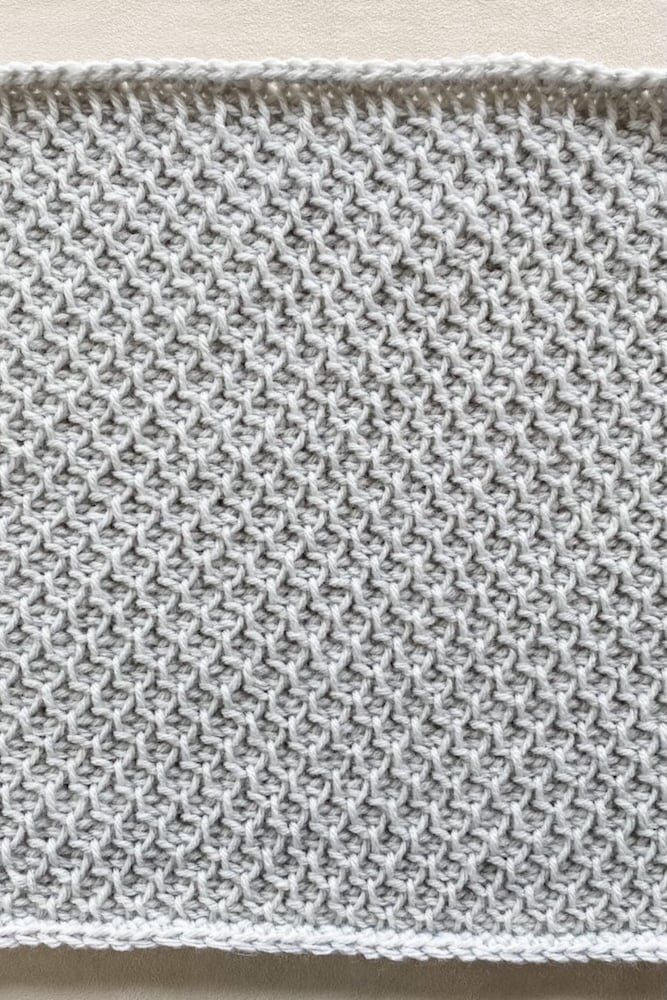
Tunisian Honeycomb Stitch by TL Yarn Crafts
The Tunisian honeycomb stitch alternates the Tunisian simple stitch and Tunisian purl stitch to create a beautiful, woven texture.
It’s an intermediate stitch that lies flat and adds a stunning two-tone effect when using multiple yarn colors.
It's a gorgeous stitch for blankets, cushion covers, and home décor projects.
The post includes a video tutorial.
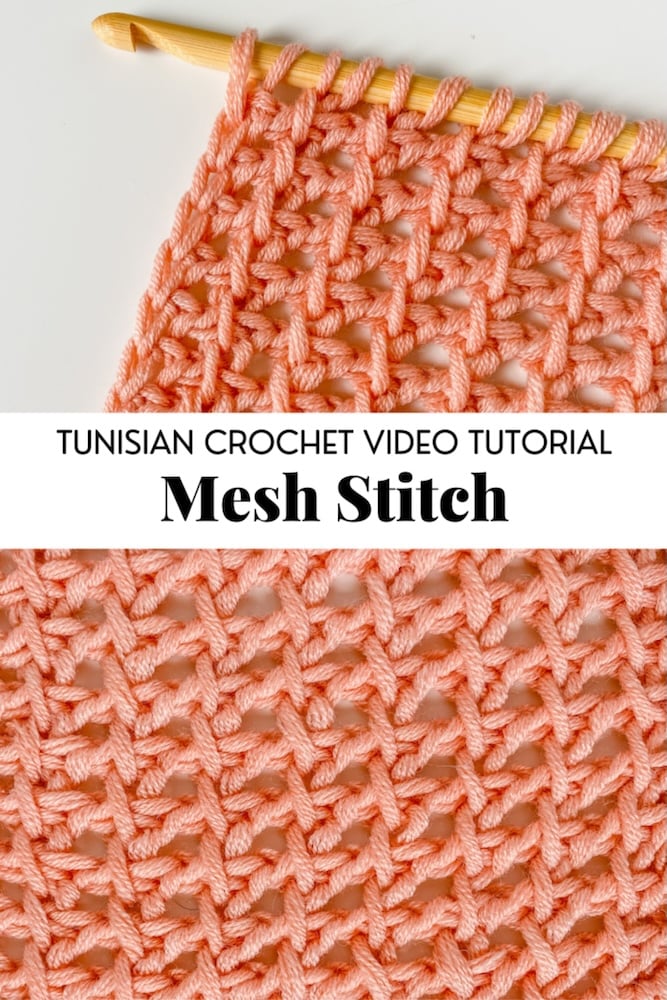
Tunisian Mesh Stitch by TL Yarn Crafts
The Tunisian mesh stitch combines simple stitches and chains to form an airy, openwork design.
It’s an easy-to-intermediate stitch that produces a lightweight, flexible fabric. This stitch is excellent for shawls, market bags, and summer garments where breathability and texture are key.
The post includes a step-by-step tutorial.
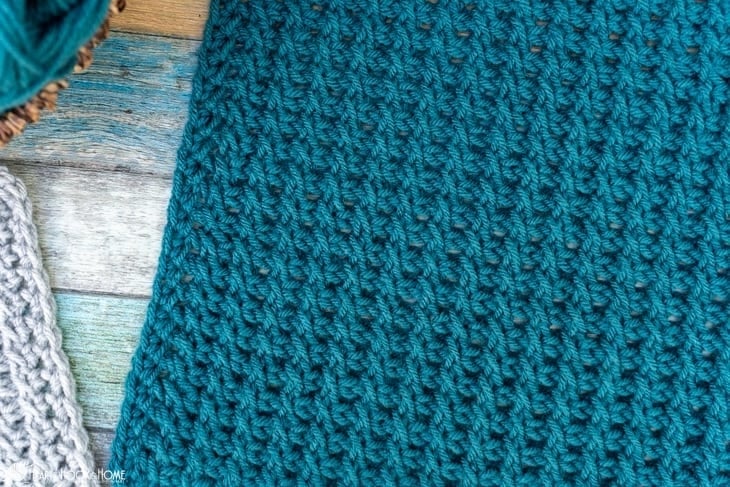
Tunisian Cross Stitch by Heart Hook Home
This stitch creates a beautiful diagonal crossed pattern by working vertical bars over different posts.
It gives a bold, structured texture that’s ideal for accent panels or decorative borders.
Intermediate level — perfect when you want to add visual interest.
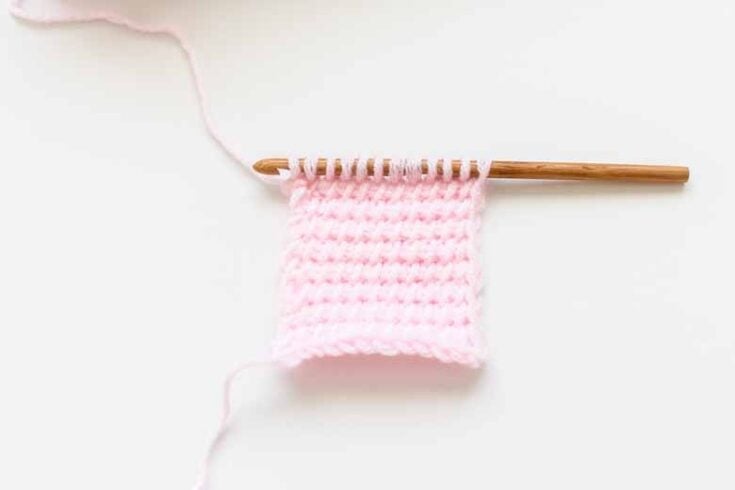
Tunisian Twisted Simple Stitch by Crochet And Stitches
The twisted simple stitch adds a subtle spiral twist to the classic TSS by working into a different part of the vertical bar.
It yields a delicate, rope-like texture that’s still fairly flat. Great as a step up from basic stitches — intermediate difficulty.
The post includes step-by-step photos.
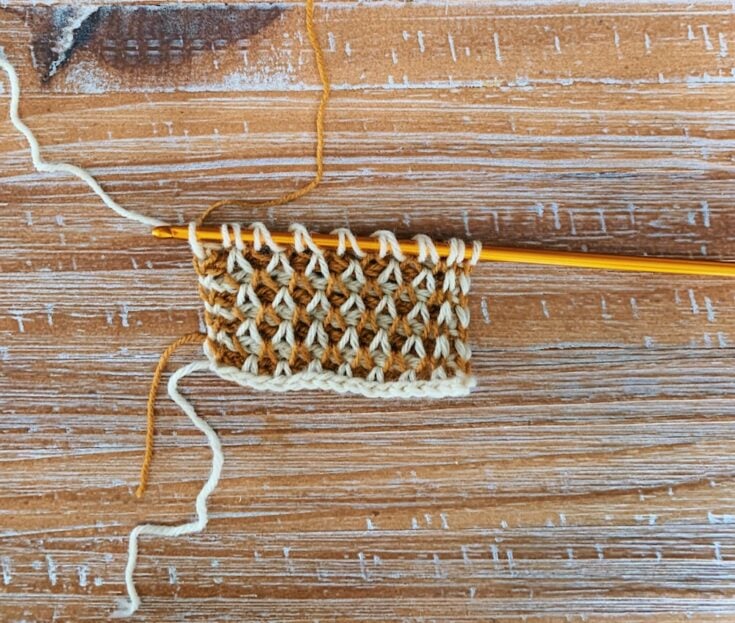
Tunisian Smock Stitch by I Can Crochet That
The smock stitch produces gathered “puffs” that resemble smocking or ruching, adding a fabric-folded effect.
It’s decorative and works beautifully for yokes, cushions, or panels with dimension.
Intermediate to advanced — you’ll need to count and manage stitch groups.
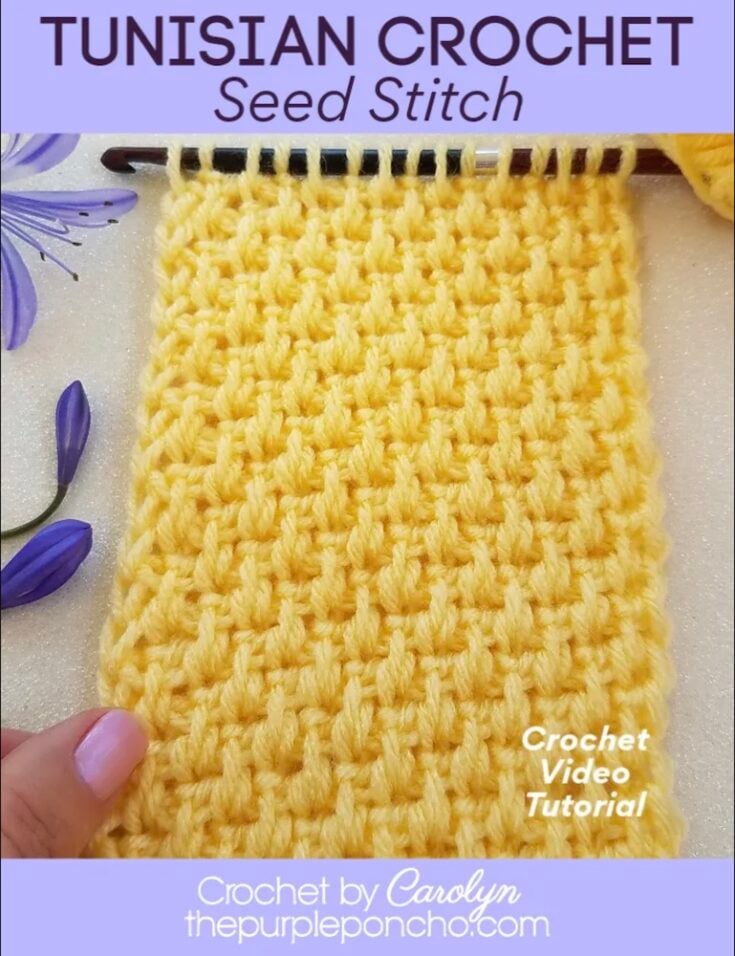
Tunisian Seed Stitch by The Purple Poncho
This stitch alternates simple and reverse stitches to create a pebbled, nubby texture that’s reversible.
It’s excellent for projects needing texture on both sides, like blankets or scarves.
Intermediate difficulty — the alternating pattern keeps things interesting.
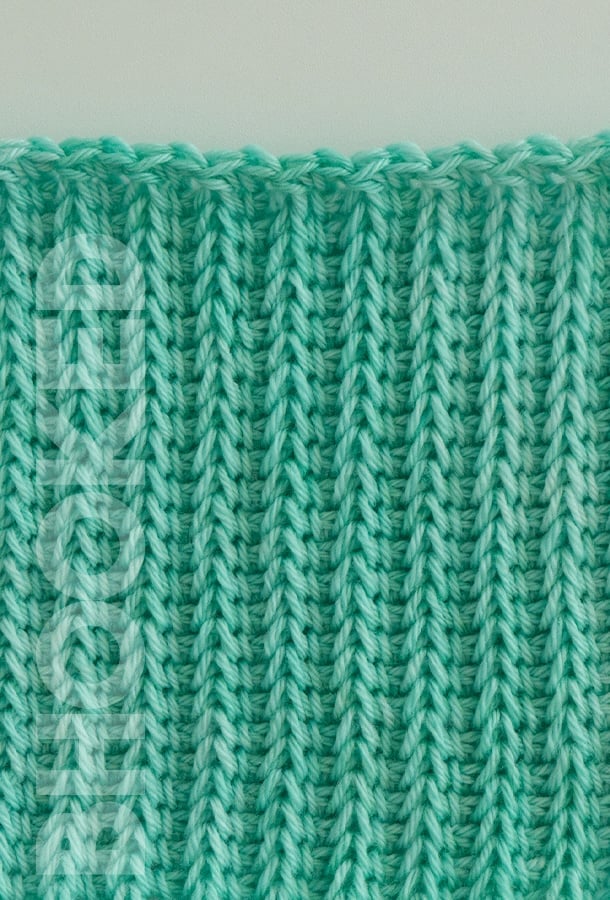
Tunisian Rib Stitch by BHooked Crochet
The rib stitch forms vertical ribs by alternating front- and back-facing stitch work, giving a stretchy, corrugated fabric.
It’s perfect for cuffs, socks, or any edge needing elasticity.
Intermediate level — a useful and practical textured stitch.
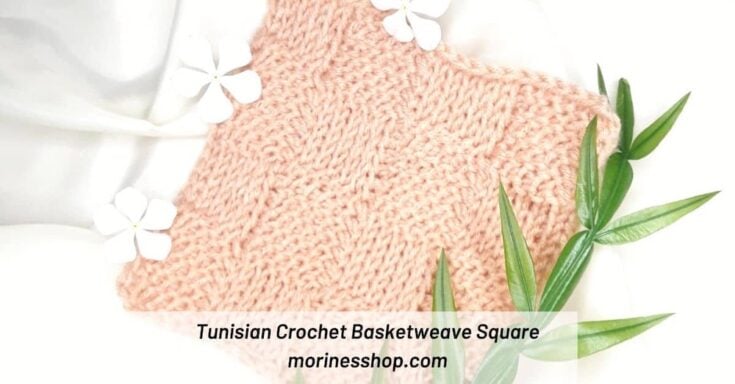
Tunisian Basketweave Stitch by Morine’s Shop
This classic textured stitch mimics woven baskets by working blocks of vertical and horizontal elements.
It gives a thick, structured fabric that’s ideal for home décor, afghans, or bags.
Intermediate to advanced, especially when managing color changes.
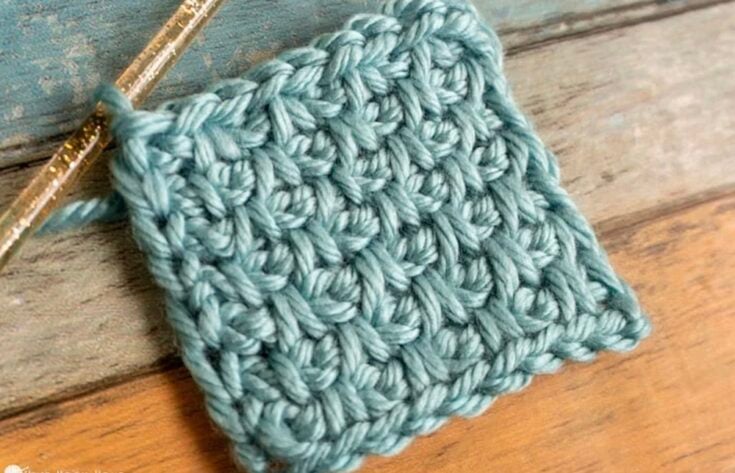
Tunisian Waffle Stitch / Brick Stitch by Heart Hook Home
The waffle stitch (or sometimes called Brick Stitch) yields deep, grid-like ridges, giving strong dimension and texture.
It’s excellent for blankets, heavy scarves, and textured throws.
Considered intermediate, the pattern rhythm is steady, but the structure is bold.
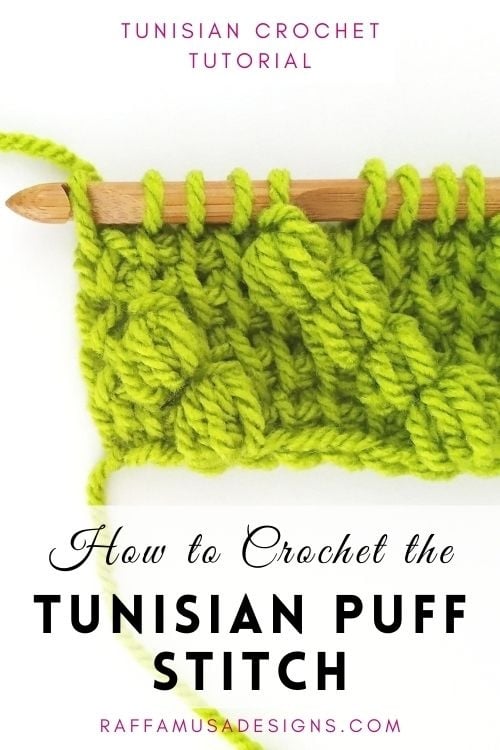
Tunisian Puff Stitch by Raffamusa Designs
The puff stitch builds soft, raised puffs by pulling multiple loops through the same stitch before closing them together.
It’s decorative and works well for accent panels or textured motifs.
Intermediate to advanced — managing loop height and consistency is key.
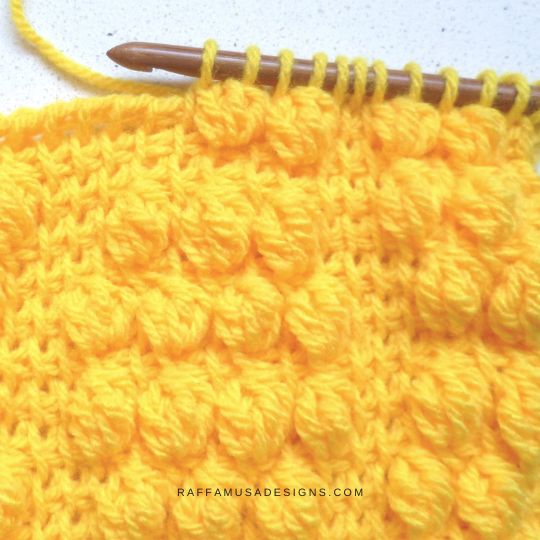
Tunisian Bobble Stitch by Raffamusa Designs
The bobble stitch forms round, three-dimensional bumps by working multiple partial stitches in one base stitch and joining them at the top.
It adds bold texture and sculptural elements to your projects.
Advanced level — a fun challenge for more confident crocheters.
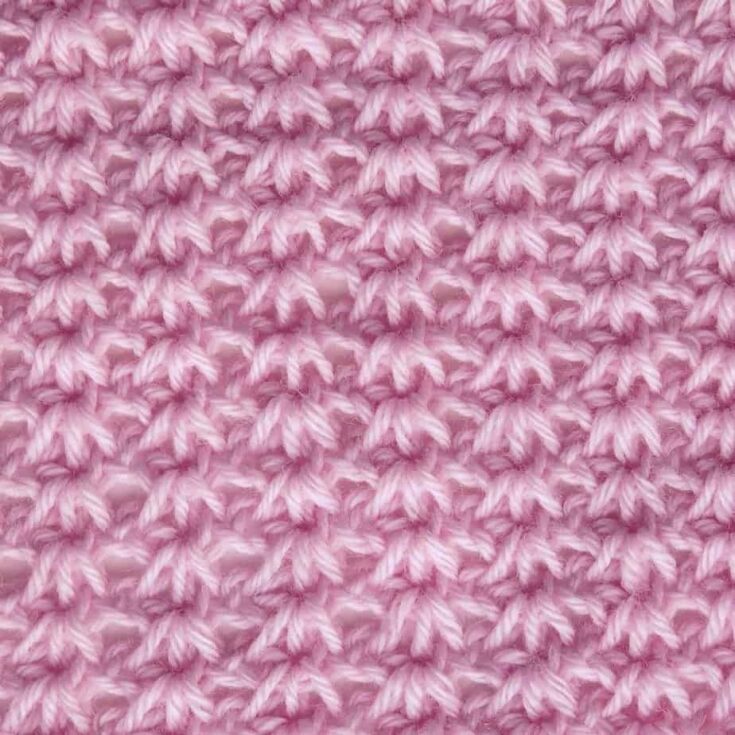
Tunisian Tiny Cluster Stitch by Crochet Kim
The Tunisian cluster stitch combines several partial stitches worked together into one, creating a raised, textured cluster.
It adds volume and visual depth, similar to puff or bobble stitches, but with a softer drape.
This intermediate to advanced stitch is perfect for blankets, cushions, and decorative panels that need a cozy, dimensional texture.
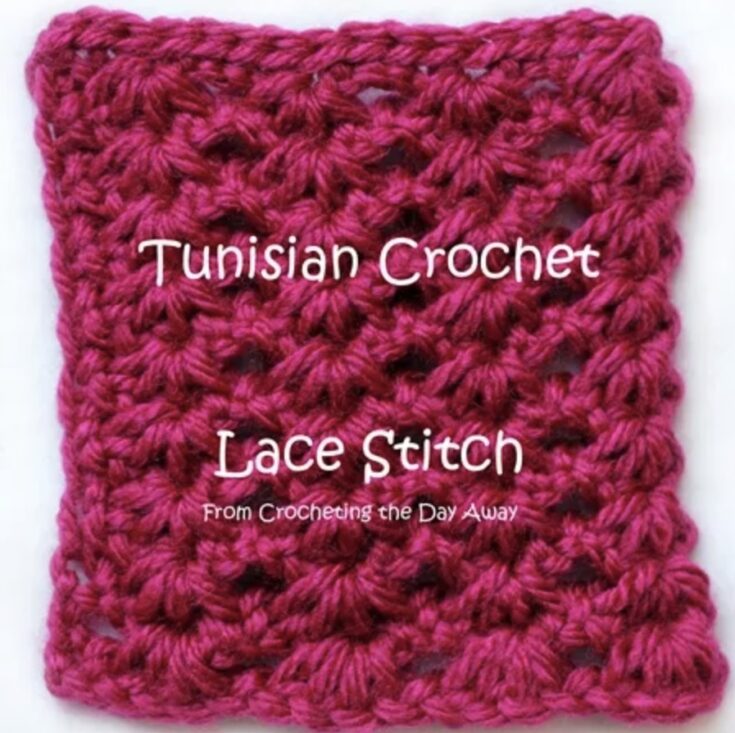
Tunisian Lace Stitch by Dakotah Knits
The Tunisian lace stitch uses chains and skipped stitches to create light, open spaces in the fabric.
It’s an amazing stitch for projects where breathability and drape matter, such as a shawl, a wrap, or a summer top.
This intermediate stitch blends Tunisian structure with delicate lacework, adding elegance without complexity.
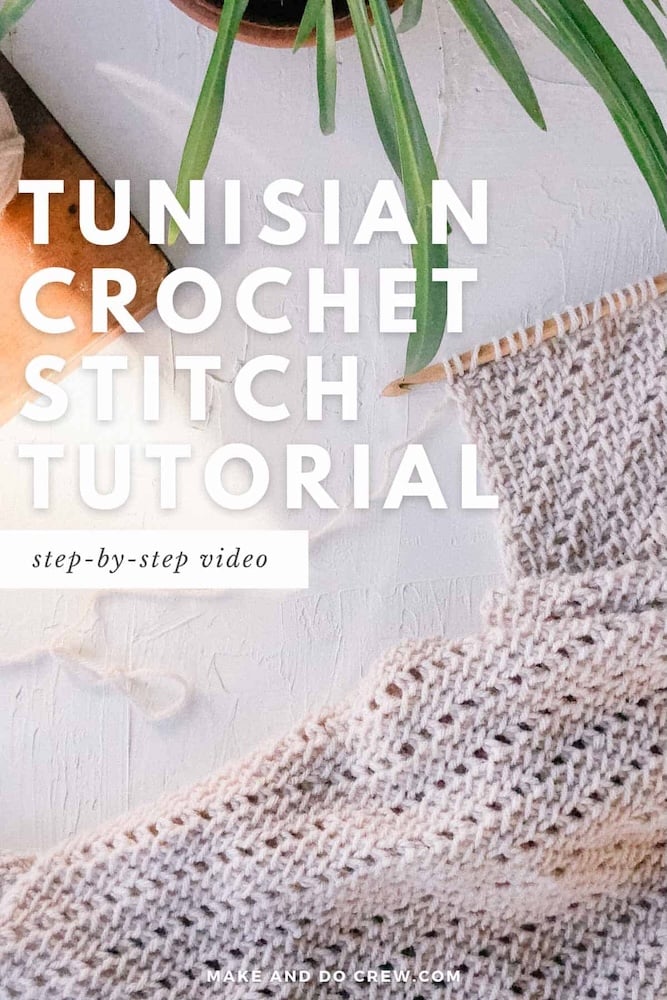
Tunisian Diagonal Eyelet Stitch by Make And Do Crew
The Tunisian eyelet stitch features small, evenly spaced holes that form a subtle openwork pattern.
It’s ideal for lightweight scarves, market bags, and airy garments, providing texture and ventilation.
This easy to intermediate stitch gives a decorative touch while maintaining the stability typical of Tunisian crochet.
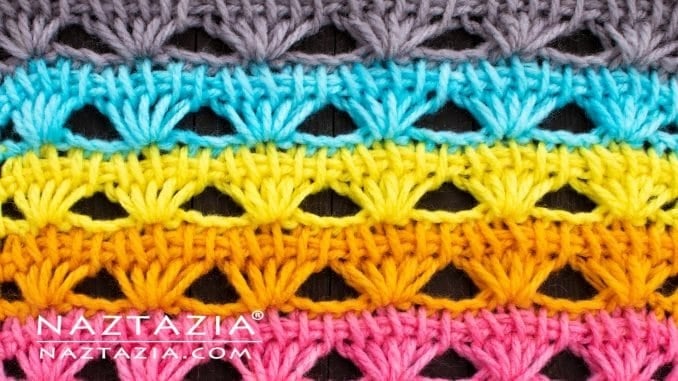
Tunisian Shell Stitch by Naztazia
The Tunisian shell stitch forms fan- or shell-like groups of stitches that create beautiful
curves and arches across the fabric.
It adds decorative flair and texture, making it ideal for edgings, blankets, and accent panels.
Difficulty: intermediate — you’ll need to manage grouping and spacing consistently.
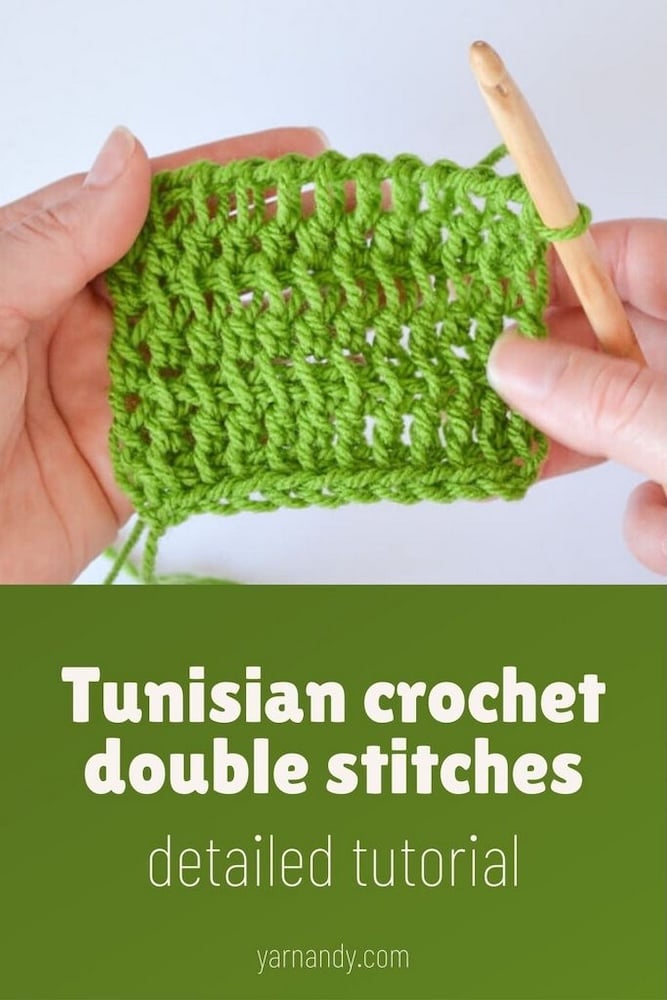
Tunisian Double Crochet Stitch (TDC) by Yarn Andy
The Tunisian double crochet stitch is taller and more open than standard Tunisian stitches, giving your fabric a looser, airier texture.
It’s great for projects where you want a lighter, drapey feel—like shawls or summer garments.
Difficulty: intermediate — because the stitch is taller, you’ll need to maintain even tension to prevent distortion.
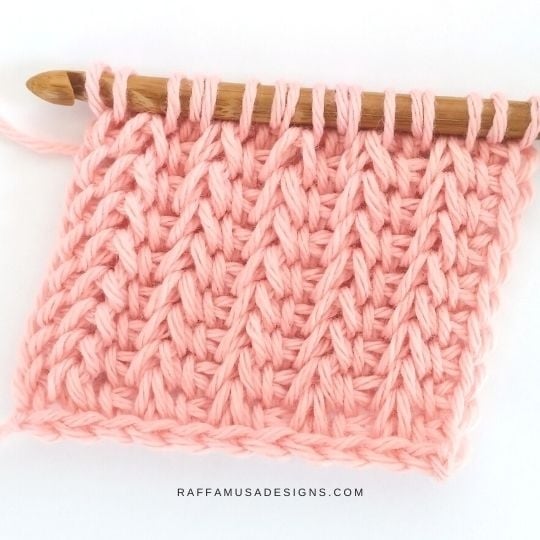
Tunisian Saloniki Stitch by Raffamusa Designs
The Saloniki stitch alternates textured ribs with open stitches to produce a stretchy, rib-like fabric.
It works beautifully for garments, cuffs, or anything needing elasticity and structure.
Difficulty: intermediate to advanced — you’ll be working alternating patterns and managing rib formation.
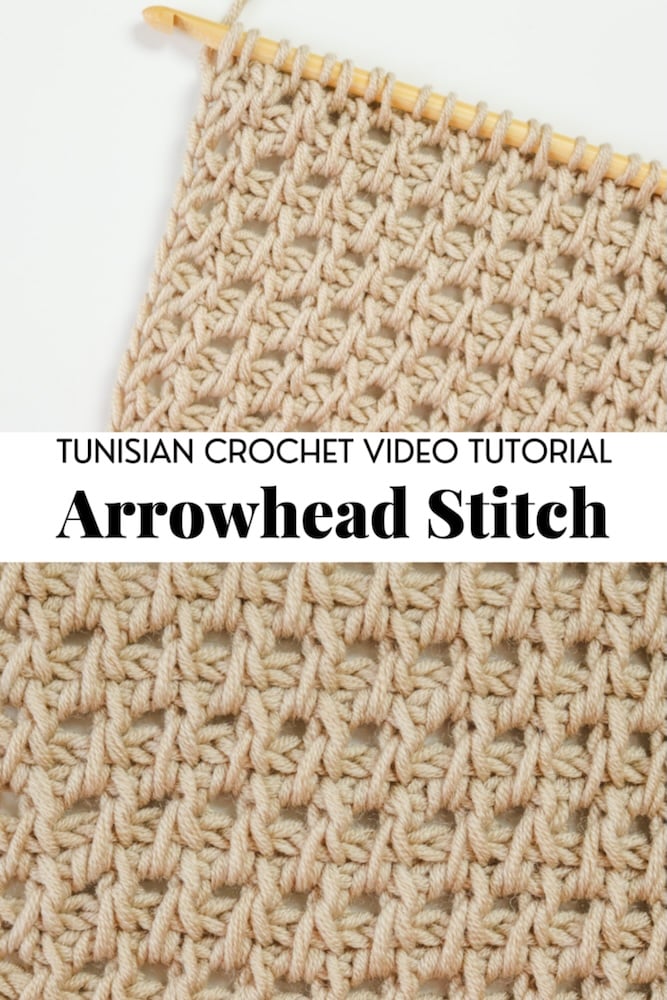
Tunisian Arrowhead Stitch by TL Yarn Crafts
The arrowhead stitch creates chevron or V-shaped motifs in your fabric by combining increases and decreases across each row.
It’s striking for garments, shawls, and decorative blankets where you want directional texture.
Difficulty: intermediate — count your stitches carefully and follow shaping instructions closely.
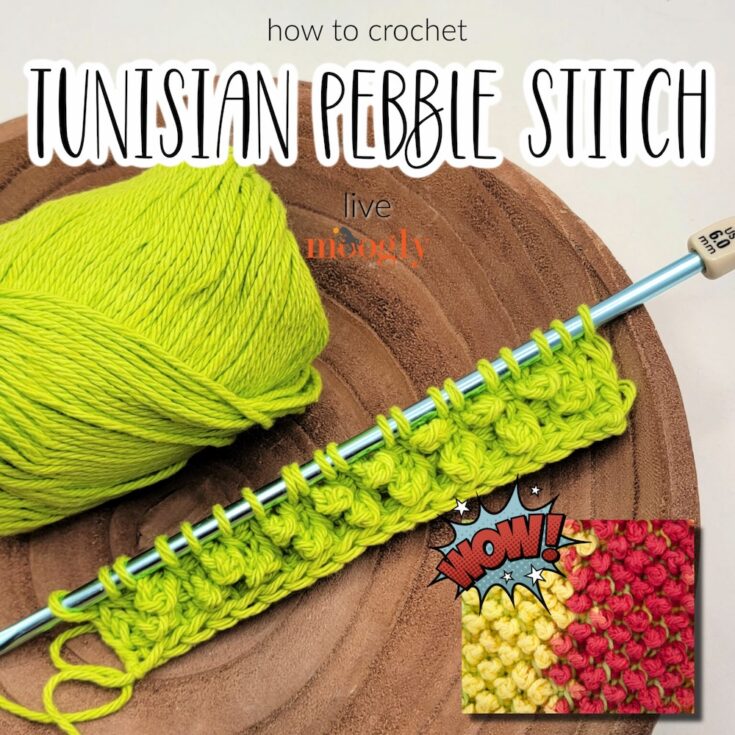
Tunisian Pebble Stitch by Moogly
The pebble stitch yields a bubbly, raised texture that resembles little stones scattered across the fabric.
It’s excellent for adding tactile interest to blankets, cushions, or accent panels.
Difficulty: intermediate to advanced — managing loop heights and cluster formation is essential for consistent pebbles.
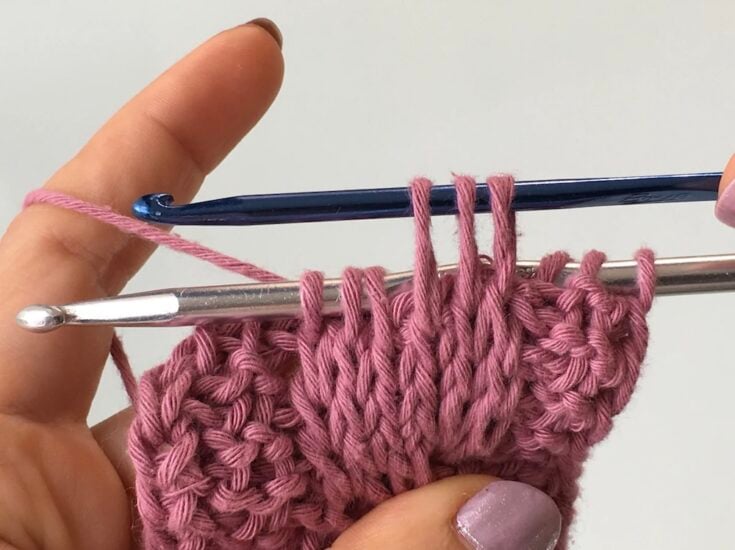
Tunisian Cable Stitch by Mode Bespoke
The Tunisian cable stitch mimics the twisting cables of knitwear by crossing groups of stitches over one another.
It’s terrific for sweaters, hats, and textured garments where you want that cable effect in crochet.
Difficulty: advanced — you’ll need to manipulate stitch placement carefully and often use a cable needle or stitch-holding technique.

Tunisian Chevron Stitch by Heart Hook Home
The chevron stitch forms a zigzag or chevron pattern by combining increases and decreases in a repeating motif.
It’s well-suited for blankets, shawls, and scarves that benefit from bold geometry.
Difficulty: intermediate — maintaining symmetry and stitch counts is key.
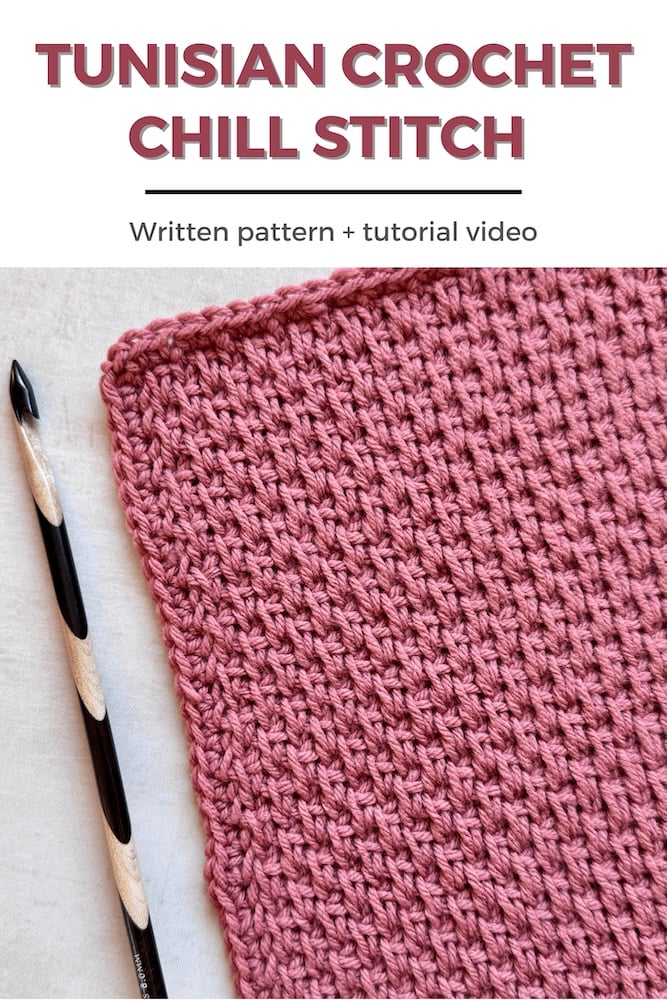
Tunisian Chill Stitch by TL Yarn Crafts
The chill stitch alternates different height stitches and dropped loops to create a relaxed, textured “chill” pattern.
It’s great for cozy throws, cardigans, or projects where you want softness with subtle interest.
Difficulty: intermediate — you’ll need to pay attention to dropped stitches and order of operations.

Tunisian Lattice Stitch by Mode Bespoke
The Tunisian lattice stitch is a decorative stitch that alternates blocks of Tunisian simple stitch (TS) with lattice stitch (LS) to create a criss-cross, lattice-like texture.
It requires you to work into groups of vertical bars (e.g. three stitches) for the LS portion, giving the fabric a striking, open-grid effect.
Difficulty: intermediate — because you’ll need to manage stitch groupings and counts to keep the lattice pattern aligned.
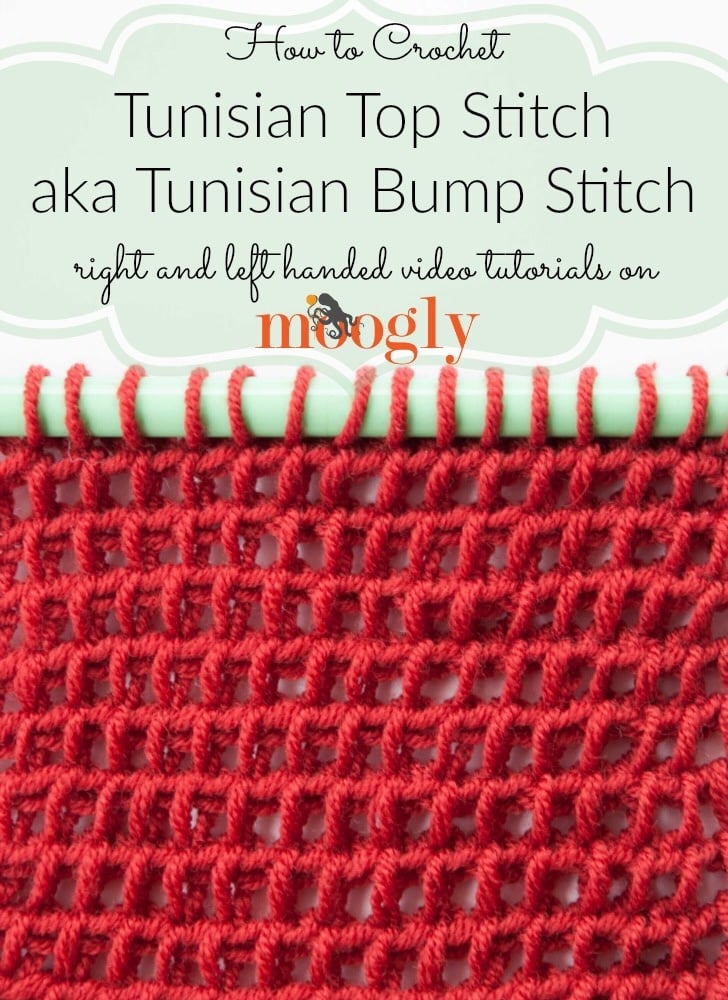
Tunisian Top / Bump Stitch by Moogly
The Tunisian top stitch (also called the Tunisian bump stitch) is worked into the “top bump” (the back bump of the return pass chain), creating a looser, more drapey fabric than the standard simple stitch.
Because of its relaxed structure, it resists curling and yields a softer hand—ideal for shawls, wraps, scarves, or light garments.
Difficulty: beginner to easy intermediate—it’s a good next step after you’ve mastered the basic Tunisian stitches.
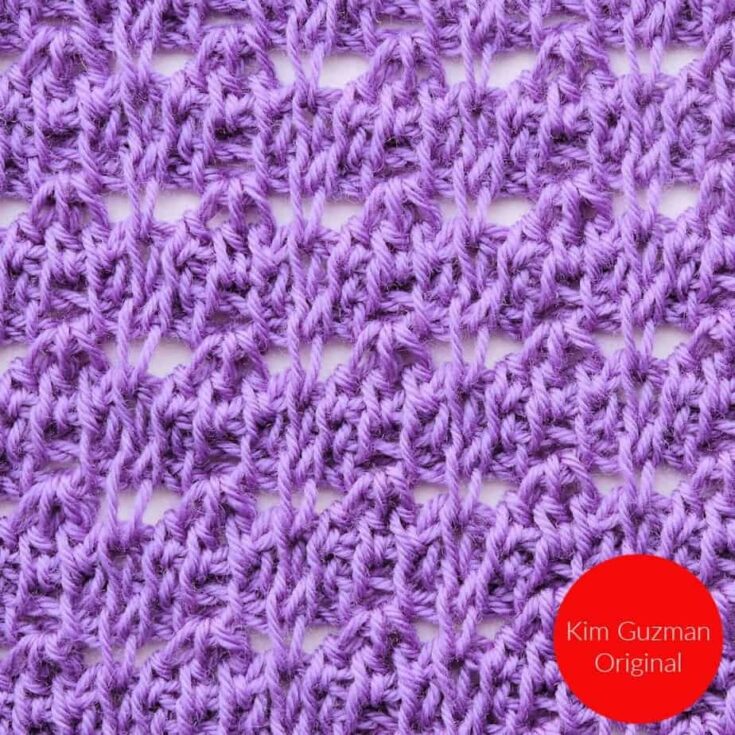
Tunisian Lozenge Stitch by Crochet Kim
The Tunisian lozenge stitch forms diamond or lozenge motifs by alternating worked stitches and open spaces (skipped stitches or chain spaces), giving your fabric a geometric lace-like appearance.
It works beautifully in shawls, lightweight blankets, and decorative panels where you want both structure and airflow.
Difficulty: intermediate — you’ll need to keep track of shaping and pattern repeats carefully.
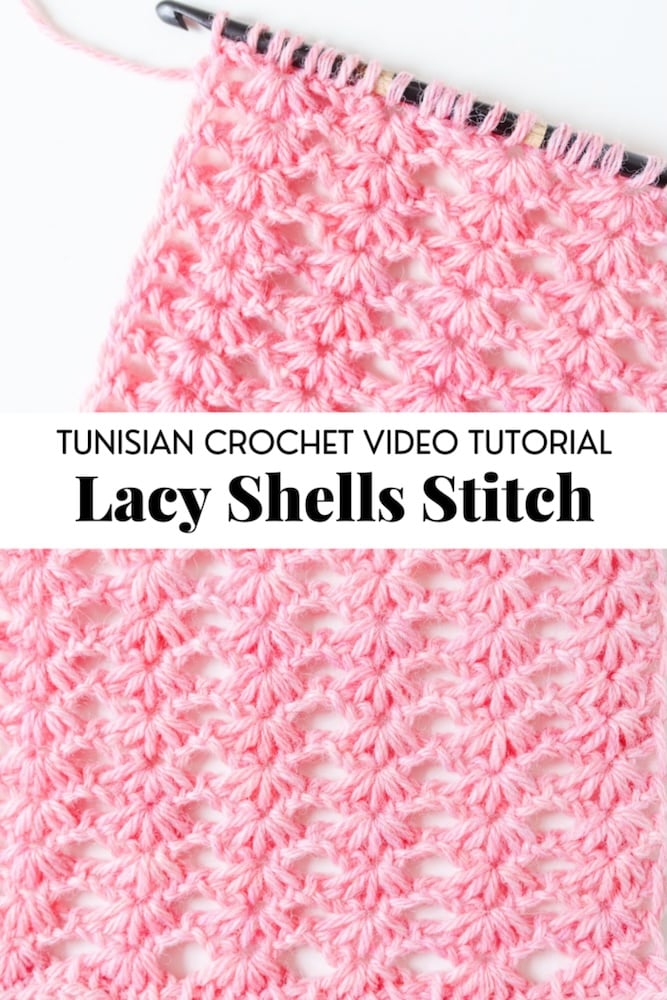
Tunisian Lacy Shells Stitch by TL Yarn Crafts
The Tunisian lacy shells stitch combines shell clusters (groups of worked stitches) with chain gaps to produce an airy, elegant, openwork texture.
It’s perfect for summer wraps, beach cover-ups, shawls, or decorative overlays that need drape and lightness.
Difficulty: intermediate — the lace effect comes from careful stitch placement, especially in the return pass.
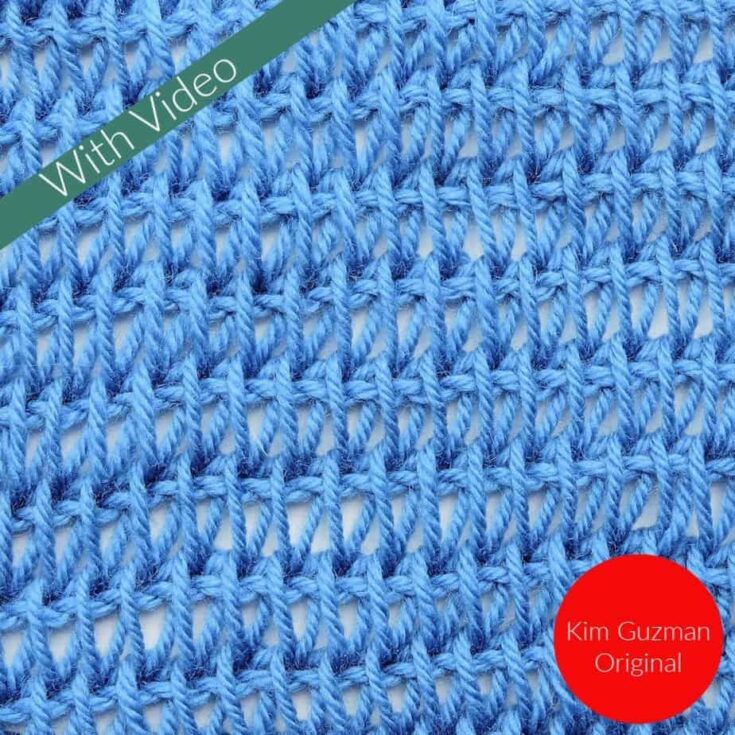
Tunisian Drop Stitch by Crochet Kim
The Tunisian drop stitch uses elongated loops that are dropped or released in later rows, creating dramatic vertical openwork columns.
This results in an airy, lace-like fabric that’s perfect for shawls, scarves, or breezy wraps.
Difficulty: intermediate — you’ll need to manage elongated loops and ensure even tension to maintain neat openings.
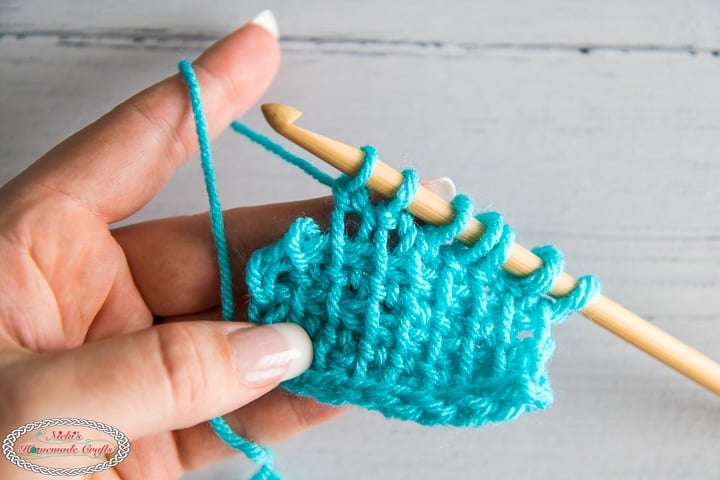
Tunisian Extended Stitch by Nicki’s Homemade Crafts
The Tunisian extended stitch involves inserting the hook a certain number of rows below the current row to “extend” the stitch vertically, giving a decorative, elongated bar effect.
It adds visual interest and texture without too much bulk, making it suitable for panels, borders, or decorative accents.
Difficulty: intermediate — you’ll need good stitch counting and the ability to reach lower rows cleanly.
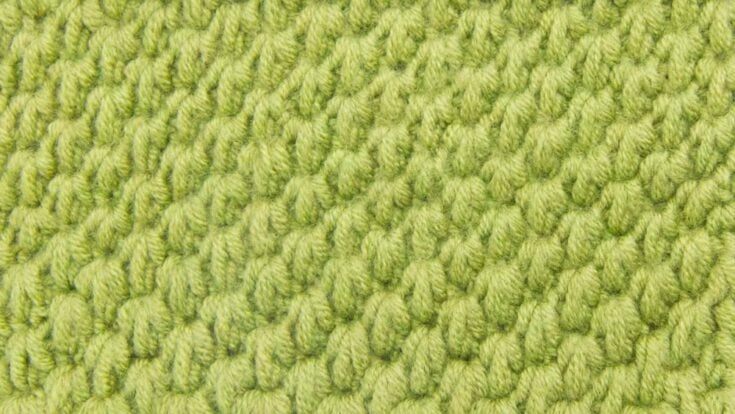
Tunisian Ocean Stitch by New Stitch A Day
The Tunisian ocean stitch creates waving, undulating patterns reminiscent of ocean waves, through clever increases, decreases, and combinations of taller stitches.
It’s great for blankets, afghans, or shawls where you want flowing, dynamic movement in fabric.
Difficulty: intermediate to advanced — since you’ll deal with shaping, stitch multiples, and maintaining symmetry.
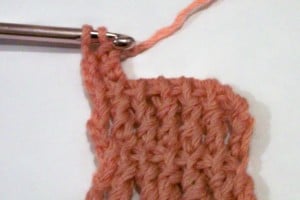
Tunisian Treble Crochet (TTC) by Crochet Spot
The Tunisian treble crochet (TTC) stitches are taller and more open, similar to treble (triple) crochet, giving fabrics more drape and softness.
It’s ideal for lighter, breezier pieces like wraps, shawls, or lightweight garments.
Difficulty: intermediate — because of the height, tension becomes more critical, and you’ll need to keep your loops and passes consistent.
What Is Tunisian Crochet?
Tunisian crochet (also known as Afghan crochet) is a unique technique that blends the best of both knitting and crochet.
Instead of completing each stitch one at a time like in traditional crochet, Tunisian crochet keeps multiple loops on the hook — similar to knitting — before working them off in the return pass.
This method creates a dense, textured fabric that doesn’t curl as easily and has a beautiful woven look.
Tunisian crochet is perfect for making blankets, scarves, dishcloths, and garments that need structure.
There are many different Tunisian crochet stitches, from the beginner-friendly Tunisian simple stitch (TSS) to more intricate patterns like the Tunisian knit stitch (TKS) or Tunisian purl stitch (TPS).
Learning these stitches and honing new skills will allow you to create amazing Tunisian crochet patterns.
What Is Tunisian Crochet Used For?
Tunisian crochet is used to create a variety of projects of textured, durable, and cozy.
Because the fabric it produces is thicker and less stretchy than regular crochet, it’s ideal for blankets, scarves, shawls, and dishcloths that benefit from extra warmth and structure.
Crafters also use Tunisian crochet for home décor items such as pillow covers, rugs, and table runners, since the stitches create a woven, knit-like look that adds texture and visual interest.
With finer yarns and smaller hooks, you can even make garments, bags, and accessories using Tunisian crochet techniques.
What Supplies Do You Need for a Tunisian Crochet Project?
To start a Tunisian crochet project, you only need a few essential supplies — similar to regular crochet, but with one key difference: the hook.
Here’s what you’ll need:
- The Tunisian hook is the most important tool. A Tunisian crochet hook is longer than a standard crochet hook to hold multiple loops at once, much like a knitting needle. Hooks come in different types:
- Yarn – Choose a yarn weight that matches your project. Medium-weight (worsted) yarn is great for beginners because it’s easy to work with and shows stitch definition clearly. Smooth, light-colored yarns are best when you’re just learning new Tunisian crochet stitches.
- Scissors – For trimming yarn ends.
- Tapestry needle – Used for weaving in your ends when your project is finished.
- Measuring tape and/or gauge tool – Helpful for checking stitch size and ensuring your finished piece meets the correct dimensions.
- Optional extras include stitch markers to keep track of rows or pattern repeats, and a blocking mat if you want to shape your finished work neatly.
With these basic Tunisian crochet supplies, you’ll be ready to create anything from simple swatches to stunning textured blankets.
How many types of Tunisian crochet hooks are there?
There are four main types of Tunisian crochet hooks, each designed for different project sizes and styles.
- Standard (straight) Tunisian hooks – These look like long crochet hooks, usually 10–14 inches in length, and are perfect for small to medium projects like scarves, dishcloths, and panels.
View standard Tunisian crochet hooks here. – Coopay Tunisian Crochet Hook Set
- Interchangeable Tunisian crochet hooks – These have a flexible cord attached to the end, allowing you to hold many stitches comfortably. They’re ideal for blankets, shawls, and garments.
Check out a set here. – Lykke Umber Interchangeable Tunisian Crochet Hook Set
- Double-ended hooks – These have a hook on each side and are used for working in the round or creating reversible fabrics. Great for projects like cowls and tubes.
See a double-ended hook here. – Double Ended Tunisian Crochet Hooks
- Ergonomic or short hooks – Designed for swatches, small projects, or learning stitches, these are shorter and easier to handle, often used when practicing new techniques.
What Are the Differences Between Tunisian Crochet and Regular Crochet?
While Tunisian crochet and regular crochet share many similarities — both use a hook to create fabric from yarn — the techniques, tools, and results are quite different.
Understanding these key differences will help you decide which style suits your next project best.
1. The hook – Regular crochet uses a standard hook that works one stitch at a time.
Tunisian crochet uses a longer hook (or one with a cable) that holds multiple loops at once, similar to knitting needles.
2. The technique – In regular crochet, each stitch is completed before moving to the next.
In Tunisian crochet, you work in two passes — a forward pass (picking up loops across the row) and a return pass (working those loops off the hook). This creates a distinctive, textured fabric.
3. The fabric – Regular crochet fabric tends to be lighter, stretchier, and more flexible.
Tunisian crochet fabric is denser and has a woven or knit-like appearance, making it great for projects that need structure, like blankets or bags.
4. Curling – Tunisian crochet often curls at the edges due to the stitch structure, while regular crochet usually lays flat. This can be minimized by blocking or by using certain stitches, such as the Tunisian purl stitch or honeycomb stitch.
5. Stitches and texture. Regular crochet offers a huge variety of stitches that are completed individually.
Tunisian crochet creates unique textures and patterns that resemble knitting — like the Tunisian knit stitch or Tunisian simple stitch.
Frequently Asked Questions About Tunisian Crochet
1. What is the best yarn weight and hook size to practice Tunisian crochet stitches with?
When you’re learning Tunisian crochet, the best yarn weight to start with is medium-weight yarn.
It’s thick enough to see your stitches clearly but not too bulky to manage easily.
For hook size, choose a Tunisian crochet hook that’s 1–2 sizes larger than what’s recommended for your yarn.
For example, if your yarn label suggests a 5 mm hook, try a 6 mm or 6.5 mm Tunisian hook — the extra size helps your fabric stay flexible and prevents curling.
Smooth, light-colored yarns (like cotton or acrylic blends) also make it easier to see the vertical bars while you practice.
Learn more about yarn here. – Yarn Weight Guide (+ Yarn Conversion Chart)
2. What are the best Tunisian crochet projects for beginners?
The best Tunisian crochet projects for beginners are small projects that let you practice basic stitches without worrying about shaping or complex patterns.
Start with simple, flat items like dishcloths, scarves, washcloths, coasters, or mug rugs — they’re quick to make and perfect for mastering the Tunisian simple stitch (TSS) and Tunisian knit stitch (TKS).
Once you feel comfortable, move on to small home décor projects like pillow covers, placemats, or pot holders, which help you practice working even tension and combining stitch patterns.
These small projects let you build confidence while producing useful, beautiful handmade pieces.
3. Can you use a regular crochet hook in Tunisian crochet?
You can use a regular crochet hook for small Tunisian crochet projects, but there are some limitations.
A standard hook works fine if it’s long enough to hold all your loops (for example, when making small swatches, dishcloths, or coasters).
However, for larger projects like blankets, scarves, or shawls, you’ll need a Tunisian crochet hook that’s longer or has a cable attachment to accommodate the extra stitches on your hook.
If your regular hook has a smooth shaft and no thumb rest, it can be easier to use for short Tunisian rows.
Still, investing in a proper Tunisian (Afghan) hook set is recommended once you start exploring bigger or more complex patterns — it’ll make your crocheting much more comfortable and efficient.
Learn more about crochet hooks here. – Crochet Hook Sizes Chart (A Free Conversion Guide)
4. Why does Tunisian crochet curl?
Tunisian crochet tends to curl because of the way the stitches are worked — all the loops are picked up (forward pass) and then worked off (return pass), which naturally pulls the fabric toward the front.
This tension difference causes the fabric to roll at the edges, especially with tighter stitches like the Tunisian simple stitch (TSS).
To prevent curling, use a larger hook size than your yarn label suggests, and try stitches that naturally lay flat, such as the Tunisian honeycomb stitch or Tunisian reverse stitch.
You can also block your finished project or add a border of single crochet or reverse stitches to help it stay flat.
Learn how to block your crochet projects here. – How To Block Crochet (Beginner’s Guide)
5. Do Tunisian hooks require a different hold than regular hooks?
Yes, Tunisian crochet hooks are held a little differently than regular crochet hooks because you work with multiple loops on the hook, similar to knitting.
Instead of holding the hook like a pencil or knife (as in regular crochet), most crocheters use a relaxed, overhand grip to help balance the longer hook and keep even tension.
If you’re using a cabled Tunisian hook, you’ll hold it closer to the hook head and let the cable rest comfortably on your lap or table.
The key is to keep your hands relaxed and your tension loose — gripping too tightly can cause curling or hand strain.
Over time, you’ll find a comfortable position that works best for your hook length and project type.
Learn how to hold a crochet hook here – How To Hold A Crochet Hook (Tutorials + Tips)
6. Do you want to explore regular crochet?
Check out the crochet lessons to find tutorials for the basic techniques, including basic stitches, decreases, and more. – Crochet Lessons (With Video Tutorials).
Take a look here to find beautiful crochet stitch patterns. – 50 Crochet Stitches For All Skill Levels (Free)
If you need more video tutorials, check out my YouTube channel here – Handy Little Me – YouTube.
For extra help and to connect with more makers from the crafting community, check out the Handylittleme Knitting and Crochet Community Facebook group.
You can also find us on social media platforms, including Ravelry, Pinterest, Instagram, Twitter, Etsy, and TikTok.
Free Crochet Patterns
If you are looking for regular crochet projects, check out the beautiful patterns below.
- Free Crochet Easter Eggs Pattern
- 50 Best Crochet Stitches For Blankets And Afghans
- Crochet Round Rug Pattern
- 35 Free Easter Crochet Patterns
- 35 Free Cotton Yarn Crochet Patterns
- Crochet Dishcloth Pattern Set
- Crochet Washcloth Pattern
- How To Crochet A Blanket
- 50 Stash Busting Crochet Patterns
- 40 Free Granny Square Crochet Patterns
- Crochet Blanket Sizes And How Much Yarn
- Outlander Shawl Crochet Pattern
- Crochet Beach Cover-Up Pattern