
15 Free Crochet Turkey Patterns For Thanksgiving
THIS ARTICLE CONTAINS AFFILIATE LINKS THAT SUPPORT HANDY LITTLE ME CONTENT AND FREE PATTERNS.Crochet turkey patterns are a fun way to add a handmade touch to your Thanksgiving decorations.
From cute amigurumi turkeys to coasters, granny squares, towel toppers, and pillows, there are plenty of free patterns to try.
Whether you’re decorating your Thanksgiving table, making handmade gifts, or using up leftover yarn, you’ll find lots of inspiration in the collection below.
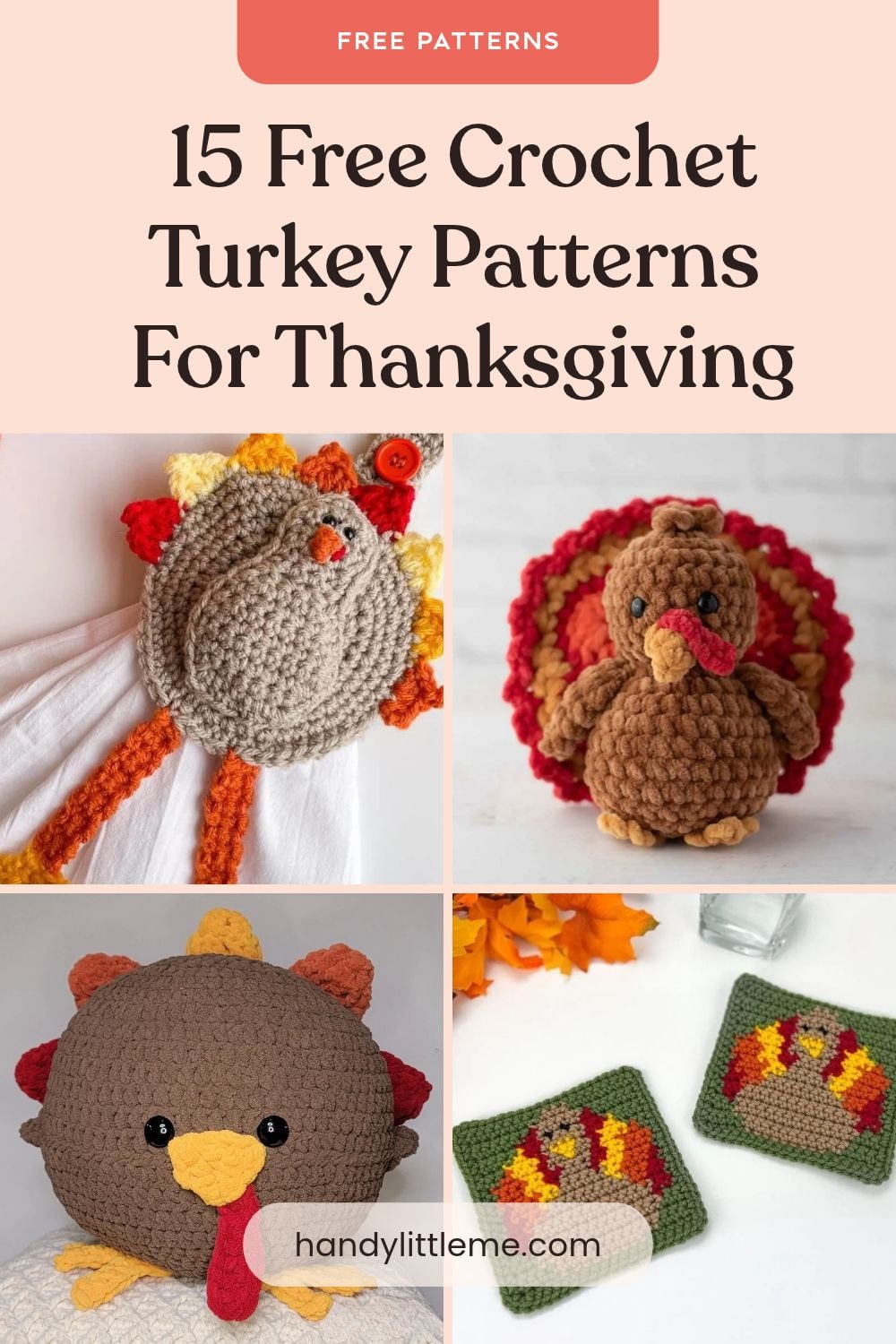
15 Free Crochet Turkey Patterns
Explore these 15 free crochet turkey patterns, including cute amigurumi turkeys, festive decorations, and fun Thanksgiving projects.
Choose your favorite, grab your yarn and hook, and get ready to crochet!
Happy Crocheting!
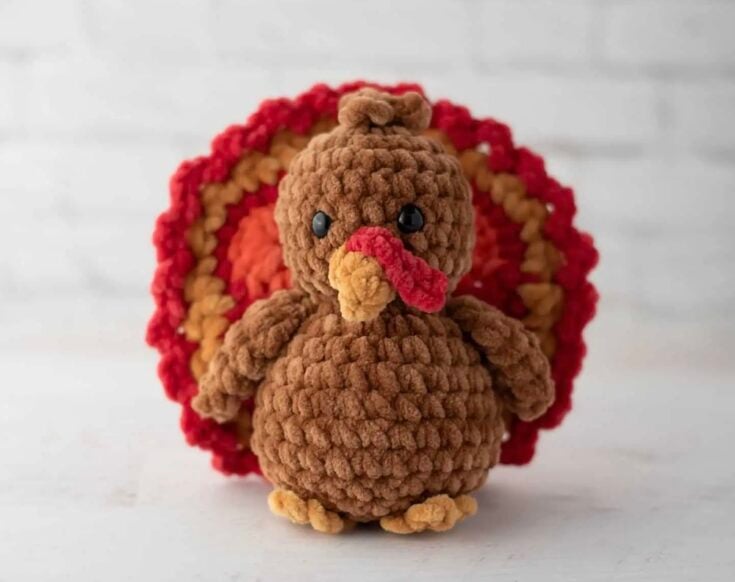
Toby The Crochet Turkey by Crochet 365 Knit Too
Toby is a squishy crochet turkey with colorful tail feathers created from a modified African flower motif.
The super bulky chenille yarn helps the finished turkey hold its shape, while the beak, wattle, wings, feet, and head feathers add plenty of character.
Yarn weight: Super bulky weight yarn (6)
Hook: 5 mm (US H-8)
Skill level: Intermediate
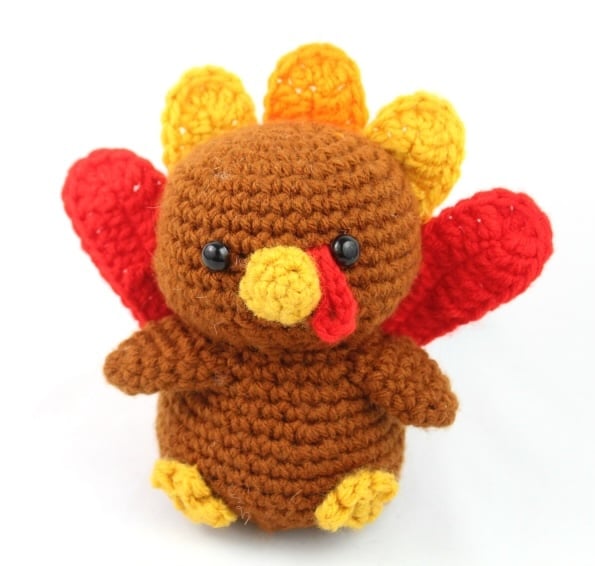
Turkey Amigurumi by Stringy Ding Ding
This little crochet turkey is made with the head and body worked as one piece before adding the beak, wattle, arms, feet, and colorful feathers.
It's rated as easy and uses basic amigurumi techniques, making it a good Thanksgiving project if you're fairly new to crocheting toys.
- Yarn weight: Medium/worsted weight yarn (4)
- Hook: 4 mm (US G-6)
- Skill level: Easy
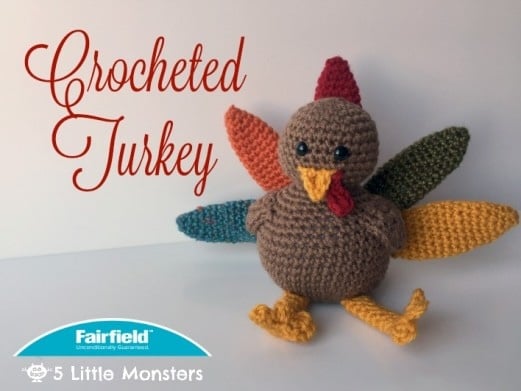
Crocheted Turkey by Erica Dietz
This colorful crochet turkey makes a fun centerpiece or addition to your Thanksgiving decor.
The body contains a small pouch of weighted stuffing beads to help the finished turkey sit upright, while bright tail feathers fan out behind it.
- Yarn weight: Worsted weight yarn (4)
- Hook: 4 mm (US G-6)
- Skill level: Easy
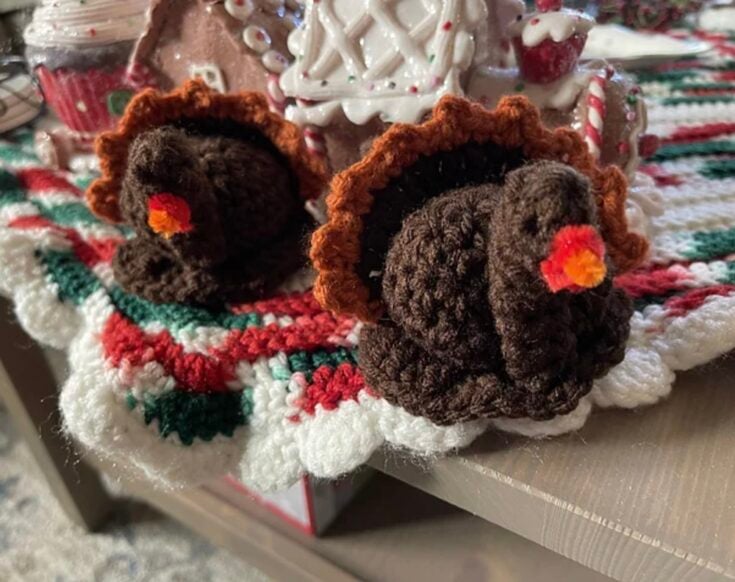
Turkey Bun Huggers by Maureen Carr
This playful Thanksgiving hair accessory is a fun alternative to a traditional crochet turkey toy or decoration.
The pattern uses medium weight yarn along with small amounts of pipe cleaner to create the turkey-themed details.
- Yarn weight: Worsted/medium weight yarn (4)
- Hook: 5.5 mm (US I)
- Skill level: Easy
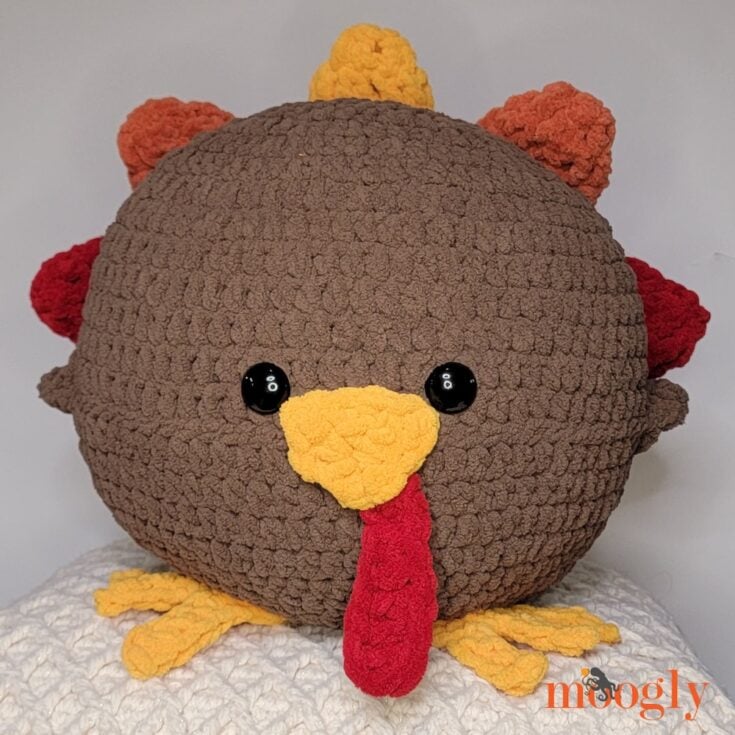
Turkey Squish by Moogly
The Turkey Squish is a large, cuddly amigurumi that's part turkey and part crochet pillow.
Made with super bulky blanket yarn, it works up quickly and includes colorful tail feathers, feet, a beak, and a wattle, plus a video tutorial to help you along.
- Yarn weight: Super bulky weight yarn (6)
- Hook: 8 mm (US L)
- Skill level: Beginner-friendly
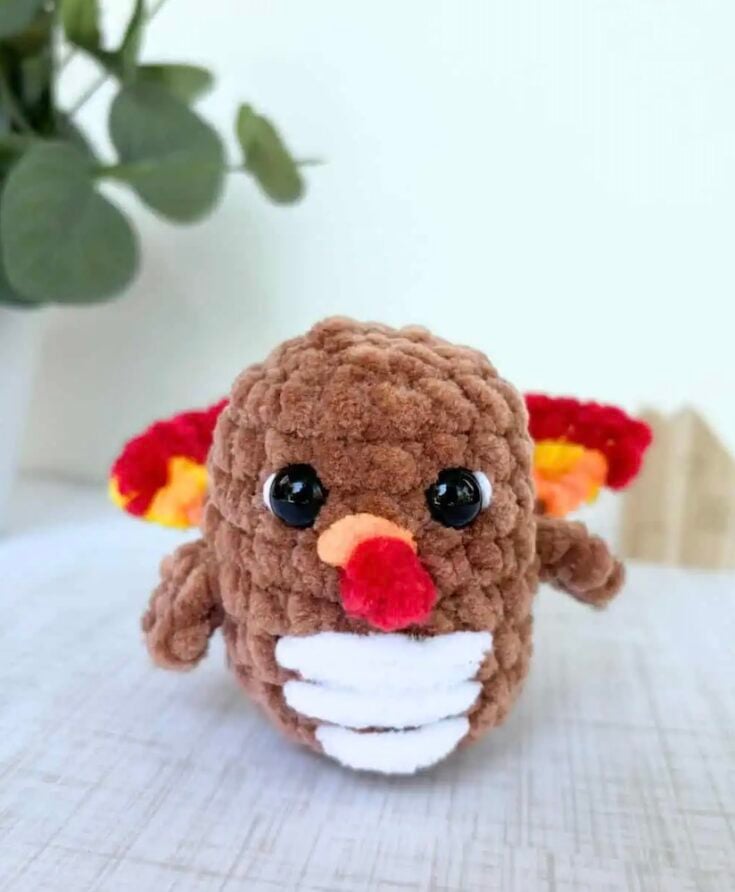
No-Sew Crochet Turkey by Natalina Craft
This tiny turkey is a great option if you enjoy amigurumi but want to avoid sewing lots of separate pieces together.
The finished turkey measures around 1.25 inches when made with the suggested yarn, making it perfect for small Thanksgiving decorations or little gifts.
- Yarn weight: Light worsted yarn (3) with chunky yarn (5) for the belly
- Hook: 2.75 mm (US C-2)
- Skill level: Easy
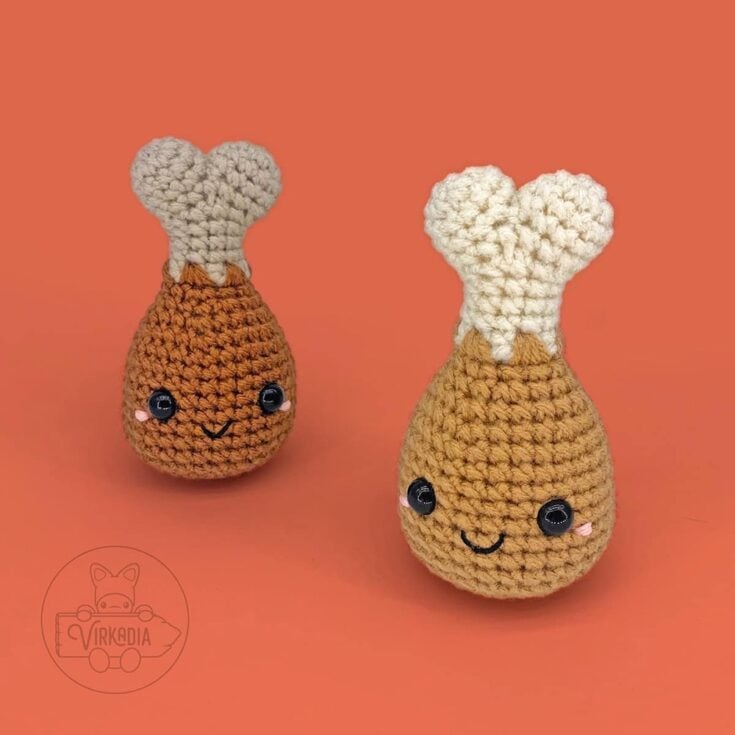
Turkey Leg Cutie by Virkadia
For something a little different, this fun amigurumi pattern turns a Thanksgiving turkey leg into an adorable little plush character.
You can make the standard version with medium weight yarn or switch to super bulky plush yarn for a larger, extra-squishy turkey leg.
- Yarn weight: Medium weight yarn (4)
- Hook: 5 mm (US H-8)
- Skill level: Intermediate
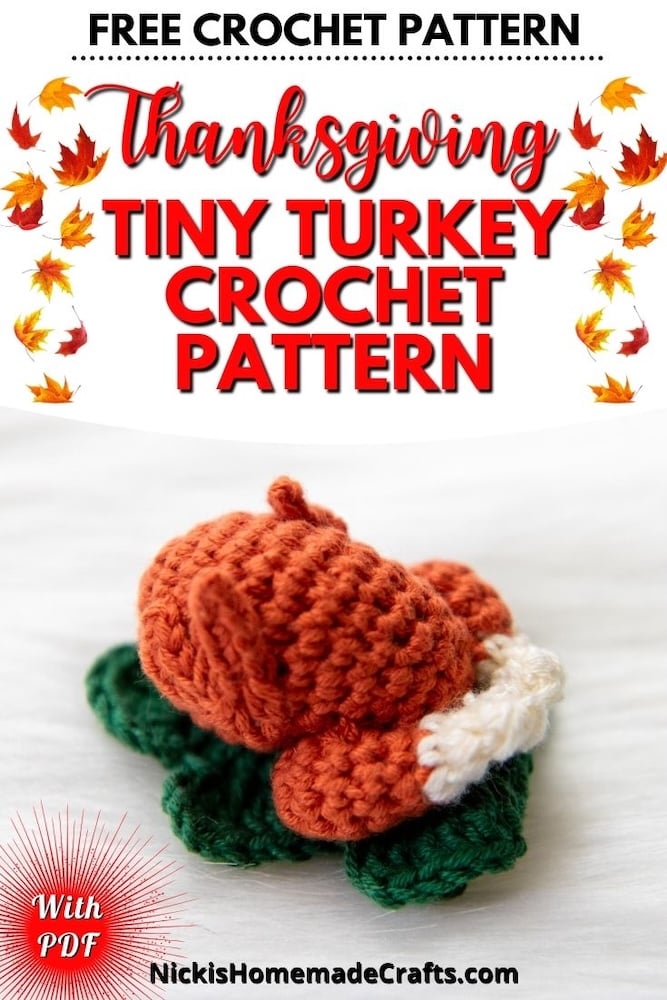
Tiny Crochet Roasted Turkey by Nicki's Homemade Crafts
This tiny roasted turkey is a clever Thanksgiving crochet project that looks like the centerpiece of the dinner table in miniature.
It uses less than 100 yards of sport weight yarn and includes a rounded body, tiny wings, and little drumsticks.
- Yarn weight: Sport weight yarn (2)
- Hook: 3 mm
- Skill level: Easy
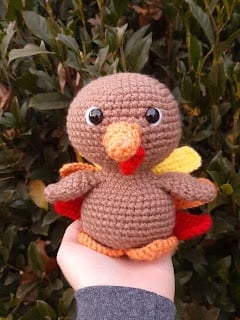
Amigurumi Turkey by Teen Crocheter
This traditional little amigurumi turkey uses warm shades of brown, orange, red, and yellow for a classic Thanksgiving look.
The head and body are worked together before the wings, feathers, beak, and other small pieces are added.
- Yarn weight: Worsted weight yarn (4)
- Hook: 3.5 mm
- Skill level: Easy
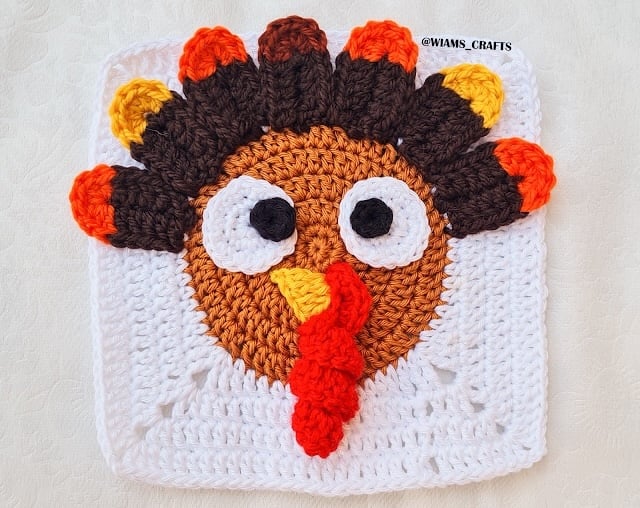
Turkey Granny Square by Wiam's Crafts
This turkey granny square is a fun option if you want to incorporate a Thanksgiving motif into a blanket, pillow, bag, or other crochet project.
The detailed square uses several autumn colors and includes both written instructions and charts.
- Yarn weight: DK-weight cotton yarn (3)
- Hook: 3 mm (US D-3)
- Skill level: Intermediate
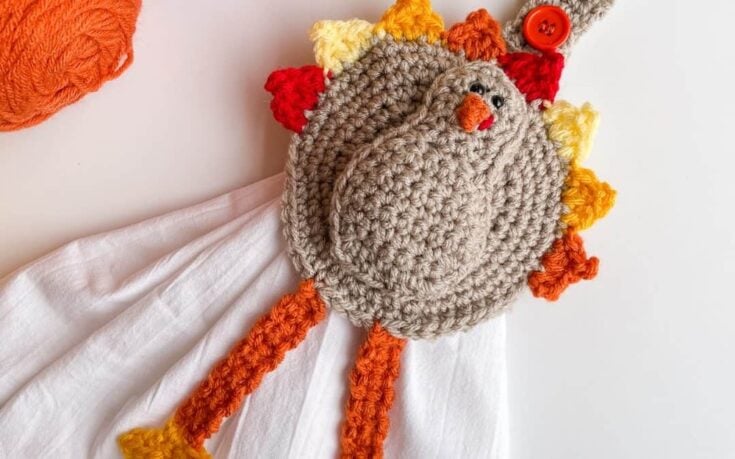
Turkey Towel Topper by Nana's Crafty Home
Add a little Thanksgiving decor to your kitchen with this cute crochet turkey towel topper.
The turkey face and colorful feathers sit above the towel, and the hanging tab makes it easy to attach to an oven or cabinet handle.
- Yarn weight: Medium/worsted weight yarn (4)
- Hook: 6 mm (US J-10)
- Skill level: Easy
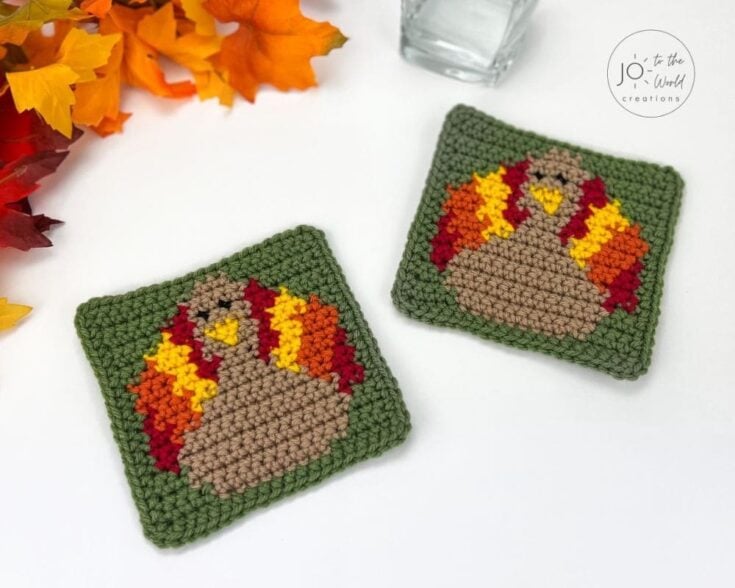
Crochet Turkey Coaster by Jo to the World Creations
These colorful turkey coasters are a practical way to bring a handmade touch to your Thanksgiving table.
Each coaster measures approximately 5.5 inches square and uses simple single crochet colorwork to create the turkey design.
- Yarn weight: Medium/worsted weight yarn (4)
- Hook: 3.75 mm (US F-5)
- Skill level: Easy
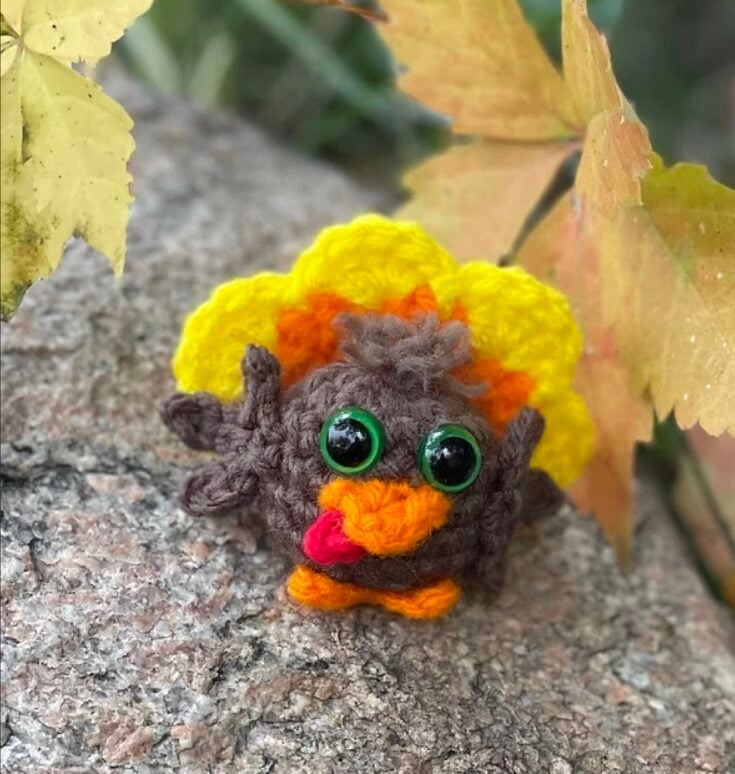
Tiny Turkey by Jillian Lewis
This palm-sized little turkey is a quick amigurumi project that's perfect for Thanksgiving decorations, table settings, or small handmade gifts.
It uses only a small amount of yarn, so you could easily make several for your holiday display.
- Yarn weight: Aran weight yarn (4)
- Hook: 3.25 mm (US D)
- Skill level: Easy
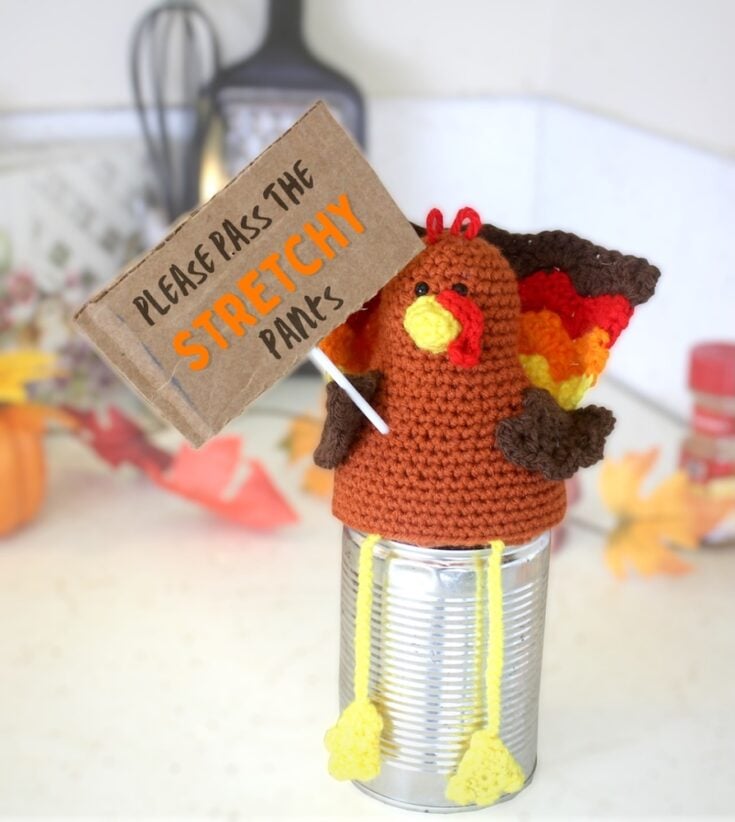
Chicken / Thanksgiving Turkey Amigurumi by Stringy Ding Ding
This clever amigurumi pattern can be made as either a chicken or a Thanksgiving turkey simply by changing the colors and adding the turkey's tail and feathers.
The turkey version also includes a fun printable "Please pass the stretchy pants" sign for an extra Thanksgiving touch.
- Yarn weight: Medium/worsted weight yarn (4)
- Hook: 4 mm (US G-6)
- Skill level: Intermediate
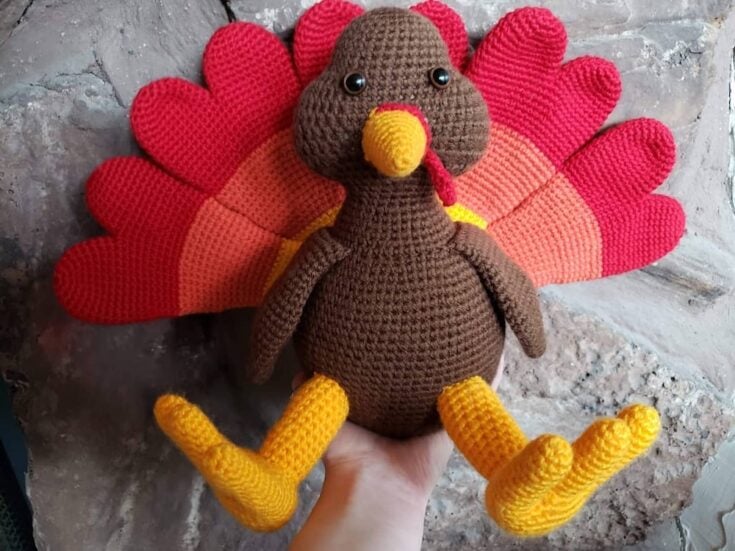
Gerald the Turkey by Crochet Wizzard
Gerald is a larger crochet turkey designed to make a statement as part of your Thanksgiving decor.
The finished turkey is approximately 11 inches tall and uses weighted pellets in the body to help him stand securely as a centerpiece.
- Yarn weight: Worsted weight yarn (4)
- Hook: 3.5 mm (US E)
- Skill level: Easy
Are These Crochet Turkey Patterns Beginner-Friendly?
Many of these free crochet turkey patterns use basic stitches, including single crochet, half double crochet, and double crochet.
Some amigurumi projects also use techniques like the magic ring, increases, decreases, and sewing pieces together.
You’ll find a mix of quick, easy projects and more detailed designs for different skill levels.
What Is The Best Yarn For Crochet Turkey Patterns?
The best yarn depends on the type of turkey you want to make.
Worsted weight yarn is one of the most versatile choices for turkey crochet patterns.
It’s easy to work with, widely available, and suitable for amigurumi, coasters, decorations, appliqués, and many other crochet projects.
Traditional turkey colors include: Brown yarn, red yarn, yellow yarn, orange yarn, cream, rust, dark brown, and gold.
Using several colors for the turkey feathers is a fun way to capture the warm shades of the fall season.
If you’re making a small amigurumi turkey, cotton or acrylic worsted weight yarn works well because it provides enough stitch definition to see the shape and facial features clearly.
Bulky yarn or bulky weight yarn can be used if you want a larger, softer turkey.
Plush yarn is another good choice for making a cuddly stuffed turkey.
For smaller decorations, appliqués, or napkin rings, you may only need a small amount of yarn in each color, making these patterns useful stash-busting projects.
Helpful resources
What Crochet Hook Should I Use For A Turkey?
Always start with the mm hook recommended in your chosen pattern.
The right crochet hook depends on your yarn weight, the finished project, and your personal tension.
For crochet turkey amigurumi, designers often recommend a hook slightly smaller than the size normally suggested on the yarn label.
This creates a dense fabric so the stuffing doesn’t show through the stitches.
For flat projects such as turkey coasters or appliqués, you may be able to use a slightly larger hook because the fabric doesn’t need to hold stuffing.
If the pattern provides a specific hook size, use that as your starting point and adjust only if necessary.
Helpful resources
What Stitches Are Used To Crochet A Turkey?
Most Thanksgiving crochet patterns use familiar crochet stitches.
You may see crochet abbreviations such as:
- sc – single crochet
- hdc – half double crochet
- dc – double crochet
- sl st – slip stitch
- ch – chain
- inv dec – invisible decrease
Amigurumi crochet patterns are often worked primarily in single crochet because it creates a dense fabric.
Flat turkey feathers, wings, and decorative pieces may use a combination of sc, hdc, and dc stitches to create curved shapes.
You may also be instructed to work into the front loop or back loop to add texture or help shape the finished turkey.
Always check whether the pattern uses US crochet terms or UK terminology before you begin.
Tips For Crocheting A Turkey
- Read the entire pattern first – Before starting, check the yarn weight, hook size, skill level, finished size, crochet abbreviations, and any special stitches. If video tutorials are included, they can be helpful for unfamiliar construction techniques.
- Use a stitch marker – Amigurumi is often worked in continuous rounds without joining with a slip stitch. Place a stitch marker in the first st of each round so you always know where the round begins. Move the marker up as you work.
- Keep your stitches tight – A dense fabric prevents stuffing from showing through the body. If your stitches are very loose, try going down a crochet hook size.
- Count your stitches – Check your stitch count at the end of each round. Missing the next st or accidentally working an extra stitch can change the shape of the turkey, particularly around the head and body.
- Stuff as you go – Don’t wait until every piece is complete before adding stuffing. If the opening becomes very small, it can be difficult to stuff the body evenly. Add stuffing gradually and shape the piece as you work.
- Leave long tails for sewing – When fastening off the wings, feathers, beak, wattle, and other small pieces, leave a long tail. You can use that yarn with a tapestry needle to attach the piece securely to the body.
- Pin the pieces before sewing – Before permanently attaching the wings, turkey feathers, eyes, beak, or wattle, pin everything into position. This gives you a chance to adjust the facial features and make sure both sides look balanced.
- Use different colors for the tail feathers – Turkey feathers are a great place to experiment with color. Try red, yellow, orange, brown, and rust for a traditional Thanksgiving color palette, or choose completely different colors for a more playful little turkey.
Turkey Crochet Patterns Aren’t Limited To Amigurumi
You can make:
- Crochet turkey coasters
- Turkey appliqués
- Amigurumi turkeys
- Turkey hats
- Thanksgiving potholders
- Turkey gnomes
- Napkin rings
- Garland decorations
- Table decorations
- Place-card holders
- Ornaments
- Plush toys
A tiny turkey can be added to a Thanksgiving place setting, while a larger finished turkey makes a fun centerpiece for the Thanksgiving table.
Turkey appliqués can also be added to bags, blankets, hats, or other fall crochet projects.
How Can You Use Crochet Turkeys For Thanksgiving Decor?
Crochet turkeys work particularly well as Thanksgiving decor because they can be made in so many different sizes.
A small turkey applique can decorate a napkin ring or place card, while crochet turkey coasters can be placed around the dinner table.
Larger amigurumi turkeys can be displayed alongside pumpkins, autumn leaves, candles, and other fall decorations.
You could even create a Thanksgiving centerpiece with a crochet turkey surrounded by crocheted pumpkin pie, pumpkins, or leaves.
Because the Thanksgiving holiday in the United States is celebrated on the fourth Thursday of November, these projects also work well throughout most of the fall season rather than for only one day.
Turkey Crochet Patterns FAQ
1. Are crochet turkey patterns good for beginners?
Yes.
There are plenty of free turkey crochet patterns suitable for beginners.
Look for an easy crochet pattern that uses basic stitches such as chains, single crochet, half double crochet, and slip stitch.
A simple turkey applique, coaster, or small amigurumi turkey can be a good first project.
Patterns involving several small pieces, complicated color changes, or detailed shaping may be better for an advanced beginner.
2. Are amigurumi turkeys difficult to crochet?
Not necessarily.
Many amigurumi turkey patterns are made almost entirely with single crochet stitches, increases, and decreases.
The most challenging part is often assembling the small pieces and positioning the turkey’s head, wings, feathers, beak, and wattle correctly.
If this is your first amigurumi project, choose a pattern with step-by-step instructions or video tutorials.
3. What is a magic ring in crochet?
A magic ring, sometimes called a magic circle, is a technique used to begin crochet projects worked in the round.
It allows you to pull the center tightly closed, which makes it particularly useful for amigurumi.
Many crochet turkey amigurumi patterns begin the head, body, wings, or feathers with a magic ring.
4. Can I crochet a turkey without a magic ring?
Yes.
If you’re uncomfortable making a magic ring, many patterns can be started by chaining two and working the required stitches into the 2nd ch from the hook.
Another option is to make a short chain and join it with a slip stitch to create a loop.
The exact alternative depends on the pattern.
5. What is the best stitch for crochet amigurumi?
Single crochet is the most commonly used stitch for amigurumi.
It creates a compact fabric with small gaps, which helps keep the stuffing inside the finished item.
Most amigurumi projects are worked with a slightly smaller hook than you might normally use for the chosen yarn.
6. Can I use safety eyes on a crochet turkey?
Yes, safety eyes are often used to create the facial features on crochet turkey amigurumi.
The pattern may recommend a particular size, such as 6 mm, 8 mm, or another size of safety eyes depending on the finished turkey.
However, safety eyes are not suitable for babies or very young children because small components can pose a choking hazard.
For items intended for young children, embroidered eyes are the safer choice.
7. How do you make turkey feathers in crochet?
There are several ways to crochet turkey feathers.
Some patterns make each feather separately using combinations of single crochet, hdc, and double crochet stitches.
Other patterns create a fan-shaped section containing several tail feathers.
You may also see scallops, loops, or layered pieces used to create a fuller tail.
Using different colors for each feather is a simple way to give the finished turkey a colorful autumn look.
8. Can I use leftover yarn for crochet turkey patterns?
Yes.
Many turkey patterns are excellent stash-busting projects because they require small amounts of several different colors.
Small pieces such as the beak, wattle, wings, feet, and tail feathers often need only a small amount of yarn.
This makes a little crochet turkey a useful project for using leftover brown, yellow, orange, and red yarn.
Check out more scrap yarn projects here – 45 Free Crochet Patterns For Scrap Yarn | Easy Projects
9. How do you attach crochet turkey pieces?
Leave a long tail when you fasten off each piece.
Thread the yarn tail through a tapestry needle and sew the piece securely to the body.
Before sewing, pin the pieces in position so you can check that the wings, feathers, eyes, beak, and wattle are evenly placed.
Weave the remaining yarn end securely through the body when you’re finished.
10. What can I make with a turkey applique?
A turkey applique is a quick project that can be added to many different finished items.
Try attaching one to: A tote bag, a hat, a blanket, a Thanksgiving potholder, a napkin ring, a table runner, a child’s sweater, and a gift bag.
Small appliqués can also be turned into ornaments, garlands, or Thanksgiving table decorations.
Check out more appliqués patterns – 27 Free Crochet Applique Patterns (Easy Ideas)
11. What are some quick turkey crochet projects?
If you don’t have time to make a full amigurumi turkey, choose a smaller pattern such as:
Turkey appliqués, crochet turkey coasters, napkin rings, small ornaments, turkey faces and mini amigurumi turkeys.
These projects use less yarn and can usually be completed much faster than a large stuffed design.
They’re also useful if you need several matching pieces for your Thanksgiving table.
12. What other crochet projects go well with turkey patterns?
Turkey projects pair naturally with other fall and Thanksgiving crochet patterns.
You could create a collection featuring pumpkins, autumn leaves, acorns, pumpkin pie, and other seasonal foods or decorations.
These smaller crochet projects can then be combined into a garland, table display, or full collection of Thanksgiving decor.
Want To Learn More?
- Crochet Lessons (For Beginners + Video Tutorials) – If you are new to the craft and need help with the basics, explore this collection of beginner-friendly crochet tutorials.
- Handy Little Me YouTube Channel – Watch step-by-step crochet and knitting video tutorials to help you learn new stitches and techniques.
- Handy Little Me Knitting + Crochet Community – Join our Facebook group to connect with other makers, ask questions, and share your projects.
- You can also find Handy Little Me on all social media platforms like Ravelry, Pinterest, Instagram, Twitter, Etsy, and TikTok for more patterns, tutorials, and crafting inspiration.
More Thanksgiving Projects To Try Out
- 45+ Thanksgiving Crafts For The Whole Family
- Crochet Pumpkin Pattern: Easy Single Crochet Ribbing
- Pumpkin Crochet Pattern (Free, Easy + Adorable)
- Free Printable Single Crochet Pumpkin Pattern for Beginners
- Easy Crochet Leaf Pattern (Free Printable)
- 55 Free Crochet Leaves (Patterns & Motifs)
- Crochet Pumpkin Coaster (Free Printable)
- 10 Thanksgiving Knits
- Door Wreath DIY {Perfect For Fall!}