
SSP Knitting: How To Slip Slip Purl
THIS ARTICLE CONTAINS AFFILIATE LINKS THAT SUPPORT HANDY LITTLE ME CONTENT AND FREE PATTERNS.Learn SSP knitting, also known as slip slip purl, with this easy step-by-step tutorial.
SSP is a purl-side decrease often used when shaping needs to happen on the wrong side of your work (purl side of the work).
If you have seen SSP in a knitting pattern and wondered what it means, this guide will walk you through the technique slowly and clearly.
You’ll learn what SSP means, how to work the decrease, when to use it, and how it compares to other common decreases like P2tog and SSK.

Save this article
Enter your email address and we'll send it to your inbox.
By entering your email, you agree to receive patterns, tutorials, and updates from Handy Little Me. Unsubscribe at any time.
Quick Answer: What Does SSP Mean In Knitting?
SSP means slip slip purl.
It is a knitting decrease worked on the purl side of your fabric.
To work SSP, you slip two stitches knitwise, return them to the left-hand needle, then purl them together through the back loop.
This turns two stitches into one stitch and decreases your stitch count by one.
SSP At A Glance
| Detail | Information |
|---|---|
| Abbreviation | SSP |
| Meaning | Slip slip purl |
| Type of stitch | Decrease |
| Stitch count | Decreases by 1 stitch |
| Worked over | 2 stitches |
| Commonly worked on | Wrong-side rows / purl rows |
| Knit-side equivalent | SSK |
| Often compared with | P2tog |
Before You Start
Before learning SSP, it helps if you already know how to:
- Knit the knit stitch
- Work the purl stitch
- Slip a stitch knitwise
- Bring the yarn to the front
- Recognize the wrong side of your knitting
- Count stitches in your pattern
SSP is a little more advanced than P2tog because you need to slip two stitches, move them back to the left-hand needle, and then purl them together through the back loops.
That sounds like a lot at first, but once you break it down, it becomes much easier.
What Is An SSP Decrease?
An SSP decrease is a purl-side decrease that turns two stitches into one stitch.
It is often considered the purl-side version of SSK.
When viewed from the knit side of the fabric, SSP creates a left-leaning decrease.
This makes it useful when you need a decrease on a wrong-side row that visually matches the direction of an SSK decrease on the right side.
SSP is less common than decreases like K2tog, SSK, or P2tog, but it is very useful when a pattern needs a specific directional decrease.
SSP Abbreviation
In knitting patterns, you may see this written as:
- SSP
- ssp
- Slip slip purl
- Slip, slip, purl
- Slip 1, slip 1, purl together
- Purl-side decrease
- Left-leaning purl decrease
These usually refer to the same technique.
Always check the pattern notes if the designer gives a specific method, especially in lace patterns where the direction of the decrease is important.
How To SSP In Knitting
To work an SSP decrease:
- Bring the yarn to the front of your work.
- Slip the first stitch knitwise from the left-hand needle to the right-hand needle.
- Slip the second stitch knitwise from the left-hand needle to the right needle.
- Slip both stitches back to the left-hand needle.
- Insert the right-hand needle through the back loops of both stitches.
- Purl the two stitches together through the back loops.
You have now worked one SSP decrease.
This creates one new purl stitch from two stitches.
Video Tutorial: How To SSP
Watch the video tutorial below to see how to work SSP step by step.
This will show you how to slip the stitches knitwise, return them to the left-hand needle, and purl them together through the back loops.
Step-By-Step SSP Instructions
Here is the SSP decrease broken down more slowly.
Step 1: Bring the yarn to the front
Because SSP is a purl-side decrease, your yarn should be at the front of your work.
Hold the yarn as you normally would when purling.
Step 2: Slip the first stitch knitwise
Insert the right-hand needle into the first stitch on the left-hand needle as if you were going to knit it.
Instead of knitting the stitch, slip it from the left-hand needle to the right-hand needle.
Step 3: Slip the second stitch knitwise
Slip the next stitch in the same way.
Insert the right-hand needle as if to knit, then move the stitch from the left-hand needle to the right-hand needle without working it.
Step 4: Return both stitches to the left-hand needle
Slip both stitches back onto the left-hand needle.
They will now be sitting in a changed position, ready to be purled together through the back loops.
Step 5: Purl the two stitches together through the back loops
Insert the right-hand needle through the back loops of both stitches.
Wrap the yarn as you would for a purl stitch and pull it through both stitches.
Slide both stitches off the left-hand needle.
You have now worked one SSP decrease.
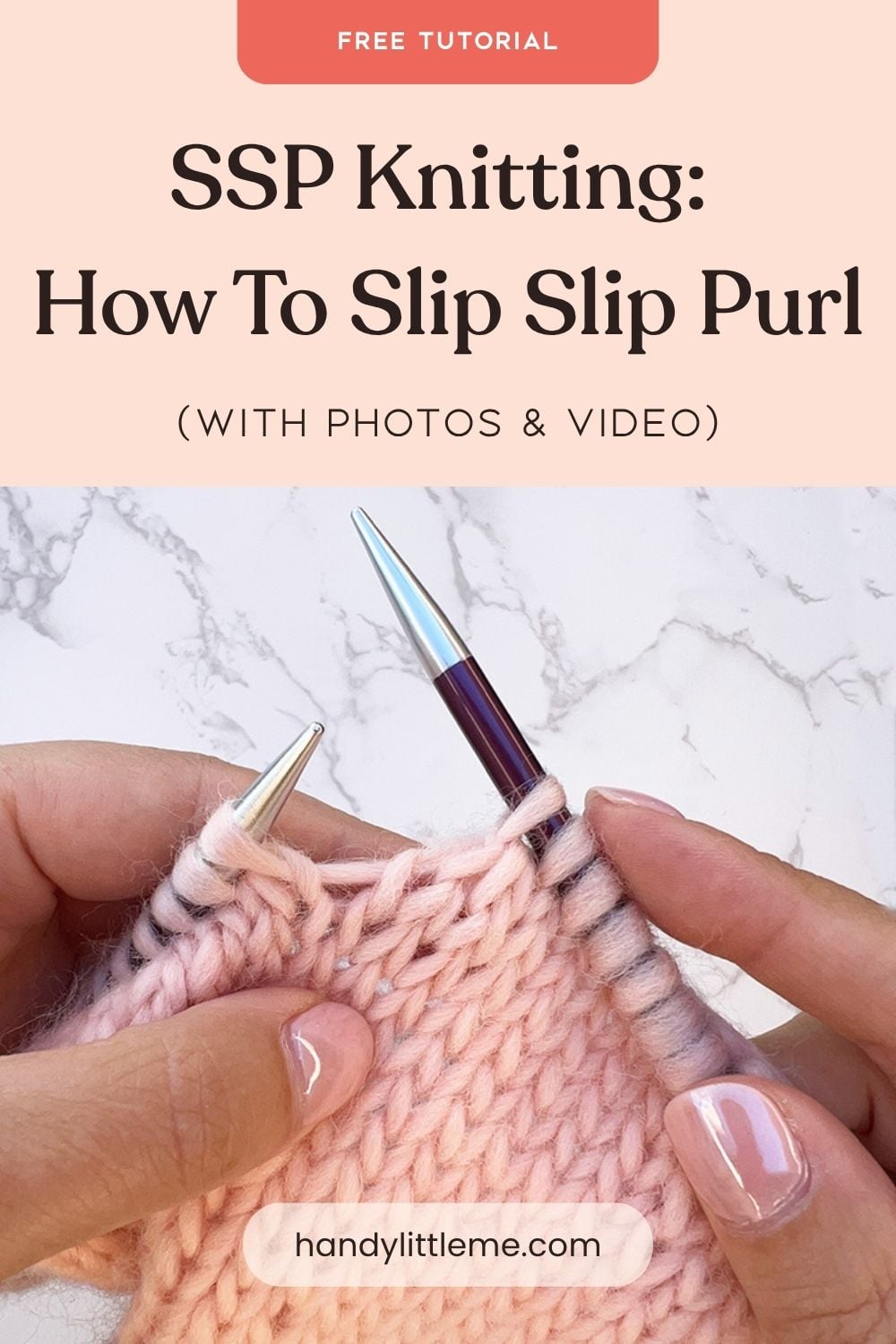
Easy Way To Remember SSP
A simple way to remember SSP is:
Slip one, slip one, purl them together.
Just like SSK means slip slip knit, SSP means slip slip purl.
The difference is that SSP is worked on the purl side of your knitting.
Is SSP A Decrease?
Yes, SSP is a decrease.
It turns two stitches into one stitch, reducing your stitch count by one.
SSP is used when a pattern needs a purl-side decrease that leans in a specific direction when viewed from the right side of the fabric.
Does SSP Lean Left Or Right?
When viewed from the knit side of the fabric, SSP creates a left-leaning decrease.
This is why it is often described as the purl-side equivalent of SSK.
It can be useful in lace patterns, mirrored shaping, and garment instructions where the direction of the decrease matters.
SSP Vs P2tog: What Is The Difference?
Both SSP and P2tog are purl-side decreases, but they are worked differently and lean in different directions when viewed from the knit side.
- P2tog means purl two together.
- SSP means slip slip purl.
- P2tog is usually easier and more common.
SSP is used when the pattern needs a specific left-leaning decrease from the right side of the fabric.
| Decrease | Meaning | Worked On | Usually Used For |
|---|---|---|---|
| SSP | Slip slip purl | Purl side / wrong side | Left-leaning decrease viewed from the right side |
| P2tog | Purl two together | Purl side / wrong side | Simple purl-side decrease |
In simple projects, your pattern may use P2tog for purl-side decreases.
In lace, shaping, or more detailed garment patterns, the designer may use SSP when the direction of the decrease matters.
SSP Vs SSK: What Is The Difference?
- SSK means slip slip knit.
- SSP means slip slip purl.
They are similar because both involve slipping two stitches before working them together.
The main difference is where they are worked:
| Decrease | Meaning | Usually Worked On |
|---|---|---|
| SSK | Slip slip knit | Knit side / right side |
| SSP | Slip slip purl | Purl side / wrong side |
SSP is often described as the purl-side equivalent of SSK.
When viewed from the right side of the fabric, both can create a left-leaning decrease.
SSP Vs K2tog
- SSP and K2tog are different decreases.
- K2tog means knit two together and is worked on the knit side of the fabric.
- SSP means slip slip purl and is worked on the purl side of the fabric.
K2tog is usually a right-leaning decrease when viewed from the right side, while SSP is used to create a left-leaning decrease from the wrong side.
When Should You Use SSP?
Use SSP when your knitting pattern tells you to work a slip slip purl decrease.
You may see SSP in:
- Lace charts
- Wrong-side shaping rows
- Garment patterns
- Sock patterns
- Shawls
- Neckline shaping
- Armhole shaping
- Decorative stitch patterns
It is especially useful when the direction of the decrease matters on the right side of the fabric, even though you are working from the wrong side.
Is SSP Hard For Beginners?
SSP can feel a little awkward at first because you have to slip two stitches, move them back to the left-hand needle, and then purl them together through the back loops.
The trickiest part is purling through the back loops of two stitches, which can feel tight.
Try to keep your tension relaxed before working the decrease.
If you already know how to purl and slip stitches, you can learn SSP with a little practice.
Common SSP Mistakes
Slipping the stitches purlwise
For a standard SSP, the stitches are usually slipped knitwise.
This changes the orientation of the stitches before they are worked together.
Forgetting to move the stitches back
After slipping the two stitches, they need to be moved back to the left-hand needle before you purl them together through the back loops.
Purling through the front loops
SSP is worked by purling the stitches together through the back loops.
This helps create the correct direction of the decrease.
Pulling too tightly
SSP can feel tight, especially through the back loops.
Keep your stitches relaxed and take your time.
Confusing SSP with P2tog
P2tog is simpler and more common, but it is not the same as SSP.
If your pattern asks for SSP, the designer likely wants the decrease to lean in a specific direction.
SSP Practice Swatch
If you are new to SSP, try practicing on a small swatch.
Cast on 20 stitches.
- Row 1: Knit all stitches.
- Row 2: Purl 2, SSP, purl to end of row.
- Row 3: Knit all stitches.
- Row 4: Purl 2, SSP, purl to end of row.
Repeat Rows 3 and 4 a few times.
This will help you get used to slipping the stitches and purling them together through the back loops.
For a comparison swatch, you can also try:
- Row 1: Knit all stitches.
- Row 2: Purl 2, SSP, purl to last 4 stitches, P2tog, purl 2.
- Row 3: Knit all stitches.
Repeat Rows 2 and 3 to see how SSP and P2tog look when worked on the purl side.
Your stitch count will decrease as you repeat these rows, so this swatch is just for practicing the movement of the SSP decrease.
SSP Knitting FAQs
What does SSP mean in knitting?
SSP means slip slip purl.
It is a purl-side decrease that turns two stitches into one stitch.
How do you SSP in knitting?
To SSP, slip one stitch knitwise, slip the next stitch knitwise, return both stitches to the left-hand needle, then purl them together through the back loops.
Is SSP a decrease?
Yes, SSP is a decrease.
It decreases two stitches into one stitch.
Is SSP the same as P2tog?
No, SSP and P2tog are different purl-side decreases.
P2tog means purl two together, while SSP means slip slip purl.
Is SSP the same as SSK?
No, SSP and SSK are not exactly the same, but they are related.
SSK is worked on the knit side, while SSP is worked on the purl side.
SSP is often considered the purl-side equivalent of SSK.
Why is SSP difficult?
SSP can feel tricky because you have to purl two stitches together through the back loops, which can be tight.
Relaxing your tension can make it much easier.
When do you use SSP?
Use SSP when your pattern asks for a purl-side decrease that creates a specific lean on the right side of the fabric.
Can beginners learn SSP?
Yes, beginners can learn SSP, especially if they already know how to purl and slip stitches.
It may feel awkward at first, but it becomes easier with practice.
More Knitting Increase And Decrease Tutorials
If you found this SSP knitting tutorial helpful, you may also like these knitting guides:
- How To Increase Stitches In Knitting
- KFB Knitting: How To Knit Front And Back
- M1L and M1R Knitting Increases
- How To Yarn Over In Knitting
- How To Knit Lifted Increases: RLI and LLI
- How To Decrease Knitting
- How To Knit 2 Together (K2tog)
- SSK Knitting Tutorial: How To Slip Slip Knit
- P2tog Knitting: How To Purl Two Together
- PSSO Knitting: How To Pass Slipped Stitch Over
- How To Knit CDD: Centered Double Decrease Tutorial
- Knitting Abbreviations
- How To Read Knitting Patterns
The SSP knitting decrease is a useful technique to learn, especially if you enjoy knitting lace, garments, socks, shawls, and shaped projects.
Although it is less common than P2tog, SSP is important when the direction of the decrease matters on the right side of the fabric.
Once you understand the steps — slip, slip, purl — the technique becomes much easier to remember.
Watch the video tutorial above, practice slowly on a small swatch, and soon SSP will feel much less intimidating.
Happy knitting!