
How To Block & Shape Knitted And Crochet Ornaments
THIS ARTICLE CONTAINS AFFILIATE LINKS THAT SUPPORT HANDY LITTLE ME CONTENT AND FREE PATTERNS.Blocking ornaments is one of those small finishing steps that can completely transform your project.
A slightly curly snowflake, a floppy star point, or a mini sweater that won’t sit flat can all look crisp, balanced, and beautifully shaped after a gentle block.
But when you’re working with acrylic yarn, cotton, or blends — or when you’re worried about felting wool — the usual blocking advice can feel risky.
This guide focuses on the safest, non-felting ways to block and shape ornaments, especially if you’re blocking acrylic yarn, cotton, or blends and want great results without damaging your work.
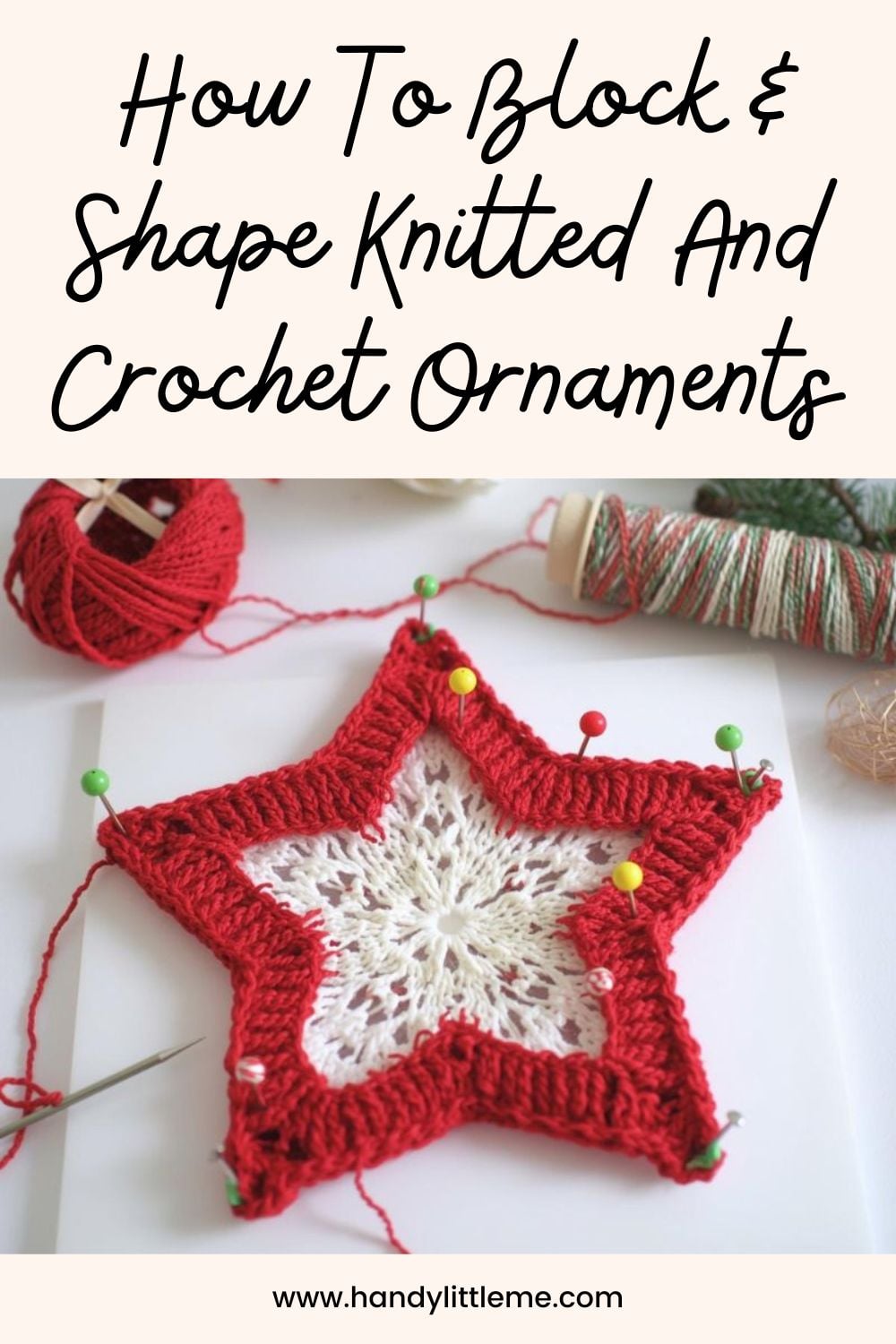
Why Block Ornaments At All?
Even tiny projects benefit from blocking.
When you relax the stitches with a little moisture or steam, the fabric settles into a more even, flatter, and more defined shape.
Stitches that once looked uneven smooth out, lace opens beautifully, and points and edges hold the shape you intended.
Think of it as helping the yarn “remember” the right form — not stretching it into something new, but removing any tension from the knitting or crochet process.
Whether your ornament is made from wool, cotton, acrylic, or a blend, blocking is a gentle way to show off the work you’ve already done.
Blocking Without Felting: Understanding Your Fibers
The first step in safe blocking is knowing how your yarn behaves.
Wool and other animal fibers relax deeply when soaked, but they can also felt if exposed to heat, friction, or sudden temperature changes.
They’re wonderfully responsive to blocking — as long as you treat them kindly. Cool water, stillness, and gentle handling are essential.
Acrylic and synthetic fibers, on the other hand, don’t feel, but they react dramatically to heat. Too much steam or an iron that touches the surface can “kill” the acrylic — flattening stitches and removing elasticity permanently.
The key is to use just enough moisture and steam to coax the fabric into shape without overheating it.
Blocking ornaments is all about working carefully within these boundaries so the yarn cooperates rather than rebels. So the finished piece will look exactly as you intended.
More blocking tutorials
Learn how to block more projects, like garments, scarves, and blanket projects.

How To Block Ornaments
The safest way: gentle spray blocking
For most ornaments — especially those made with acrylic yarn — the safest and easiest approach is simply to mist the piece with cool water and shape it as it dries.
This is my favorite method for blocking acrylic yarn ornaments because it avoids harsh heat while still improving the shape.
You don’t need a full soak, and you avoid the risks of heat.
Place your ornament on a flat surface (a towel over a blocking mat works perfectly), shape it with your hands, and lightly mist it until the fabric feels evenly damp.
As the fibers absorb a little moisture, the stitches relax, allowing you to straighten points, smooth edges, and refine details.
Keeping the ornament pinned in place while it dries helps it “set” into the final shape without introducing stress or stretching.
Once dry, the piece will hold its form far better, and acrylic in particular benefits from this gentle method.
Acrylic-safe steam shaping
Sometimes, spray alone isn’t quite enough, especially if the fabric is stubborn or textured.
In those cases, a very cautious hover-steam is the next step — but never let the iron touch the fabric.
Hold a steam iron a few inches above the ornament, letting the steam fall onto the fabric without pressure.
The key is distance: the goal is warmth and moisture, not direct heat.
You should see the stitches relax almost immediately.
This is your moment to adjust the shape with your fingers, smooth the edges, or sharpen the points.
Stop steaming early rather than late; it’s always safer to add a little more than to risk overdoing it.
With acrylic, remember: you’re shaping, not melting.
If the fabric suddenly looks shiny, limp, or rigid, the iron was too close. Keeping the process light and brief prevents damage.
Safe wet blocking (when you want definition without felting)
Wet blocking can be beautiful for wool and cotton ornaments, especially lace snowflakes and textured designs — but only if done carefully.
Use cool water and let the ornament soak without agitation.
Lifting it out gently, supporting the whole piece, avoids stretching.
Press water out using a towel rather than wringing.
From there, shaping happens on a flat, breathable surface with a few pins to encourage points and curves to stay put.
For wool, this method can bring out stunning stitch definition without any of the risks of felting.
Just keep water cool, movement minimal, and drying slow.
Shaping around forms (for 3D ornaments)
Some ornaments — especially balls, stuffed shapes, or designs meant to be perfectly round or symmetrical — respond best to shaping rather than traditional blocking.
A small amount of moisture (a light mist, or even the humidity from your hands while you smooth the stitches) can make the fabric pliable enough to stretch over a form.
Plastic baubles, foam balls, or small balloons work beautifully for round shapes.
For stars and hearts, a cut-out cardboard template wrapped in plastic is enough to guide the edges.
Because the fabric dries in place over the form, you don’t need intense moisture or heat.
It’s a very safe method for acrylic and blends, especially when you want crisp, repeatable shapes.
The core principle: slow, cool, gentle
When learning to block ornaments — particularly acrylic ones — it helps to remember three simple rules:
- Cool water.
Heat is risky for both acrylic (which can melt) and wool (which can felt). Cool or lukewarm water is safe for nearly every fiber.
- Gentle shaping.
Instead of pulling or stretching, guide the piece into shape. Ornaments are small; they don’t need force, just encouragement.
- No direct heat.
A steam iron must never touch acrylic fabric. Hovering is safe; contact is not. And for wool, sudden heat can lead to felting.
Follow these, and you’ll be able to block ornaments confidently, no matter what yarn you’re using.
Supplies You’ll Need
Before you start blocking, it helps to have a few basic tools on hand.
You don’t need anything fancy — most of these items are things knitters and crocheters already have at home.
A flat surface (like a towel on a table or a foam blocking mat) and a few pins are often enough for small ornaments, especially when using gentle, acrylic-safe methods.
Here’s what you’ll want nearby:
- A blocking board or a flat surface (a yoga mat, foam tiles, or a padded board all work).
- Rust-proof pins or T-pins for holding edges and shaping points.
- A clean towel for gently removing excess moisture.
- A spray bottle filled with cool water for misting ornaments.
- A steam iron or garment steamer (used carefully, hovering above the fabric).
- Optional forms like foam balls, plastic baubles, or cardboard templates for shaping 3D pieces
These simple tools make it easy to shape your ornaments safely — without felting natural fibers or damaging acrylic yarn.
Blocking FAQs: Acrylic Yarn, Wool & Shaping Ornaments
1. Should you block acrylic yarn?
You don’t have to, but it often makes small ornaments look neater and more defined.
Blocking can help points stay crisp, edges lie flat, and stitches look more even.
Acrylic won’t “remember” the new shape as strongly as wool, but gentle blocking still improves the finish.
2. What blocking method works best for acrylic yarn?
The safest and most effective approach when you’re blocking acrylic yarn is spray blocking: mist the piece with cool water, pin it into shape, and let it dry.
If the fabric needs a little extra smoothing, you can use very light hover-steam, keeping the iron several inches away so the heat doesn’t touch the yarn.
3. Can acrylic yarn be steamed safely?
Yes — as long as the steam iron never touches the fabric.
Hold the iron above the ornament and let the steam drift over it.
A little steam relaxes the stitches; too much heat can “kill” the acrylic, leaving the fabric limp or shiny.
Start slowly and stop early.
4. Will acrylic yarn melt if it gets too hot?
Acrylic is a plastic-based fiber, so high heat can soften, shrink, or melt it.
Never press an iron onto acrylic yarn, and avoid hot steam blasts.
Cool or lukewarm water, gentle misting, and distant steam are the safest options.
5. Can you block or dry acrylic yarn with a hair dryer?
You can use a cool-air setting to speed up drying after spray blocking.
Avoid warm or hot air — many hair dryers run hotter than steam irons and can warp or melt acrylic stitches.
Keep the dryer moving and at a distance.
6. Should acrylic projects be wet blocked?
Wet blocking doesn’t change acrylic dramatically, but it can help smooth uneven stitches if you use cool water and handle the ornament gently.
Don’t expect it to reshape the fabric as effectively as spray or steam blocking.
7. What is dry blocking, and when do you use it?
Dry blocking means shaping the piece with little to no water.
For ornaments, this often means stretching the fabric over forms (like foam balls or cardboard templates) and letting it dry.
It’s an excellent choice for 3D shapes and for acrylic pieces that don’t need deep relaxation.
8. How long does blocking take to dry?
Most ornaments dry within a few hours to overnight, depending on humidity and how much water you used.
Spray blocking dries the fastest; wet blocking takes the longest.
Using a fan or a cool hair dryer can shorten the drying time safely.
9. Can blocking make crochet less stiff?
Yes — especially cotton or wool.
Blocking relaxes the stitches and evens out the fabric.
Acrylic may soften slightly with misting or light steam, but avoid intense heat, which can permanently change the texture.
10. Does blocking soften acrylic yarn?
It may feel a little smoother after blocking, but don’t expect a big transformation.
Light steam can relax the stitches slightly and improve drape, but only when used carefully.
Heavy steam will “kill” the fibers and permanently flatten the texture, which you don’t want for ornaments.
11. How do you steam block acrylic yarn without a steamer?
Use a regular steam iron held a few inches above the surface so the steam floats over the fabric.
Never let the iron touch the yarn.
This method works well for shaping points, smoothing curls, and refining stitch definition without special equipment.
12. What is the washer-and-dryer blocking method?
This shortcut involves putting a knit item through a gentle wash to relax the stitches and using the dryer (if the yarn label allows) to help set the shape.
It’s suited for large, sturdy projects like blankets or sweaters — not ornaments. Small, delicate pieces can stretch or distort from the motion of the machine.
Hand-blocking is far safer for decorative work.
The Magic of Blocking Small Projects
The nicest thing about blocking ornaments is that you can often see the transformation immediately.
A lace snowflake becomes crisp.
A knitted star finds its points.
A mini sweater’s ribbing straightens out. Even acrylic pieces — often thought to be “unblockable” — respond beautifully when treated with patience and restraint.
Blocking isn’t about changing your project. It’s about revealing it.
The stitches you made are already doing the work; blocking is simply the moment where everything settles into harmony.
Knitted and Crochet Ornament Patterns
- Crochet Christmas Bauble Cover (Free Printable Pattern)
- 50 Free Crochet Christmas Ornament Patterns
- Knitted Christmas Bauble Cover (Free Printable)
- Hedwig Ornament | Harry Potter DIY
- Knitted Christmas Tree Ornament (Free + Easy Pattern)
- Free Crochet Christmas Ornament Pattern – Goodie Bag
- Tartan Christmas Decorations (Plaid Knitting Pattern)
- 17 Free Crochet Angel Patterns To Make For Christmas
- Crochet Flat Christmas Tree Pattern (Free Appliqúe How To)