
How To Knit An Easy Lace Stitch Pattern (Tutorial)
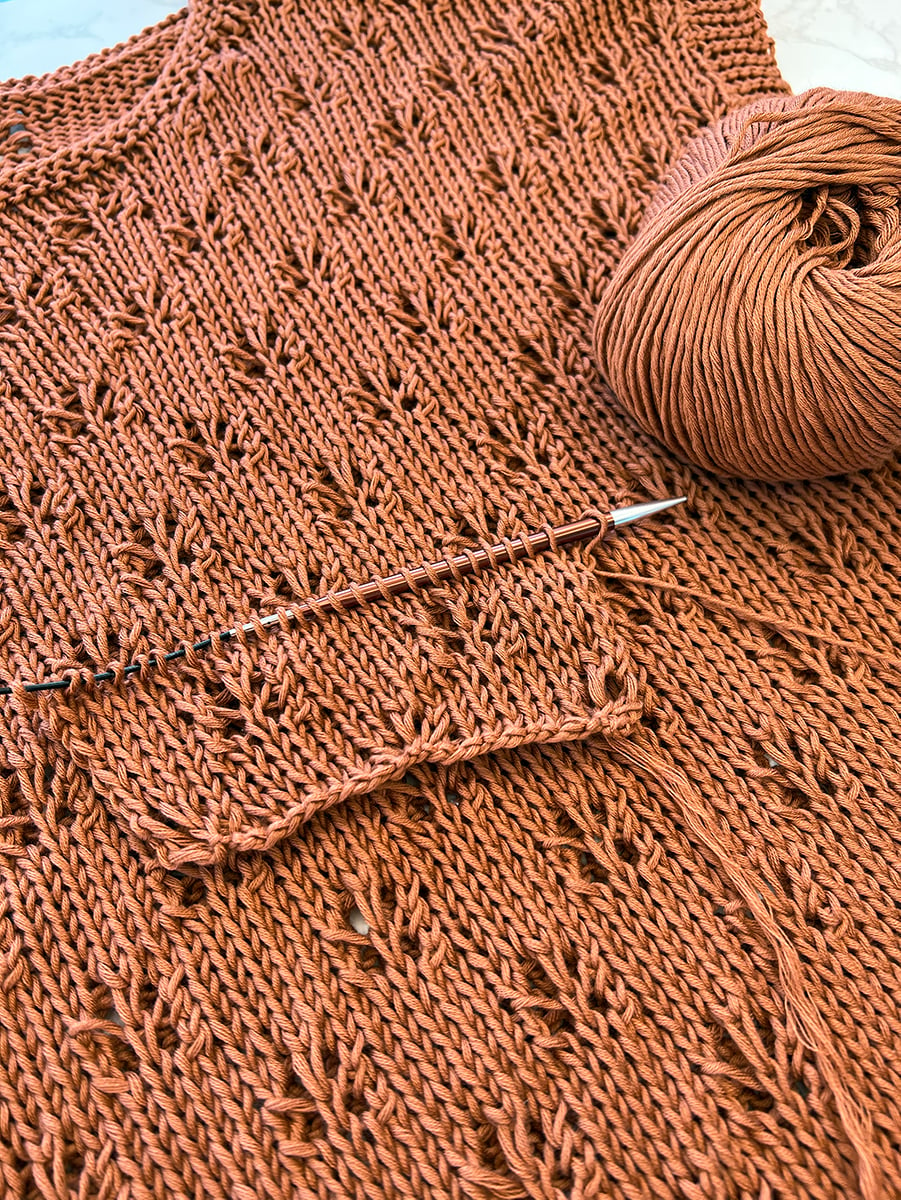
THIS ARTICLE CONTAINS AFFILIATE LINKS THAT SUPPORT HANDY LITTLE ME CONTENT AND FREE PATTERNS.In this tutorial, you will learn how to knit an easy lace stitch pattern that creates a soft, airy fabric.
This stitch uses a simple combination of yarn overs and decreases to form an open, textured design.
The result is a lightweight fabric that is perfect for garments, accessories, and summer knitting projects.
Once you get into the rhythm, this stitch is easy to follow and relaxing to knit.
Save this article
Enter your email address and we'll send it to your inbox.
By entering your email, you agree to receive patterns, tutorials, and updates from Handy Little Me. Unsubscribe at any time.
Before You Get Started
This lace stitch pattern is created using yarn overs and decreases, which work together to form the open spaces in the fabric.
The stitch pattern is worked in a repeat, making it easy to memorize after a few rows.
This tutorial is suitable for advanced beginners and intermediate knitters who are comfortable with:
- knit stitches
- purl stitches
- yarn overs
- basic decreases (k2tog and ssk)
If you are new to lace knitting, it’s a good idea to knit a small practice swatch first before using the stitch in a project.

Materials
To make a practice swatch, you will need:
- Any yarn weight
- Knitting needles suitable for your yarn
- Scissors
- Tapestry needle (optional)
Because this is a stitch tutorial, you can use any yarn and needle size to practice.
Abbreviations
- K – Knit
- P – Purl
- YO – Yarn over
- K2tog – Knit two stitches together
- SSK – Slip, slip, knit
- Rep – Repeat
- RS – Right side
- WS – Wrong side
- St(s) – Stitch(es)
- WYIF – With yarn in front
- YO – Yarn over
Chart
- Multiple of 10 sts plus 5.
- Repeat rows 1-12.

Pattern Instructions
(This stitch pattern is worked in multiples of 10 sts + 5)
Cast on 15 sts for a small sample or 25 for a larger sample.
- Rows 1 and 3 (RS): *K2tog, YO, K1, YO, SSK, K5; rep from * to last 5 sts. K2tog, YO, K1, YO, SSK.
- Rows 2 and 4 (WS): P2, WYIF sl 1, P2, *P7, WYIF, sl 1, P2; rep from * to end.
- Row 5: Knit
- Row 6: Purl
- Rows 7 and 9: *K5, K2tog, YO, K1, YO, SSK; rep from * to last 5 sts, K5.
- Rows 8 and 10: P5, *P2, WYIF sl 1, P7; rep from * to end.
- Row 11: Knit
- Row 12: Purl
Continue repeating rows 1-12 until your piece reaches your desired size.
Finishing and Blocking
You may wish to block your sample; you can do that as follows:
- Ensure all ends are woven using a tapestry needle or method of choice.
- Gently block by filling a sink or water basin with lukewarm water, and add a small amount of rinse-less wool wash.
- Place the item in the water and gently massage out any air bubbles.
- Drain water, gently squeezing out any excess from the item, then roll in a towel and stomp on the towel roll to remove any remaining water.
- Lay the item out on a towel to approx. finished measurements and allowed to dry completely.
- Blocking Tutorial – Blocking Knits – How To Block Knitting Guide
Video Tutorial
If you prefer to learn visually, you can watch the step-by-step tutorial below.
This will guide you through how the yarn overs and decreases create the lace design.
Pattern Using This Stitch
If you would like to use this stitch in a project, try the Lace Tee Knitting Pattern (Erato | Muses Collection).
This lightweight top features this lace stitch as a central panel, creating a soft and airy texture.
Lace Tee Knitting Pattern (Erato | Muses Collection)

FAQ
Is this lace stitch beginner-friendly?
This stitch is suitable for advanced beginners who are comfortable with yarn overs and basic decreases.
Why is my stitch count changing?
Each yarn over (increase) should be balanced by a decrease.
If your stitch count changes, check that you are working each YO, K2tog, and SSK correctly.
What can I make with this lace stitch?
This stitch works well for:
- tops and garments
- shawls and wraps
- scarves
- lightweight accessories
Do I need to block lace knitting?
Yes. Blocking is recommended because it helps open up the lace pattern and shows the stitch definition clearly.
Can I use this stitch with any yarn?
Yes, but lighter yarns with good drape will give the best results for lace patterns.
Share Your Make
I love seeing your finished projects on social media.
If you enjoyed making the dandelion fluff lace knitting pattern, I’d love to see your sample on Instagram, tag me @handylittleme.
If you are on Facebook, check out the Handy Little Me Facebook Group and share a photo.
You can also check out my Facebook page here.
I’d love to see your work.
Happy Knitting!
More Free Knitting Patterns
Check out more knitting patterns and the stitch pattern tutorials you need to try out!
- Diamond Leaf Tank Top Knitting Pattern (Euterpe | Muses Collection)
- Ripple Stitch Tee Knitting Pattern (Calliope | Muses Collection)
- How To Knit The Ripple Stitch (Tutorial)
- Slip Stitch Rib Bag Knitting Pattern (Muses Collection)
- How To Knit Slip Stitch Rib (Tutorial)
- The Polyhymnia Cardigan Knitting Pattern
- Clio Tee Knitting Pattern With A Feather And Fan Panel
- Thalia Garter Stitch Tank Top Knitting Pattern
- How To Knit The Feather And Fan Stitch (Tutorial)
- Feather and Fan Wrap Knitting Pattern (Melpomene | Muses Collection)
- How To Knit The Mesh Stitch (Tutorial)
- Lace Mesh Top Knitting Pattern (Urania | Muses Collection)
- How To Knit A Shawl For Beginners (Step-By-Step Tutorial)
- Japanese Knot Bag Knitting Pattern
- 12 Summer Knits (The Muses Collection)