
10 Free Knitted Scrunchies (Quick & Easy Patterns)
THIS ARTICLE CONTAINS AFFILIATE LINKS THAT SUPPORT HANDY LITTLE ME CONTENT AND FREE PATTERNS.In this blog post, you will see 10 free knitted scrunchies (quick and easy patterns).
Knitted scrunchies are having a major comeback—and it’s easy to see why.
These little accessories aren’t just fun and fashionable; they’re also a sustainable way to use up leftover yarn from other projects.
Perfect for stash-busting, scrunchies let you transform small amounts of yarn into something stylish and practical.
One of the best things about scrunchies is how quick they are to make.
You can knit one in an evening, customize it with different stitches or yarn types, and create a handmade accessory that feels truly unique.
They also make wonderful last-minute gifts—everyone loves a soft, cozy scrunchie.
Grab your yarn and needles—it’s time to get knitting!
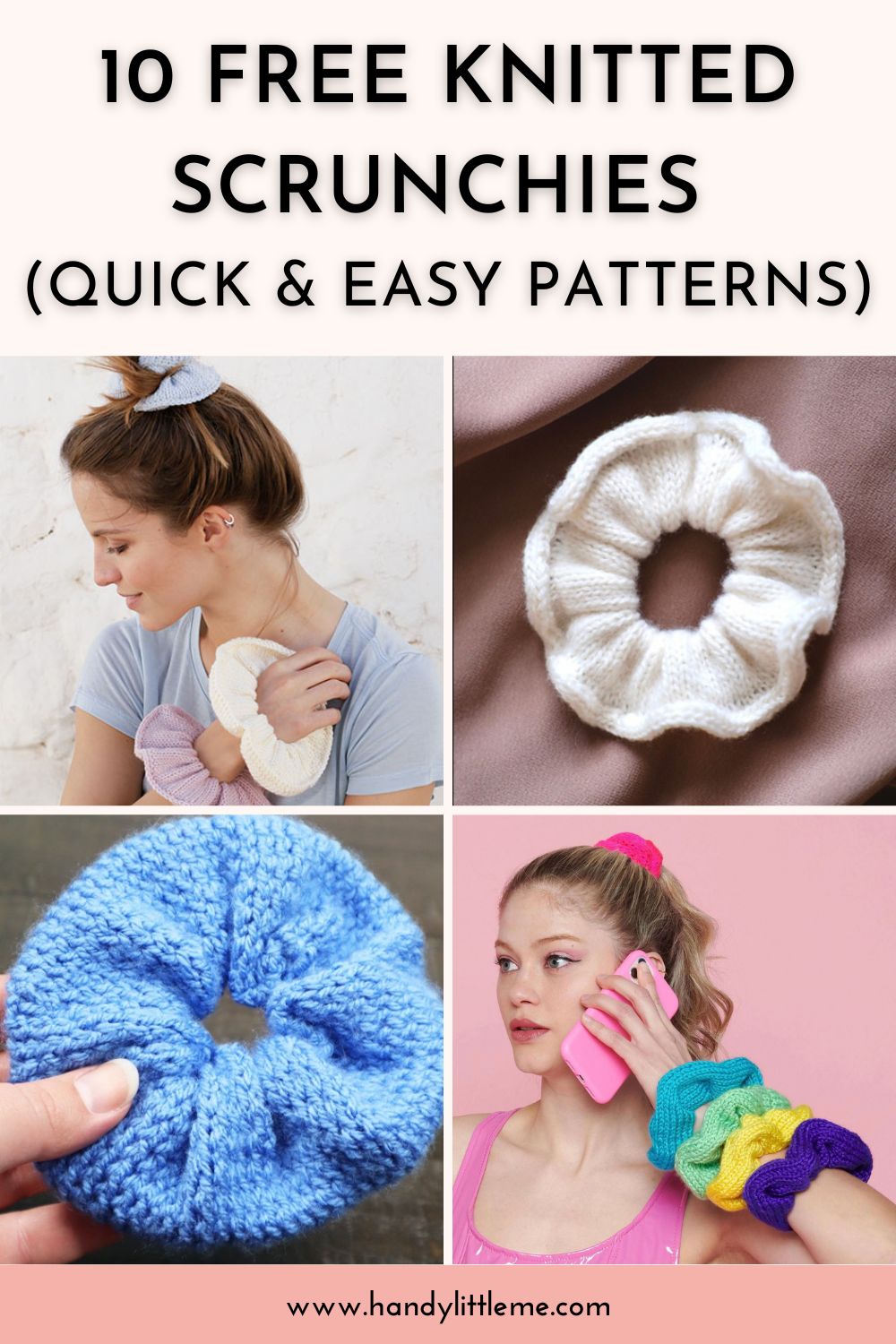
Save this article
Enter your email address and we'll send it to your inbox.
By entering your email, you agree to receive patterns, tutorials, and updates from Handy Little Me. Unsubscribe at any time.
Knitted Scrunchies: 10 Free, Quick & Easy
Stash-busting knitted scrunchies you can finish tonight—10 free patterns with tips, yarn ideas, and sizing.
Happy Making!
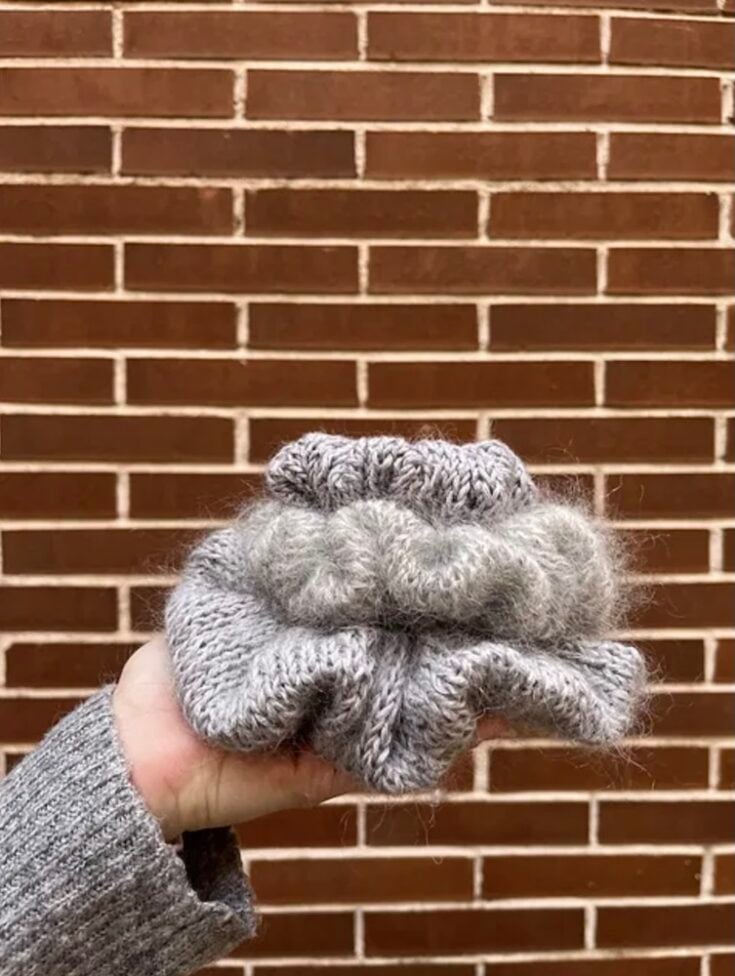
Scrunchie Mimi by Aresta
Make beautiful hair accessories with this free scrunchie pattern.
This is a quick project you can make in an afternoon.
You will need worsted weight yarn and 4.5 mm knitting needles.
You can grab the free PDF on Ravelry.
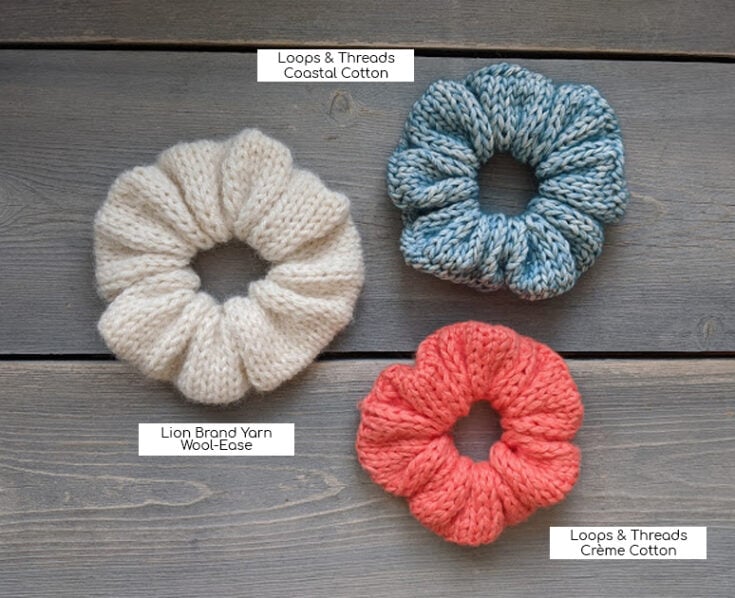
Free Knit Scrunchies Pattern by Savla Bot
In this blog post, you will see three different scrunchie knitting patterns.
You will need light worsted or worsted weight yarns and 4.5 mm knitting needles.
These scrunchies are knit with basic stitches, like the garter stitch and the stocking stitch (one scrunchie uses the right side of the stockinette stitch and the other one the wrong side).
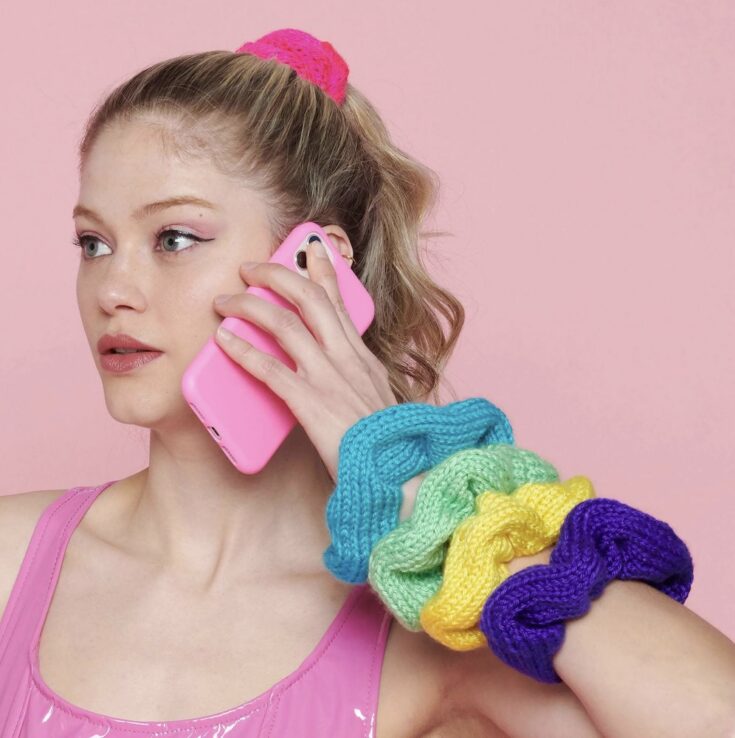
Free Caron Color Burst Knit Scrunchie Pattern by Yarnspirations
Knit a cute scrunchie with this free pattern.
To make this useful item, you will need medium-weight yarn and 5 mm knitting needles.
Grab the free pattern on Yarnspirations.
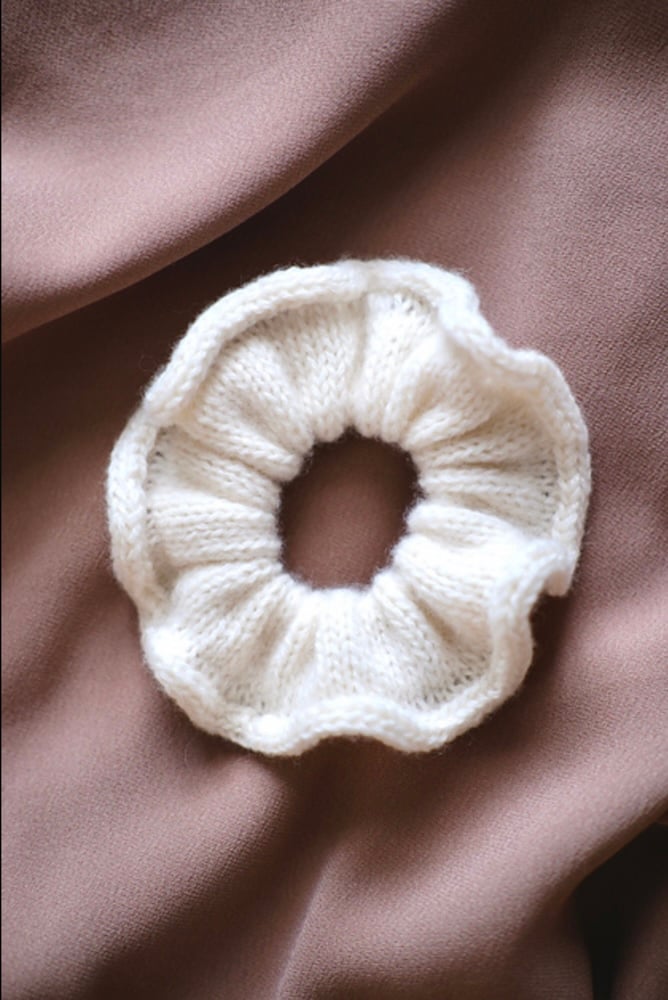
Cashmere Twist Scrunchie by Auguste Knit
This simple pattern will teach you how to knit a scrunchie.
You will need 4 mm circular needles and DK weight yarn.
This is a small project you can make with 10 g of cashmere yarn.
If you have any in your stash of yarn, it's perfect for hair accessories.
Grab the free PDF on Ravelry.
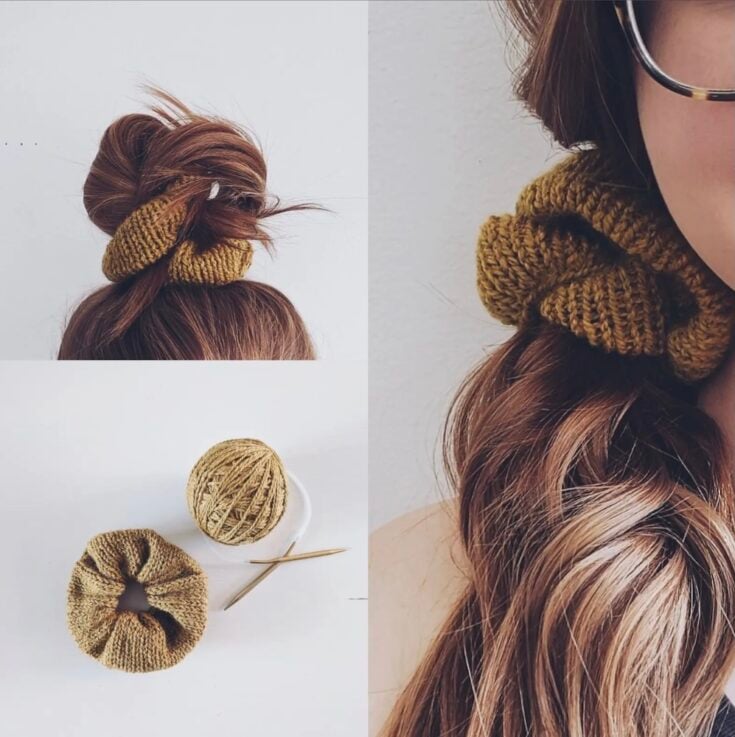
Knit Scrunchie by Spruce Hills Knits
In this blog post, you will see how to knit a scrunchie.
This is the perfect first project for beginner knitters, as you just knit every row, and there is a step-by-step photo tutorial on how to make up your scrunchie.
You will need DK-weight yarn and 5 mm circular or double-pointed needles.
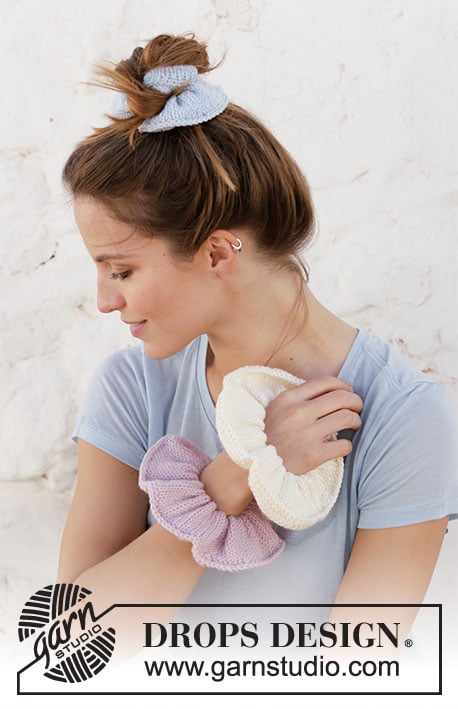
Softy Scrunchie by DROPS Design
This pattern will show you how to knit soft scrunchies.
You will need DK-weight yarn and 4 mm knitting needles.
This is the perfect pattern for a new knitter.
Additionally, the website offers pattern instructions in multiple languages.
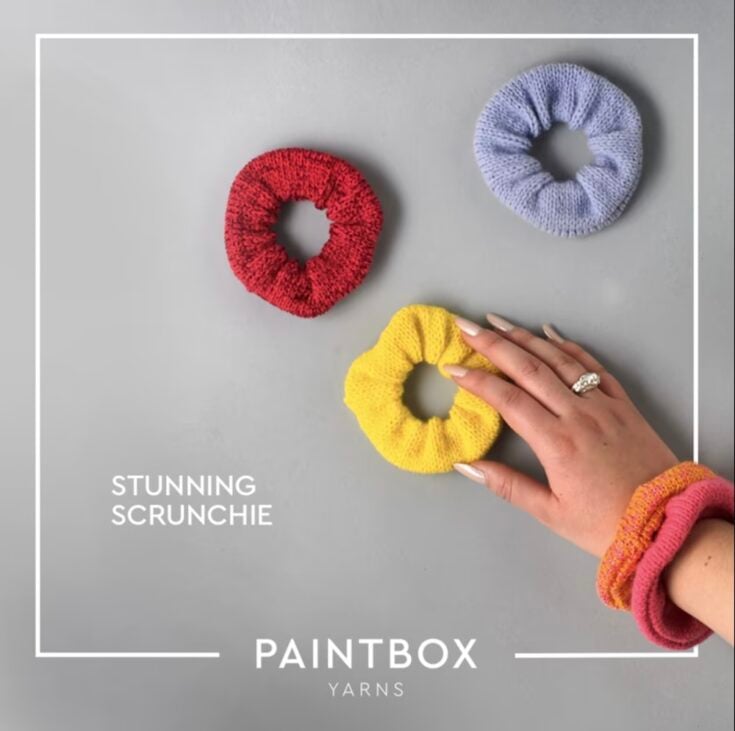
Stunning Scrunchie by Paintbox Yarns
Make stylish scrunchies with this free pattern.
You will need 3.5 mm straight needles and DK weight yarn.
This is an excellent project for beginning knitters.
Grab the free PDF on Love Crafts.
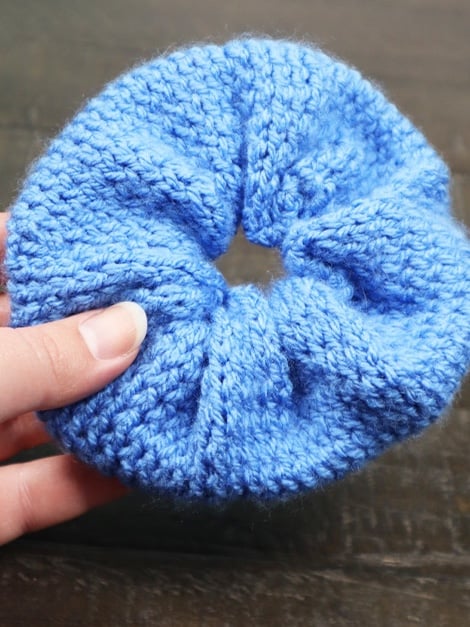
Free Knitted Hair Scrunchie Pattern by Hands That Bless
In this blog post, you will find a free knit pattern for a scrunchie.
The pattern includes instructions for a garter stitch scrunchie (use the knit stitch on every row) and a stocking stitch scrunchie (which combines knit and purl stitches).
This is a great choice for knitters of all skill levels.
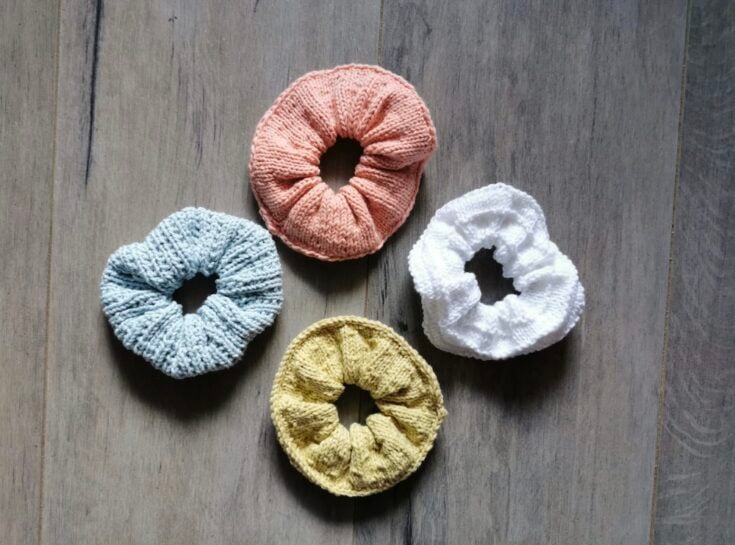
The Perfect Scrunchie Recipe! by Binge Tricot
This pattern will show you how to make beautiful hair accessories.
You will need DK weight yarn and 3.5 mm knitting needles.
Make a set in the yarn colors of your choosing.
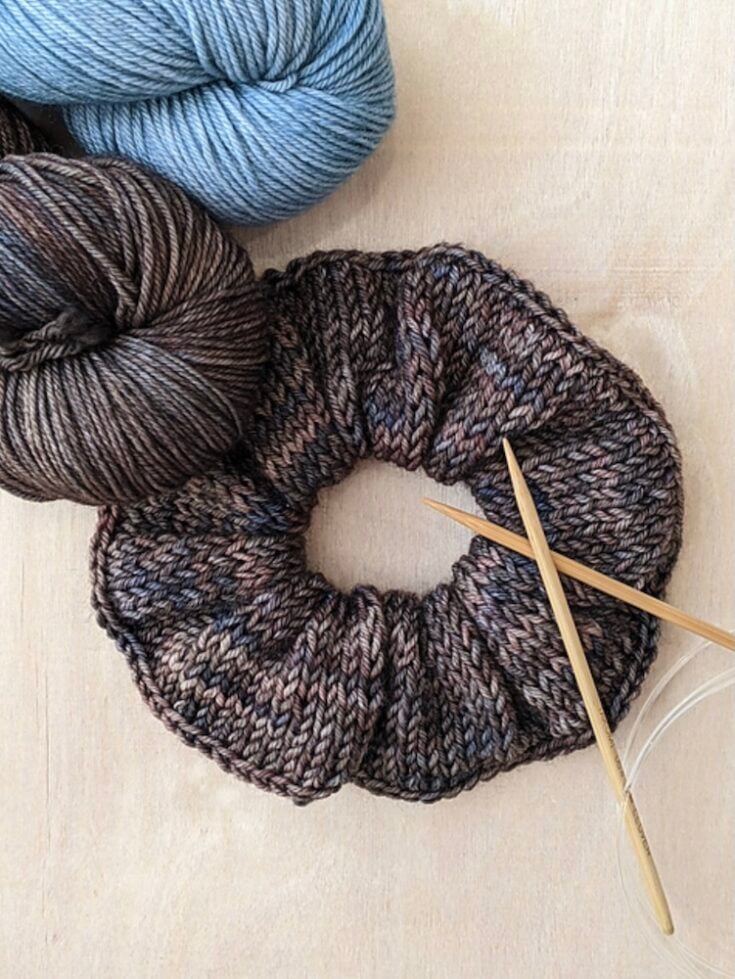
Scrap Yarn Scrunchie by Cozy Yarn
Make cute scrunchies with this free pattern.
All you need are scraps of yarn and your knitting needles.
Grab the free PDF on Ravelry.
What Is The Best Yarn For Knitted Scrunchies?
Best yarn fibers
The fiber you choose determines how your scrunchie will feel, stretch, and wear over time.
Here are some of the most popular options:
- Cotton: smooth and breathable, cotton scrunchies are gentle on hair and perfect for everyday wear. They hold their shape well but don’t have much natural stretch, so pairing them with ribbed stitches works best.
- Velvet / Chenille: Soft, plush, and luxurious, velvet scrunchies are very on-trend. They’re cozy for winter and add a fashionable, statement look.
- Acrylic: Affordable, easy to find, and available in endless colors. Acrylic is great for beginners and experimenting with new styles, though it can sometimes feel less soft than natural fibers.
- Wool / Wool Blends: Warm and elastic, wool creates cozy scrunchies that stretch well. Choose soft types like merino or alpaca for comfort against the hair.
- Specialty Yarns (Mohair, Sparkle, Bouclé, etc.): These add fluff, shimmer, or texture to your scrunchie. Perfect for festive or dressy accessories, though they’re best combined with a sturdier yarn for strength.
Learn everything about yarn fibers here – Yarn Types Explained: A Guide To Different Fibers
Best yarn weights
- The weight of the yarn affects how chunky, delicate, or structured your scrunchie will look:
- Lightweight/fingering weight: Creates delicate, slim scrunchies. Ideal for a subtle look or for using fine fibers like cotton or silk blends.
- DK (double knitting) weight: A versatile middle-ground yarn that creates lightweight scrunchies with good drape. Ideal for everyday wear.
- Worsted/aran weight: A little thicker, this yarn makes durable scrunchies that knit up quickly. Great for beginners and for showing off textured stitches.
- Bulky/chunky weight: Perfect if you want oversized, statement scrunchies. They work up fast and cover elastic well, but can feel heavy for thin hair.
Tip: Match your yarn weight to the look you want. For a classic, everyday scrunchie, DK or worsted yarn is usually the best choice.
Helpful resources
Best Knitting Stitches For Scrunchies
Scrunchies are small projects, which makes them the perfect way to experiment with different textures and stitches.
Here are some of the best options:
1. Stockinette stitch
A classic, smooth fabric that lets the yarn shine.
Works beautifully with velvet, chenille, or specialty yarns.
Simple for beginners—knit one row, purl one row.
Learn how to knit the stocking stitch here – How To Knit Stockinette Stitch (For Beginners)
2. Garter stitch
Knit every row for a bumpy, stretchy texture.
Adds extra grip, which helps the scrunchie stay put in your hair.
Great for cotton yarns that have less natural stretch.
Learn how to knit the garter stitch here – How To Knit Garter Stitch For Beginners (Tutorial)
3. Ribbing (1×1 or 2×2)
Elastic and stretchy, making it one of the most practical stitches for scrunchies.
Creates a snug fit around the hair elastic.
Adds a nice vertical texture that works well with all yarn types.
Learn how to knit the rib stitch here – How To Knit Rib Stitch Patterns (1×1 and 2×2 ribbing)
4. Moss/seed stitch
A textured, pebbly look that’s both stylish and classic.
Works especially well in solid colors to show off the stitch detail.
Slightly thicker, giving scrunchies a cozy feel.
Learn how to knit the seed stitch here – How To Knit Seed Stitch For Beginners
5. Lace or eyelet patterns
Light, airy stitches that create a delicate scrunchie.
Perfect for summer accessories or fancy, decorative scrunchies.
Works best in cotton or lightweight yarns.
Check out lace stitch patterns here – 43 Lace Knitting Patterns (Easy Knit Stitches)
6. Cable stitches (mini cables or twists)
Add a trendy, chunky look with subtle twists.
Perfect for wool or acrylic yarns that hold structure.
A fun way to turn a simple accessory into a statement piece.
To make sure you have the right stitch for your project, make a small gauge swatch before starting.
Check out eight beautiful cables here – 8 Cable Stitch Knitting Patterns
Supplies You Need To Knit A Scrunchie
Knitting a scrunchie doesn’t require much—you only need a few basic supplies to get started:
- Yarn – Choose a fiber and weight that suits your style (cotton, velvet, wool, or acrylic are all great options). DK or worsted weight works well for most scrunchies.
- Knitting needles – Straight or circular needles, sized to match your yarn. A smaller size will give a tighter fabric, while a larger size creates a softer, looser look.
- Hair elastic – A plain elastic band forms the core of the scrunchie. Choose one that matches your hair color or the yarn you’ll be using.
- Tapestry needle/darning needle – For seaming your scrunchie and weaving in yarn ends.
- Scissors – To cut your yarn neatly.
- Extras – Stitch markers if you’re knitting in the round, or a crochet hook to help with finishing touches.
- Embellishments – Beads, pearls, buttons, ribbons, bows, appliqués, and embroidery. These little extras make your knitted work more personal and unique.
FAQs
1. Can you knit a scrunchie?
Yes, you definitely can!
A scrunchie is a perfect beginner knitting project — small, quick, and forgiving.
2. What are the measurements to make a scrunchie?
A knitted scrunchie works a bit differently from a sewn fabric one, since the fabric is stretchier and has more give.
Basic:
- Width of knitted strip (before folding): 8–10 cm (3–4 inches). When folded in half and seamed, this gives a nice “puffy” scrunchie.
- Length of knitted strip: 40–45 cm (16–18 inches). This length creates enough gathers once wrapped around the elastic.
- Elastic length:18–20 cm (7–8 inches) of 0.5–1 cm (¼–½ inch) wide elastic.
Slim scrunchie (less puffy):
- Knit strip: 6 cm × 35 cm (2½ × 14 inches)
- Elastic: 15–18 cm (6–7 inches)
Oversized scrunchie (chunky look):
- Knit strip: 12–15 cm × 50–55 cm (5–6 × 20–22 inches)
- Elastic: 20–22 cm (8–9 inches)
3. How many stitches do you cast on for a scrunchie?
The number of stitches you need for a knitted scrunchie will depend on the yarn weight, the size of your knitting needles, and how wide or full you want your scrunchie to look.
- DK weight yarn – Cast on around 40–50 stitches for a medium scrunchie.
- Worsted / aran weight yarn – Cast on 30–40 stitches.
- Bulky yarn – Cast on 20–30 stitches for a chunkier, oversized scrunchie.
If you’re knitting flat, you’ll cast on a strip that’s wide enough to wrap around your elastic (usually 2–3 inches).
Then you’ll seam the strip into a tube around the elastic.
If you’re knitting in the round, cast on enough stitches to fit comfortably around your elastic band without stretching too tight.
Start with about 40 stitches in DK or worsted weight if you’re unsure.
You can always adjust it up or down depending on how full or slim you want your scrunchie to look.
Learn how to cast on here – How To Cast On Knitting
4. Is braided or knit elastic better for scrunchies?
For knitted scrunchies, knit elastic is usually the better choice because it’s softer, more durable, and doesn’t lose stretch as easily when enclosed in yarn.
5. Can you knit a scrunchie with a hair tie?
Absolutely!
Instead of using elastic by the yard, you can knit directly around regular hair ties.
This makes the process quicker since the elastic loop is already in place, and you don’t need to worry about sewing elastic ends together.
Choose a strong, good-quality hair tie that won’t snap easily, since it will be enclosed in yarn.
A simple, no-metal elastic works best.
- Knitting around the hair tie – You cast on stitches directly around the hair tie and knit in the round, letting the tie act as the core. This method creates a stretchy scrunchie without extra finishing.
- Knitting a tube first – You knit a strip or tube, thread the hair tie through it, and then seam the edges closed. This is handy if you want more control over the texture and width of the scrunchie.
6. How do you seal your scrunchie?
Once you’ve threaded the elastic inside your knitted tube and secured the ends together, it’s time to seal the scrunchie.
To do this, you’ll need to seam the open edges of your knitting around the elastic.
You can choose from a few finishing methods depending on the look you prefer—whip stitch for a quick close, mattress stitch for an invisible seam, or even Kitchener stitch if you want a smooth, seamless join.
Whichever method you use, the goal is to encase the elastic securely and create a neat finish so your scrunchie is both durable and polished.
Related post: The Mattress Stitch – How To Seam Knitting
Knitting Lessons
If you are new to the craft and need help with the knitting basics, check out more helpful tutorials here: Knitting Lessons (With Video Tutorials).
You can also check out this step-by-step guide on how to knit for beginners – How To Knit – A Complete Beginner’s Guide
If you need more video tutorials, check out my YouTube channel here – Handy Little Me – YouTube.
For extra help and to connect with more makers from the crafting community, check out the Handylittleme Facebook group.
If you also love to crochet, check out easy patterns here – Free Crochet Patterns
You can also find us on social media, Ravelry, Pinterest, Instagram, Twitter, Etsy, and TikTok.
More Free Knitting Patterns
For more inspiration, check out the easy knitting projects below, including shawls, garments, socks, scarves, baby blankets, bookmarks, dishcloths, and more.
- 25 Fall Sweaters To Knit (Simple + Cute)
- 31 Knitted Headbands To Make (Free + Simple)
- Scrap Yarn Shawl Knitting Pattern
- Free Sock Knitting Pattern (Easy + Simple For Beginners)
- 31+ Free Knitted Dishcloth Patterns For Beginners
- Corner To Corner Knitted Blanket (Free Printable)
- How To Knit A Baby Blanket (Free Printable)
- 17+ Free Bookmark Knitting Patterns For Book-Lovers
- Knitted Cat Hat – Free Knitting Pattern
- Skinny Scarf Knitting Pattern (Easy Knit Garter Stripe)
- 15 Quick Knits To Cast On Today! (Free Patterns)
I’m excited to start knitting.
Hello Bonnie,
I hope you enjoy the patterns 🙂
Happy knitting!
Louise
I love the blanket or throw in the very top picture in front of window. Do you have a pattern for that?
Hello Jackie,
No sorry, I don’t that is a stock photo.
There are other blanket patterns on the site though if you search ‘blanket’ in the search bar you will find them.
I hope that helps!
Louise