
10 Free Tunisian Crochet Blanket Patterns
THIS ARTICLE CONTAINS AFFILIATE LINKS THAT SUPPORT HANDY LITTLE ME CONTENT AND FREE PATTERNS.Tunisian crochet blankets are a wonderful way to make cozy, textured, handmade blankets with a look that sits somewhere between crochet and knitting.
This type of crochet uses a special hook to hold loops on the hook during the forward pass, then works them off during the return pass.
The finished fabric can be thick, squishy, warm, and full of beautiful stitch definition.
In this roundup, you will find Tunisian crochet blanket patterns for different skill levels, from beginner-friendly Tunisian simple stitch blankets to colorwork, chevrons, honeycomb stitch, and entrelac designs.
You will also find tips for choosing yarn, working the foundation row, avoiding curl, changing to a new color, and getting started with your first Tunisian crochet blanket project.
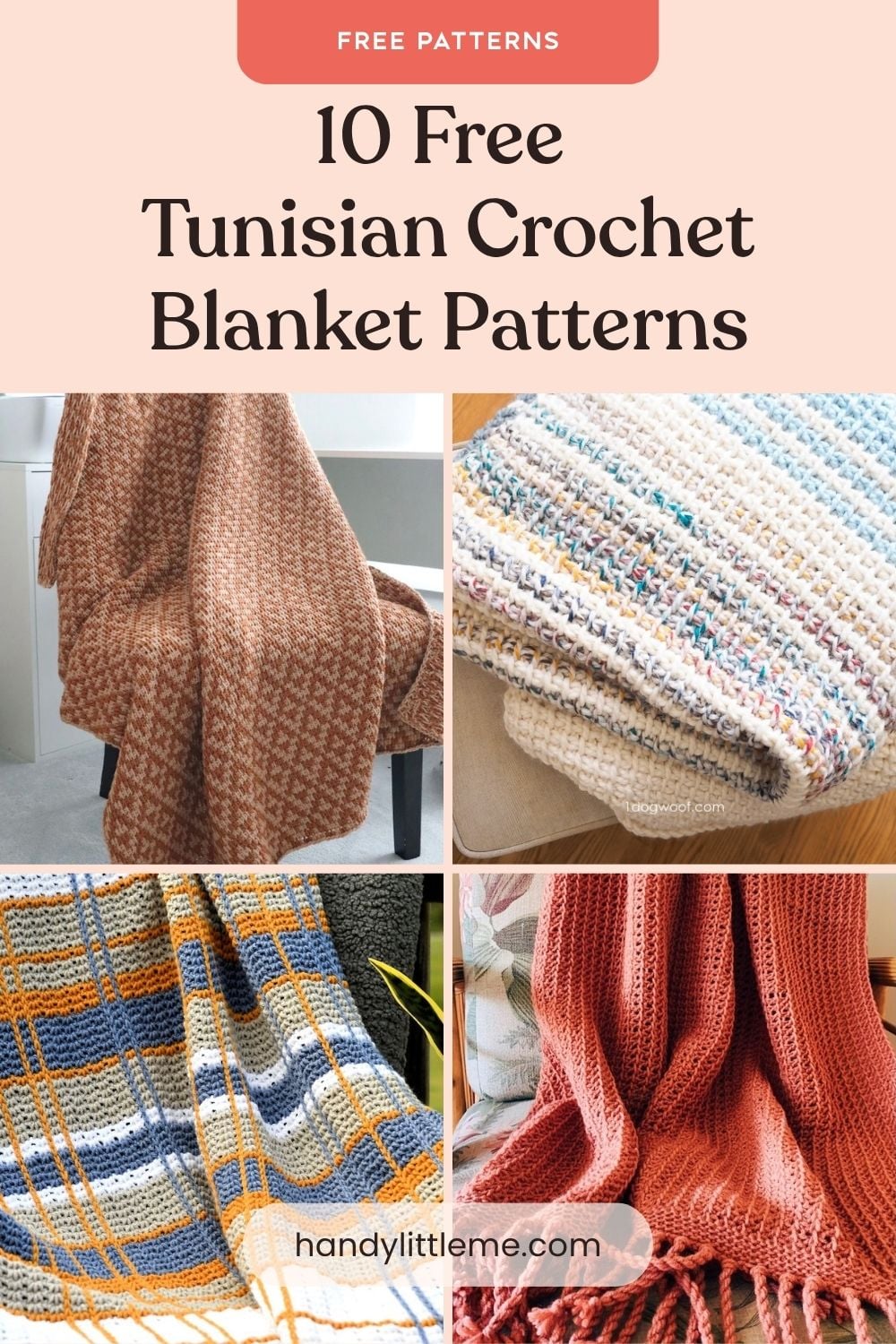
10 Free Tunisian Crochet Blanket Patterns
If you’re ready to try Tunisian crochet, explore the free blanket patterns below.
You’ll find simple stitch designs for beginners, along with chevrons, plaid, honeycomb, colorwork, and entrelac blankets.
Happy crocheting!
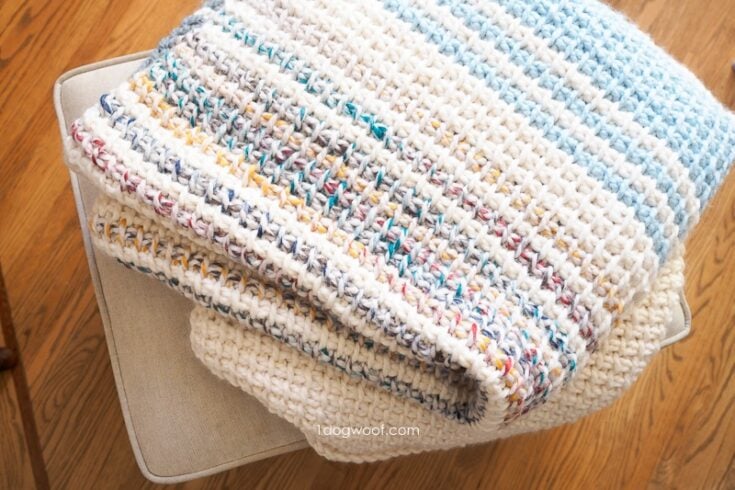
Daydream: A Simple Striped Tunisian Crochet Blanket by One Dog Woof
This is a simple striped Tunisian crochet blanket that uses Tunisian simple stitch throughout.
It is a great pattern for beginners who want to practice TSS, stripes, and easy Tunisian crochet blanket color changes.
- Yarn weight: Super bulky yarn – Lion Brand Wool Ease Thick & Quick
- Tunisian crochet hook: P/16, 11.5 mm, approx. 30–36 inches long
- Skill level: Easy
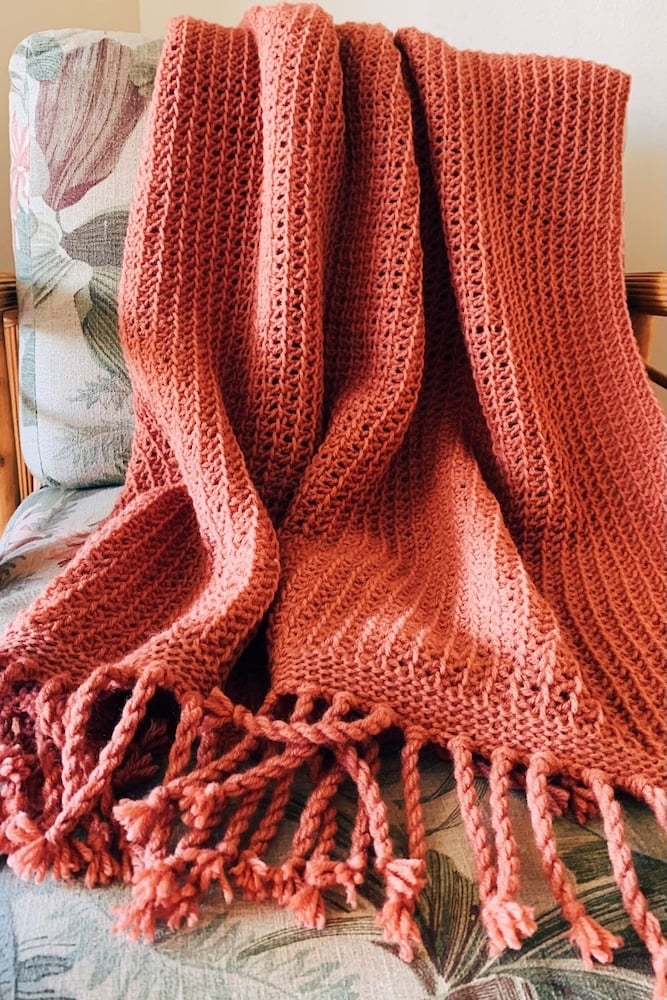
The Ava Throw Tunisian Crochet Blanket by I Can Crochet That
This is a lightweight Tunisian crochet blanket pattern with an open weave, simple border, and rope tassels.
It is a lovely choice if you want a handmade blanket that feels cozy but not too heavy.
- Yarn weight: Medium weight yarn – Lion Brand Pound of Love
- Tunisian crochet hook: 6 mm hook with cord
- Skill level: Intermediate
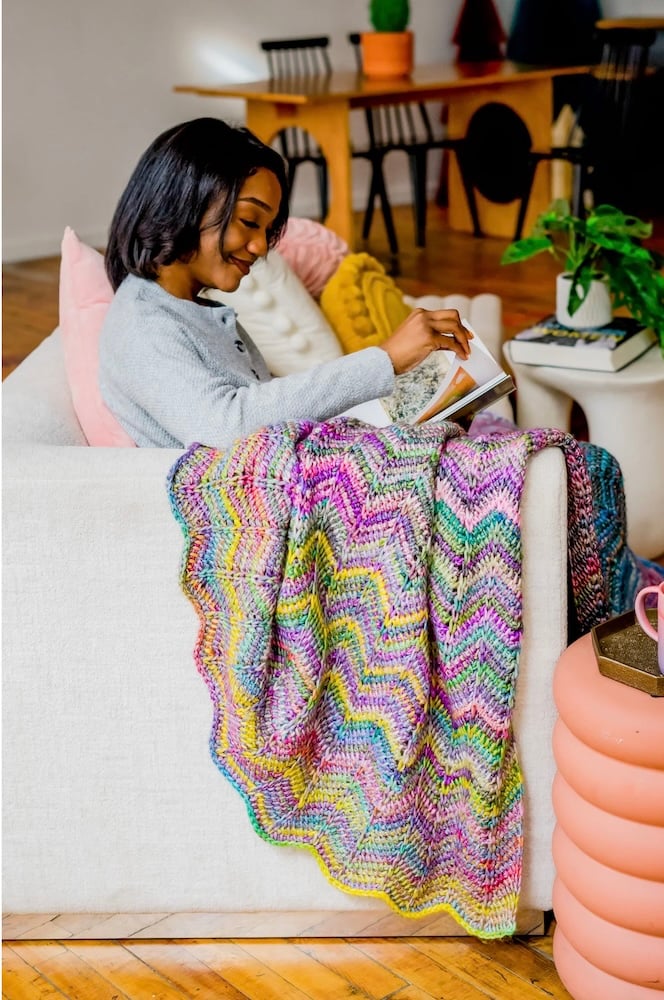
Bahama Blanket Tunisian Crochet Chevron Throw by TL Yarn Crafts
This is a beginner-friendly Tunisian crochet chevron afghan with a beautiful faded color repeat.
It is worked from the bottom up and uses multicolored yarn to create a soft gradient effect.
- Yarn weight: Worsted weight yarn – Lion Brand Landscapes Breeze
- Tunisian crochet hook: 8 mm with 32-inch cord
- Skill level: Beginner-friendly
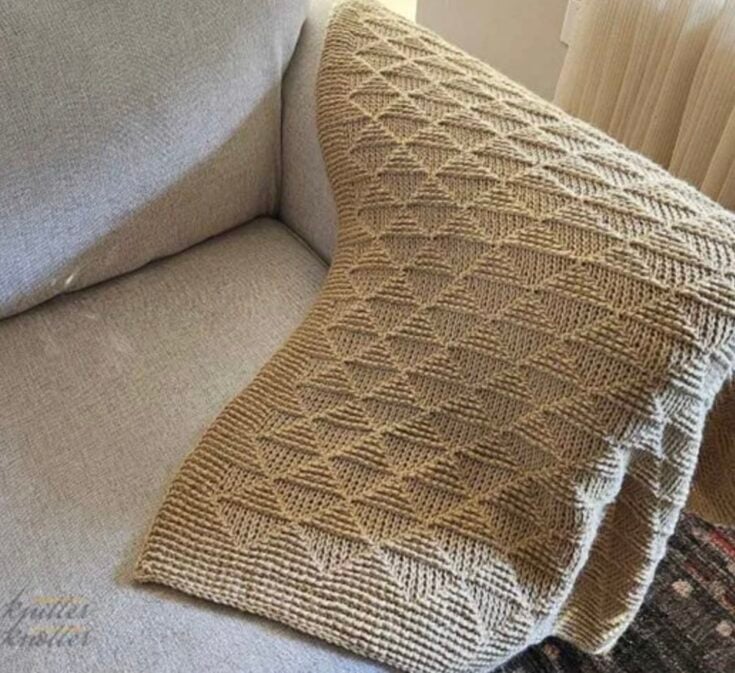
Mihir Blanket Tunisian Crochet Stitch Blanket by Knitter Knotter
This is a simple Tunisian crochet stitch blanket that uses two basic Tunisian crochet stitches to create texture.
It is designed to be beginner-friendly while still giving the finished product a beautiful, polished look.
- Yarn weight: Medium weight yarn - Lion Brand Pound of Love
- Tunisian crochet hook: 8 mm with cable
- Skill level: Easy
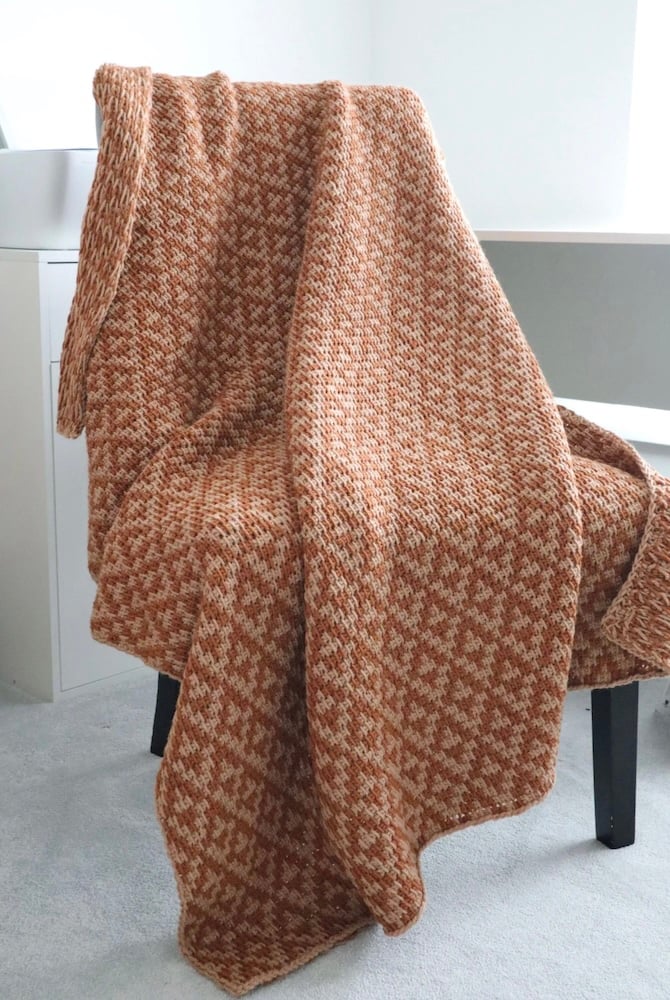
Melissa Throw by Exquisite Crochet UK
This is an intermediate Tunisian crochet blanket with a decorative motif and colorwork.
It is a good next project if you already know the basics and want to practice keeping your gauge even while changing colors.
- Yarn weight: Worsted weight yarn – Knit Picks Brava Worsted
- Tunisian crochet hook: 7 mm with 31-inch cable
- Skill level: Intermediate
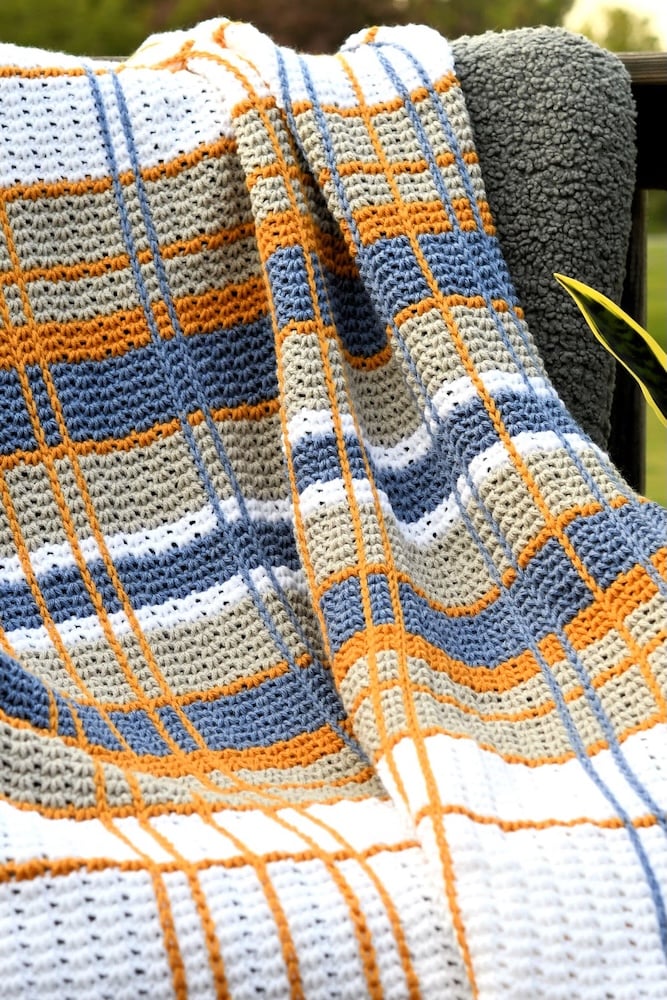
Plaid Tunisian Crochet Afghan by Make It Crochet
This is a free pattern that combines Tunisian crochet with surface crochet for a classic plaid look.
It is worked in rows from bottom to top, with color changes forming the horizontal stripes and surface crochet added for the vertical lines.
- Yarn weight: Worsted weight yarn – JoAnn Big Twist Value
- Tunisian crochet hook: I-9, 5.5 mm
- Skill level: Intermediate
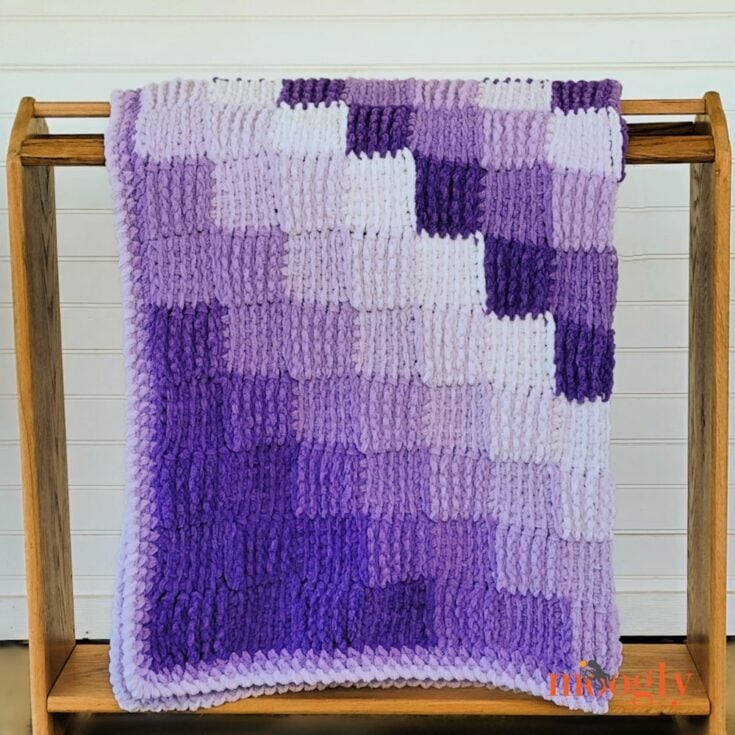
Corner to Corner Tunisian Pixel Blanket by Moogly
This is a fun Tunisian crochet blanket project that creates a pixel or checkerboard effect.
It uses Tunisian simple stitch and can be made in different sizes by increasing, maintaining, and decreasing the corner-to-corner shape.
- Yarn weight: Super bulky yarn – Bernat Blanket Perfect Phasing
- Tunisian crochet hook: US P/16, 11.5 mm hook
- Skill level: Beginner-friendly
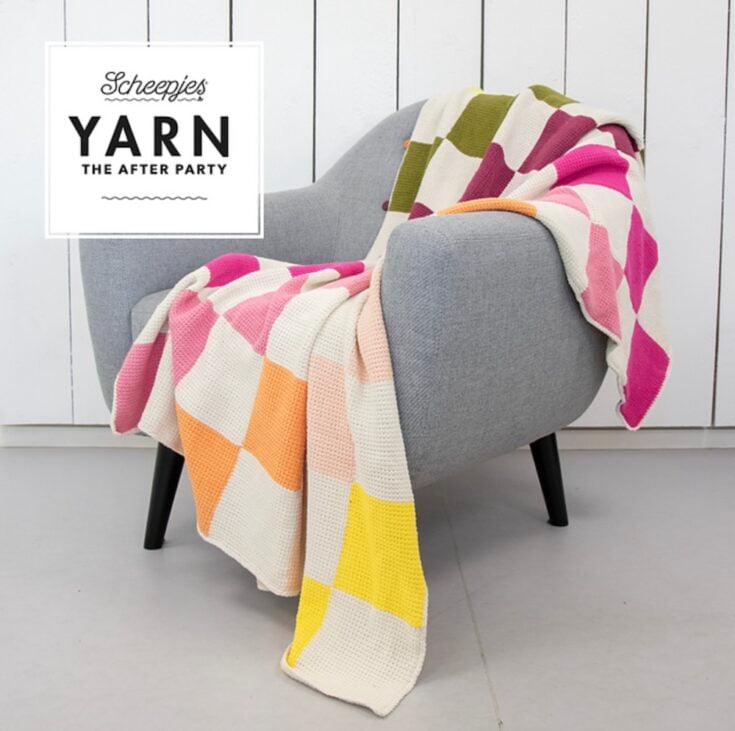
Tunisian Tiles Blanket by Hobbydingen
This is a beautiful colorwork blanket made with DK weight yarn.
It uses Tunisian crochet, intarsia color changes, and a tile-style blanket design.
This pattern is worked with the right side facing throughout, and each row includes a forward pass and return pass.
It is a great pattern for makers who want to try more advanced Tunisian crochet blanket color changes.
Grab the free pattern on Ravelry.
- Yarn weight: DK weight yarn – Scheepjes Softfun
- Tunisian crochet hook: 5 mm with 80 cm cable, plus 5 mm and 5.5 mm regular crochet hooks
- Skill level: Intermediate
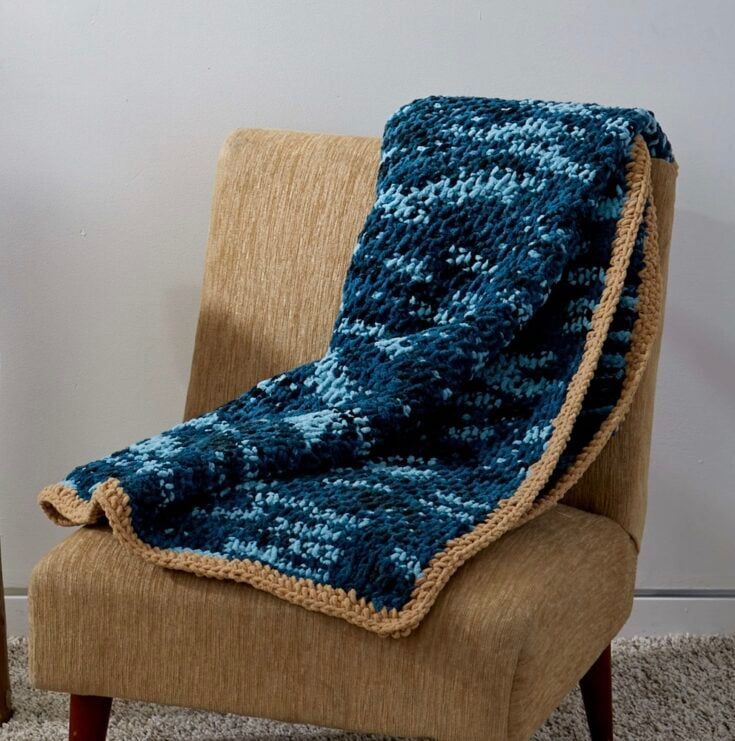
Bernat Tunisian Honeycomb Crochet Blanket by Yarnspirations
This is a cozy blanket and a good intro to Tunisian crochet.
It is stitched in Bernat Blanket yarn and alternates Tunisian purl stitch and Tunisian simple stitch to create the honeycomb stitch texture.
This is a bulky, warm blanket that works well as a cozy blanket for the sofa or bedroom.
Grab the free PDF on Yarnspirations.
- Yarn weight: Super bulky yarn – Bernat Blanket
- Tunisian crochet hook: 8 mm hook
- Skill level: Easy
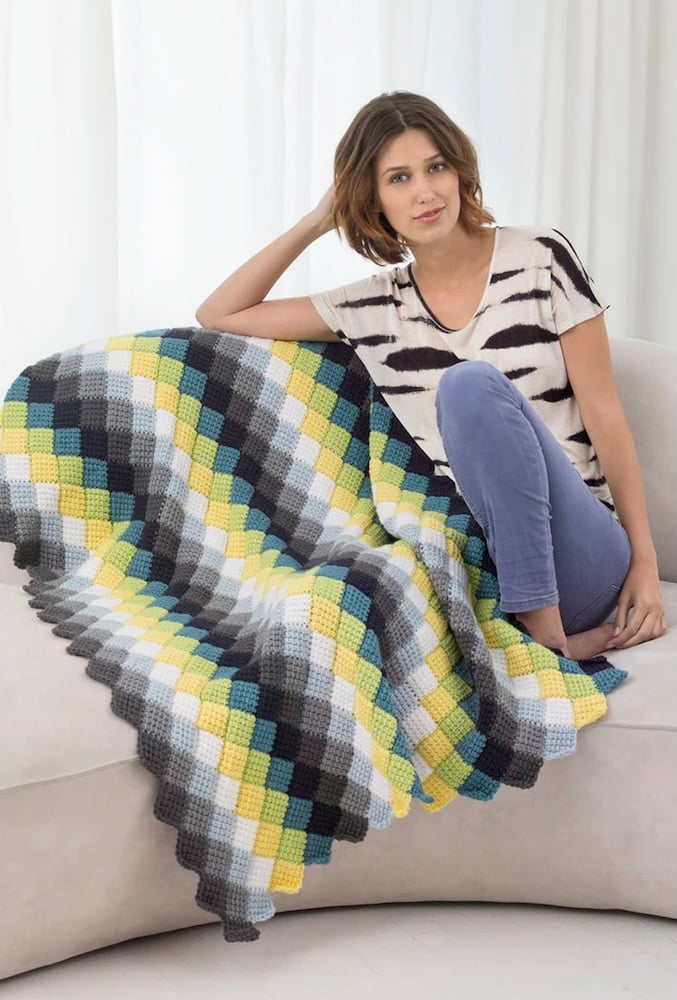
Tunisian Crochet Entrelac Throw by Lion Brand Yarns
This is a bold striped afghan worked in Tunisian crochet entrelac.
It is made in blocks, so a regular crochet hook is used instead of a long Tunisian crochet hook because only a small number of loops are held on the hook at once.
This is a great pattern if you want to try a different type of crochet blanket construction.
The blocks create a striking diagonal look, and each entrelac row is worked in one color.
- Yarn weight: Aran / medium weight yarn – Lion Brand Vanna’s Choice
- Crochet hook: 9 mm regular crochet hook
- Skill level: Intermediate
Can You Tunisian Crochet A Blanket?
Yes, you can Tunisian crochet a blanket, and blankets are one of the best projects for learning this technique.
Tunisian crochet creates a dense, textured fabric that works beautifully for crochet blankets, baby blankets, throws, afghans, temperature blankets, and cozy home decor projects.
The main difference from traditional crochet is that you work each row in two parts:
- Forward pass – You insert the hook into the stitches or vertical bars and pull up loops, keeping them on the hook.
- Return pass – You work the loops off the hook, usually by yarning over and pulling through two loops at a time.
- Repeat row – Repeat the forward and return passes until your blanket reaches the required length.
For most Tunisian blankets, you will need a Tunisian crochet hook, also called an afghan hook.
For wider crochet blankets, an interchangeable Tunisian hook with a cable is often the best option because it gives your stitches room to sit comfortably.
Related Post: 30 Free Tunisian Crochet Patterns (For All Skill Levels)
What Is The Easiest Tunisian Stitch For A Blanket?
The easiest Tunisian stitch for a blanket is usually the Tunisian simple stitch, often abbreviated as TSS or tss.
Tunisian simple stitch is beginner-friendly because the movement is easy to repeat:
- Skip the first vertical bar.
- Insert hook from right to left under the next vertical bar.
- Yarn over and pull up a loop.
- Leave the loop on the hook.
- Repeat across the row.
- Work the return pass.
The Tunisian simple stitch makes a neat woven-looking fabric and is used in many easy Tunisian crochet blanket patterns.
It is also a great stitch for stripes, color repeat blankets, temperature blanket projects, and simple stitch body sections.
Other beginner-friendly Tunisian crochet stitches for blankets include:
- Tunisian knit stitch – Looks more like knitting and creates a thick fabric.
- Tunisian purl stitch – Often paired with TSS to reduce curl and add texture.
- Honeycomb stitch – Made by alternating Tunisian simple stitch and Tunisian purl stitch.
- Tunisian reverse stitch – Useful for borders or blanket designs that need less curl.
Related Post: 35 Free Tunisian Crochet Stitches (Easy Tutorials)
What Is The Best Yarn For A Tunisian Crochet Blanket?
The best yarn for a Tunisian crochet blanket depends on the blanket size, stitch pattern, and how you want the finished product to feel.
Tunisian crochet can create a thicker fabric than traditional crochet, so soft yarn with good drape is a great choice.
Smooth yarns are also easier for beginners because you can clearly see the vertical bars, loops, and stitch patterns as you work the forward pass and return pass.
For most Tunisian crochet blankets, DK weight yarn, worsted weight yarn, bulky yarn, and super bulky yarn are all good options.
- Acrylic yarn is a popular choice for Tunisian blankets because it is affordable, washable, and easy to care for.
- Cotton and cotton blends can also work well, especially for baby blankets or warmer climates, but they may have less stretch.
- Wool and wool blends are warm and beautiful, but always check the care instructions if the blanket will be used often.
It is always a good idea to make a swatch gauge before starting your Tunisian crochet blanket project.
This helps you check your hook size, number of stitches, number of rows, and overall fabric feel before making the larger blanket.
Related Post: Types Of Yarn Explained: A Guide To Different Fibers
What Are Some Common Mistakes To Avoid In Tunisian Crochet?
Tunisian crochet is beginner-friendly, but there are a few common mistakes to watch for.
- Using too small a hook: Tunisian crochet fabric can become tight if your hook size is too small. Go up a hook size if the fabric feels stiff or if your loops are hard to move along the hook.
- Forgetting the last stitch: The last stitch can be easy to miss. At the end of each row, insert hook under both vertical bars of the last stitch so the edge stays neat.
- Pulling the return pass too tightly: A tight return pass can make the fabric curl more and affect your swatch gauge. Keep your yarn relaxed as you work the loops off the hook.
- Not counting your stitches: Count the loops on your hook regularly, especially when working long rows, increases, decreases, or colorwork.
- Ignoring curl: Curl is common in Tunisian crochet, especially with Tunisian simple stitch and Tunisian knit stitch. A border, larger hook, blocking, or a stitch pattern with purl/reverse stitches can help.
- Changing color in the wrong place: For Tunisian crochet blanket color changes, the new color is often added at the end of the return pass, when two loops remain on the hook. Some colorwork patterns also change color during the forward pass or return pass, so always follow the pattern instructions.
- Choosing a pattern that is too advanced: For your first project, choose a simple stitch or striped blanket before moving on to intarsia, entrelac, or complex colorwork.
What Are Some Tips For Beginners In Tunisian Crochet?
Start small, even if your goal is a larger blanket.
A scarf, swatch, dishcloth, or baby blanket is a great first Tunisian crochet project.
- Use a long hook or Tunisian crochet hook with a cable for blanket projects.
- Go up a hook size from what the yarn label suggests to help the fabric drape.
- Practice the foundation row before starting the full blanket.
- Learn the forward pass and return pass first.
- Keep the first loop and last stitch neat to create clean, even edges.
- Use stitch markers if your number of stitches is hard to track.
- Make a swatch gauge before starting a baby shower gift or larger blanket.
- Begin with one color or simple stripes before trying more complex colorwork.
- Watch a video tutorial if you are a visual learner.
- Read through the full instructions before starting a new pattern.
Tunisian crochet skills build quickly once you understand the rhythm of the forward pass and return pass.
After that, you can explore different Tunisian stitches, panels, squares, stitch blanket designs, and new patterns.
Related post: How To Read A Yarn Label (Step By Step)
FAQs
Do I need a special hook for a Tunisian crochet blanket?
For most Tunisian crochet blankets, yes, you will need a special hook.
A Tunisian crochet hook, afghan hook, long hook, or interchangeable Tunisian hook with a cable gives you enough room to hold all the loops on the hook.
For smaller sections, entrelac blocks, or narrow panels, some patterns may use a regular crochet hook.
Can I use a regular crochet hook for Tunisian crochet?
You can use a regular crochet hook for small Tunisian crochet swatches, short rows, entrelac blocks, or narrow projects.
For a full-width blanket, a regular crochet hook usually will not be long enough to hold all the loops.
Related Post: Crochet Hook Sizes Chart (A Free Conversion Guide)
Why does Tunisian crochet curl?
Tunisian crochet can curl because the forward pass and return pass create tension in the fabric.
Tunisian simple stitch and Tunisian knit stitch are especially known for curling.
To reduce curl:
- Use a larger hook size.
- Keep your tension loose.
- Add a border.
- Block the blanket.
- Try stitch patterns with Tunisian purl stitch or reverse stitch.
Related Post: How To Block Crochet (Beginner’s Guide)
Is Tunisian crochet harder than regular crochet?
Tunisian crochet is not necessarily harder than traditional crochet, but it is different.
You hold loops on the hook during the forward pass and work them off during the return pass.
Once you learn the foundation row, Tunisian simple stitch, and return pass, the rhythm becomes easy to follow.
How do you change color in Tunisian crochet?
For many Tunisian crochet blanket color changes, you change to the new color at the end of the return pass.
When two loops remain on the hook, yarn over with the new color and pull through the final two loops.
This makes the first loop of the next forward pass the correct color.
Some patterns, especially intarsia or colorwork patterns, may ask you to change color during the forward pass, return pass, or at the end of a row.
How many stitches do I need for a Tunisian crochet blanket?
The number of stitches depends on your yarn, hook size, swatch gauge, and desired blanket size.
Make a gauge swatch first, then measure how many stitches you get in 4 inches. Use that number to calculate your starting chain.
For example, if your gauge is 14 stitches per 4 inches and you want a blanket about 40 inches wide, you will need about 140 stitches, plus or minus any stitch multiple required by the pattern.
Can beginners make a Tunisian crochet baby blanket?
Yes, a Tunisian crochet baby blanket is a great beginner project.
Choose a simple stitch pattern, soft yarn, and easy-care fiber.
A baby blanket is smaller than a large afghan, so it is a good way to practice without committing to a huge project.
Want To Learn More?
- Crochet Lessons (For Beginners + Video Tutorials) – If you are new to the craft and need help with the basics, explore this collection of beginner-friendly crochet tutorials.
- Handy Little Me YouTube Channel – Watch step-by-step crochet and knitting video tutorials to help you learn new stitches and techniques.
- Handy Little Me Knitting + Crochet Community – Join our Facebook group to connect with other makers, ask questions, and share your projects.
- You can also follow Handy Little Me on Ravelry, Pinterest, Instagram, Facebook, and TikTok for more free patterns, tutorials, and creative inspiration.
More Crochet Blanket Patterns
- How To Crochet A Blanket For Fall (Beginner-Friendly!)
- How To Crochet A Granny Square Blanket (Free Pattern)
- Chunky Crochet Blanket (Super Easy Free Pattern!)
- 33 Best Bernat Blanket Yarn Patterns (Free Ideas)
- 13 Free Black And White Blanket Crochet Patterns
- 15 Free Crochet Afghan Patterns To Make In 2026
- Crochet Cat Blanket Pattern (Free Printable)
- 11 Free Corner To Corner Crochet Baby Blanket Patterns
- 47+ Free Crochet Baby Blanket Patterns Using Lightweight Yarn
- Simple Crochet Baby Blanket Pattern (Blanket Stitch)
- Crochet Moss Stitch Baby Blanket (Free Printable Pattern)
- Easy Double Crochet Chevron Baby Blanket Pattern (Free Printable)