
30 Crochet Lace Stitch Patterns (Free Lacy Stitches)
THIS ARTICLE CONTAINS AFFILIATE LINKS THAT SUPPORT HANDY LITTLE ME CONTENT AND FREE PATTERNS.In this blog post, you will see 30 crochet lace stitch patterns (Free lacy stitches).
Whether you’re a beginner or an experienced crocheter, these patterns offer a variety of beautiful lace stitches to incorporate into your projects.
So, grab your crochet hook, and let’s start with these crochet stitch tutorials!
Save this article
Enter your email address and we'll send it to your inbox.
By entering your email, you agree to receive patterns, tutorials, and updates from Handy Little Me. Unsubscribe at any time.
Crochet Lace Stitch Patterns (Free Tutorials)
Create elegant, airy fabric with crochet lace stitches—perfect for scarves, shawls, and lightweight garments.
Browse the free tutorials below.
Happy crocheting!

Picot Trellis Stitch by Nordic Hook
In this post, you will see how to crochet the picot trellis stitch, a beautiful and textured pattern perfect for various projects.
The tutorial provides detailed instructions and step-by-step photos to guide you through creating this intricate stitch.
This stitch is ideal for adding a decorative touch to blankets, scarves, and other crochet items.

The Crossed Double Crochet And Lace Stitch by Nordic Hook
The crossed double crochet and lace stitch creates a beautifully airy fabric with a delicate, openwork look and subtle texture.
Made with a simple two-row repeat, it combines chain spaces and crossed stitches to form a light, lacy pattern that’s perfect for shawls, summer garments, and decorative pieces.
This stitch is ideal for crocheters who already know the basics and want to try something that looks intricate but is surprisingly easy to master.

Lace Flower Crochet Stitch by Crochet Beja
In this post, you will learn how to crochet the lace flower stitch, a beautiful and intricate pattern perfect for various projects.
The tutorial includes detailed instructions and step-by-step photos, making it easy to follow and master.
This stitch is ideal for creating delicate and decorative items like shawls, blankets, and garments.

Spider Lace Crochet Pattern – Stitch Tutorial by Joy Of Motion Crochet
The spider lace crochet pattern creates a striking, web-like design with delicate open spaces and a beautifully balanced texture.
Worked with basic stitches in a repeating sequence, it forms an intricate lace motif that looks impressive on both sides—perfect for lightweight garments, wraps, or airy accessories.
While the stitch repeat is a bit larger, the detailed structure makes it a rewarding project for confident beginners ready to explore more decorative lace techniques.

Solomons Knot Crochet Stitch by Bella Coco Crochet
The Solomon’s Knot stitch creates an ultra-light, open lace fabric with long, elegant loops that give it a flowing, almost net-like appearance.
Also known as the Lover’s Knot, this technique uses elongated loops anchored with simple stitches to form a delicate yet eye-catching pattern.
It’s perfect for breezy shawls, scarves, and summer pieces, and while it looks intricate, it’s surprisingly achievable once you get the rhythm of the stitch.
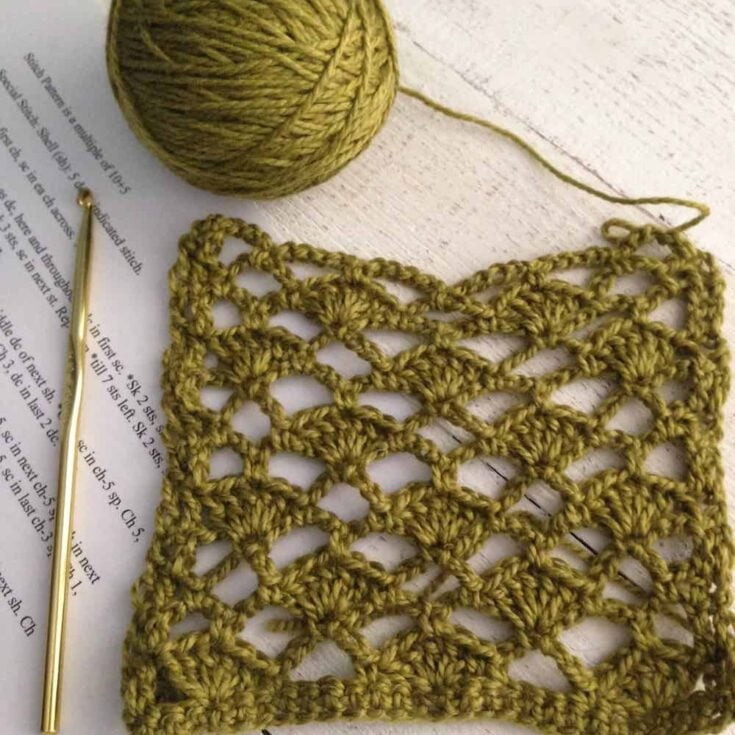
The Shell Trellis Stitch by Desert Blossom Crafts
The shell trellis stitch blends soft, curved shell motifs with airy chain spaces to create a flowing, lace-like texture full of movement and depth.
The combination of clustered stitches and open gaps gives it a delicate, drapey finish that works beautifully for garments, wraps, and lightweight accessories.
Despite its intricate look, it’s built from simple stitches in a repeating pattern, making it a great choice for crocheters ready to step into more decorative lace designs.
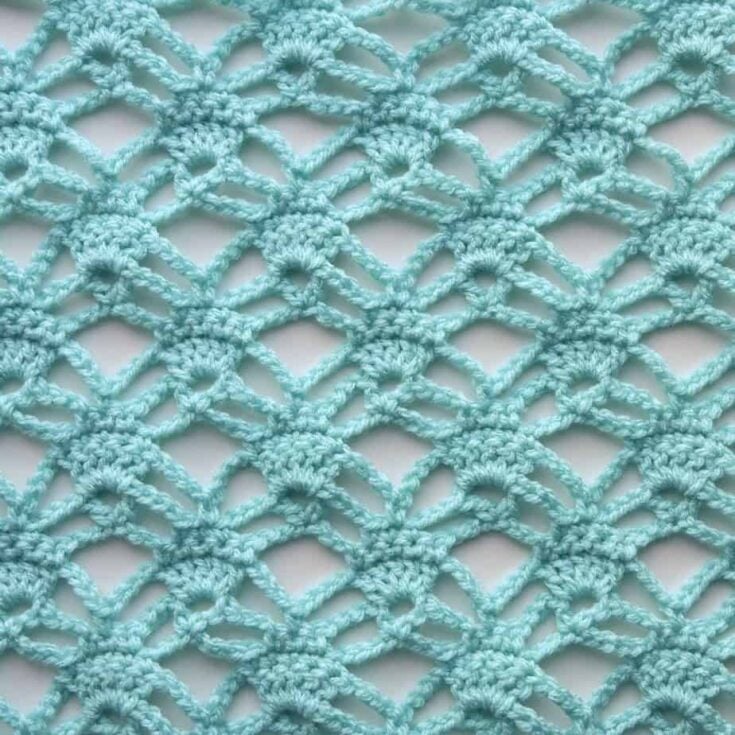
Candlelight Lace Free Crochet Stitch Tutorial by Crochet Kim
The candlelight lace stitch creates a soft, flowing pattern with a mix of delicate arches and clustered stitches that give it a gentle, glowing texture.
Built around repeating sections of V-stitches and open chain spaces, it forms an elegant lace fabric with plenty of movement and drape.
This intermediate-level stitch is ideal for adding a refined, decorative touch to projects like shawls, wraps, and lightweight accessories.
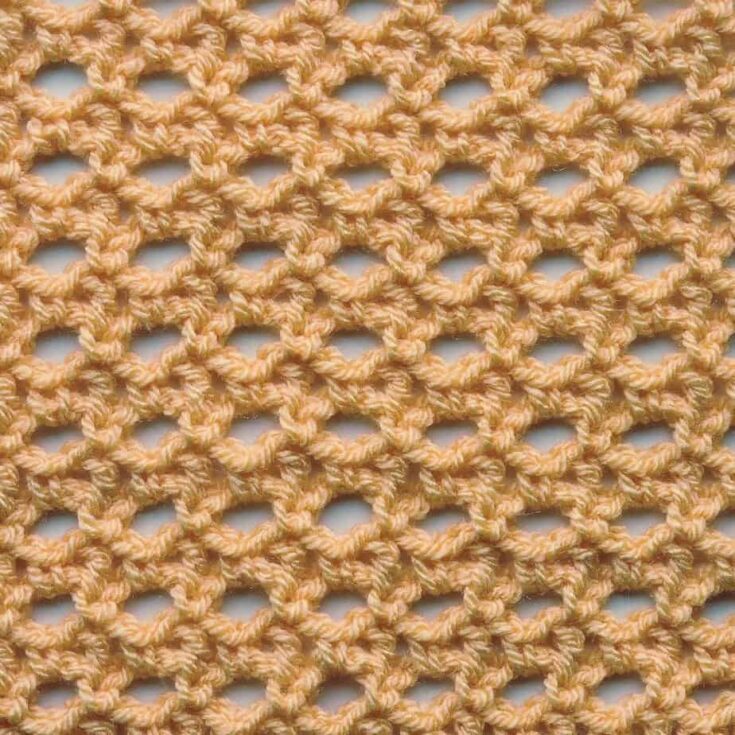
Cat’s Eye Lace Free Crochet Stitch Tutorial by Crochet Kim
The cat’s eye lace stitch forms a delicate pattern of small, eye-shaped openings that create a light, textured fabric with a subtle geometric feel.
Made from a combination of basic stitches worked into chain spaces, it builds a repeating lace design that’s both airy and versatile.
This easy-to-follow stitch is perfect for everything from blankets and bags to shawls and scarves, making it a great option for crocheters looking to add a decorative touch without too much complexity.

How To Crochet The Broomstick Lace Stitch by Joy Of Motion Crochet
The broomstick lace stitch creates a bold, airy texture using oversized loops that are grouped together to form a striking, open pattern.
Unlike traditional crochet stitches, it uses a large needle or “broomstick” to hold the loops before working them off in clusters, giving the fabric a unique, elongated look.
This technique produces a soft yet structured lace that’s perfect for statement pieces like shawls, scarves, and blankets, and it’s a great choice for crocheters looking to try something a little different.

Lace Pattern by Crochet Beja
This crochet lace pattern creates a stylish, decorative fabric that looks far more intricate than it actually is.
Built using simple stitches like single and double crochet, it forms an airy, elegant texture that’s easy to work into a wide range of projects.
Its versatility makes it a great choice for everything from garments to home décor pieces, especially when you want a lightweight design with a polished finish.

How To Crochet The Heart Stitch by Dessert Blossom Crafts
The heart stitch creates a charming, textured pattern with small heart shapes formed through a clever combination of stitches and chain spaces.
Worked in a repeating sequence, the design builds subtle, raised motifs that add both dimension and visual interest to the fabric.
It’s a fun and decorative stitch that’s perfect for themed projects, especially Valentine-inspired makes, while still being versatile enough for blankets, scarves, and accessories.

Easy Crochet Lacy Pattern by Crochet Beja
This easy crochet lacy pattern offers a soft, elegant look with open stitches that create a light and breathable fabric.
Designed using simple techniques, it gives the appearance of a detailed lace design without being complicated to work with.
Its classic style makes it a versatile choice for a variety of projects, from accessories to home décor, especially when you want something delicate yet beginner-friendly.

Lacet Stitch by Rich Textures Crochet
The lacet stitch is a vintage-inspired crochet pattern that creates a beautifully open, airy fabric with a classic lace feel.
Using a combination of double crochet, chains, and single crochet, it forms a structured yet delicate design that works up quickly and evenly.
This stitch is a great choice for elegant projects like shawls, table linens, or beach cover-ups, especially when you want a timeless lace effect that’s simple to achieve.

How To Crochet The Feather And Fan Stitch - Free Tutorial by Raffamusa Designs
The feather and fan stitch creates a flowing, wave-like lace pattern with alternating peaks and valleys that give the fabric beautiful movement.
Formed with a mix of clusters, chains, and tall stitches, it produces an open, airy texture that looks intricate but becomes quite rhythmic once established.
This classic stitch is perfect for scarves, shawls, and lightweight garments, adding a timeless, elegant feel to any project.

Crochet Arcade Stitch by Banana Studio
The arcade lace stitch creates a graceful, arching pattern with repeating curves that give the fabric a soft, scalloped look.
Worked with a combination of chains and basic stitches, it builds an open, flowing design that feels light yet structured.
This stitch is perfect for adding a decorative edge or creating airy pieces like shawls and scarves, offering a simple way to achieve an elegant lace effect.

Puff Stitch Lace Crochet Dishcloth or Washcloth: Free Pattern by Knitting, Crochet, And Crafts
The puff stitch lace dishcloth combines soft, raised stitches with airy spaces to create a fabric that’s both textured and lightweight.
The puff stitches add a plush, dimensional feel, while the lace elements keep the design breathable and elegant.
It’s a practical yet pretty pattern that works beautifully as a dishcloth or washcloth, offering a nice balance between functionality and decorative detail.

Crochet Stitch: Lace Ripples by Lion Brand Yarns
The lace ripple stitch combines gentle waves with openwork details to create a flowing, textured fabric that has both movement and lightness.
Using a mix of basic and taller stitches with chain spaces, it forms a repeating ripple pattern that works beautifully with stripes or multiple colors.
This stitch is ideal for blankets, garments, and accessories, especially when you want a design that feels dynamic yet still soft and airy.

Diamond Lace Crochet Stitch by Meladora's Creations
The diamond lace stitch creates a striking geometric pattern with open spaces that form repeating diamond shapes across the fabric.
Inspired by filet crochet, it combines simple stitches and chain spaces to build a design that feels both structured and airy.
Despite its detailed look, it’s an approachable stitch that works up evenly, making it a great choice for blankets, garments, or decorative pieces where you want a bit of texture with a clean, classic finish.

Crochet Lace Stitch by Lacy Crochet
This crochet lace stitch creates a delicate, openwork pattern with a classic, timeless feel that highlights the beauty of simple stitches.
The design builds a light and airy fabric with repeating spaces that give it an elegant, almost vintage look.
Worked in an easy rhythm, it’s a great option for scarves, shawls, or decorative pieces when you want something refined yet approachable.

Crochet Triangles & Cones Lace Stitch Tutorial by Raffamusa Designs
The triangles and cones stitch creates a bold, geometric lace pattern with a mix of pointed triangle shapes and raised cone-like textures throughout the fabric.
This combination gives it a modern, eye-catching look while still keeping an open, airy feel that’s perfect for lightweight projects.
With its structured yet decorative design, it’s a great choice for shawls, wraps, or summer garments when you want something a little more unique and sculptural.
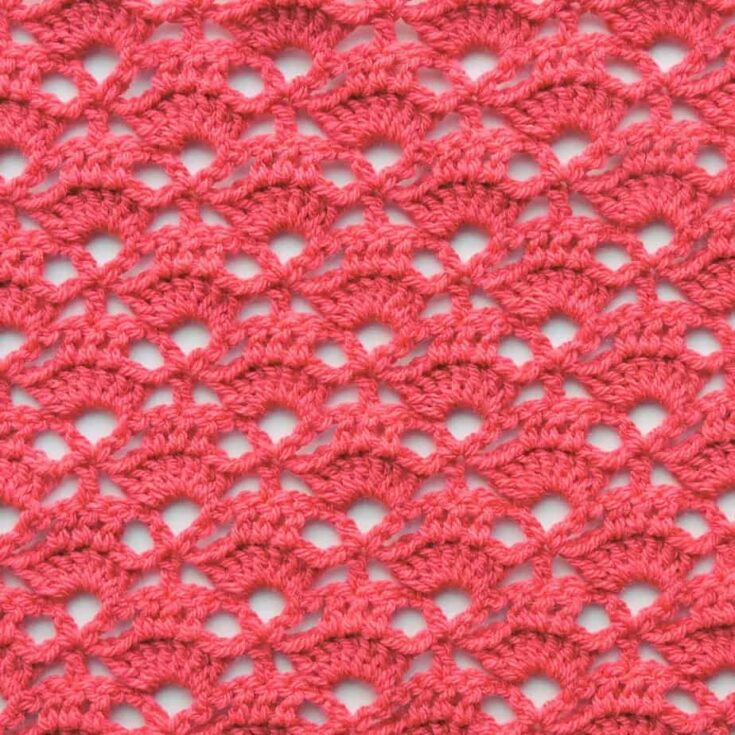
Snapdragon Lace Free Crochet Stitch Tutorial by Crochet Kim
The snapdragon lace stitch creates a beautifully textured pattern with alternating sections of openwork and fuller stitches, giving it a balanced mix of airy and dense areas.
Built around V-stitches and groups of double crochet, it forms a repeating design that feels intricate yet works up in a steady rhythm.
This versatile stitch is well-suited for a wide range of projects, from blankets and wraps to garments and accessories, making it a great choice for crocheters who want a decorative lace with structure.
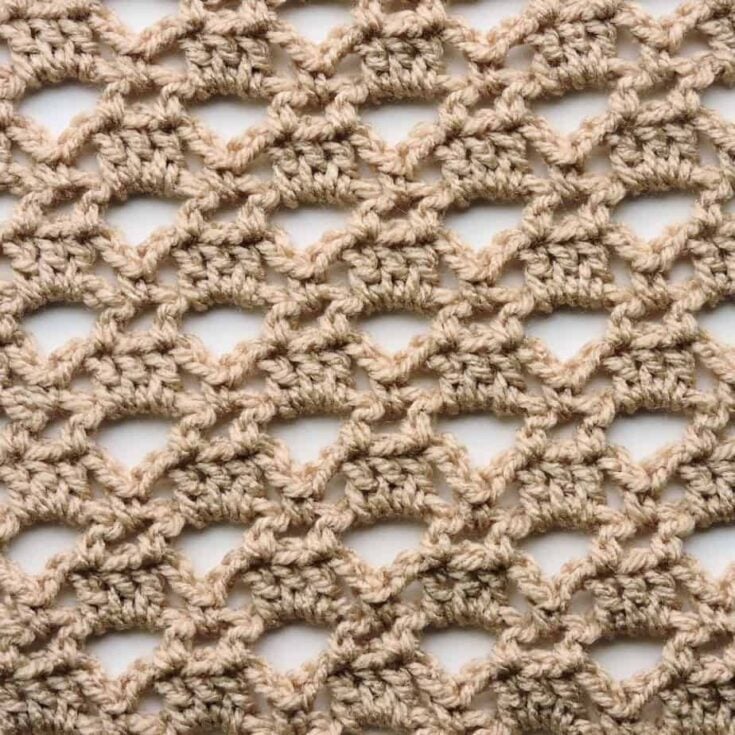
Triangle Lace Stitch by Crochet Kim
The triangle lace stitch creates a delicate, geometric pattern with repeating triangular shapes formed through a mix of chain spaces and clustered stitches.
This design gives the fabric a light, airy feel while still maintaining a structured look, making it both decorative and versatile.
Worked in a repeating sequence, it’s an easy lace stitch that’s perfect for a wide range of projects, from shawls and scarves to blankets and home décor pieces.

The Iris Stitch by Yarn Hild
The iris stitch creates a soft, lacy texture with repeating clusters that form a subtle, floral-inspired pattern across the fabric.
Made using simple combinations of double crochet and chain stitches, it’s an easy-to-memorize design that works up quickly in a one-row repeat.
The result is a light, airy fabric with beautiful drape, making it perfect for blankets, scarves, and summer garments.
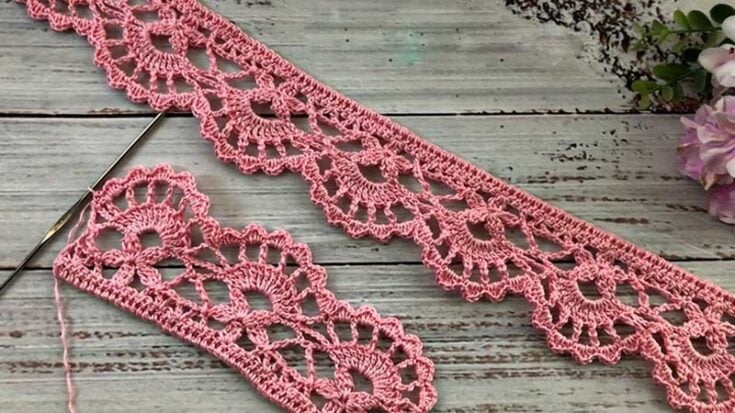
Free Coronet Lace Trim Pattern by E Harris Gallery
The coronet lace trim features a repeating crown-like motif that creates a delicate, decorative edging with a refined finish.
Made with a combination of arches, picots, and taller stitches, it forms a structured yet airy lace that adds elegant detail to any project.
Designed as a narrow trim, it’s perfect for edging garments, linens, shawls, or accessories, and works beautifully when lightly blocked to highlight the intricate crown shapes.
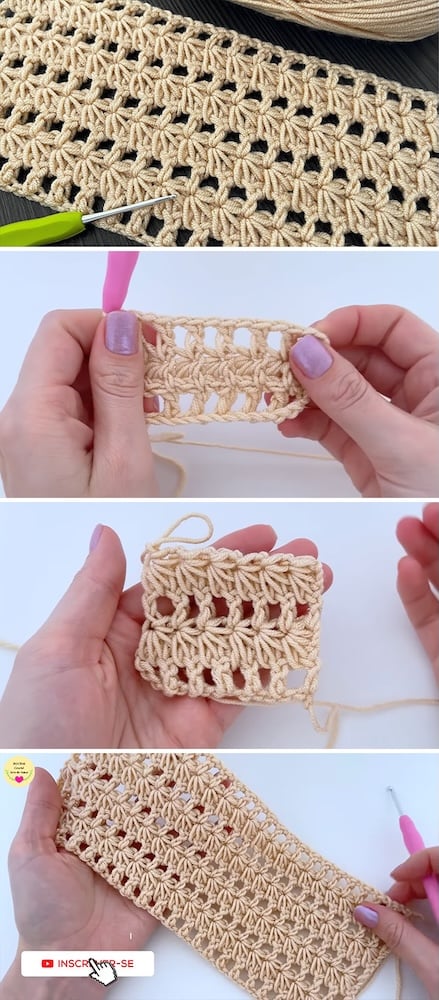
Crochet Star Lace Stitch: A Stunning Openwork Design by Crochet Beja
The star lace stitch creates a delicate openwork fabric filled with tiny, interconnected star-like motifs that give it a soft, decorative finish.
By combining loops and chain spaces, it forms an airy texture that feels light and breathable while still offering visual detail.
This elegant stitch is perfect for warm-weather projects like shawls, tops, and accessories, especially when you want a design that looks intricate yet works up with a steady rhythm.
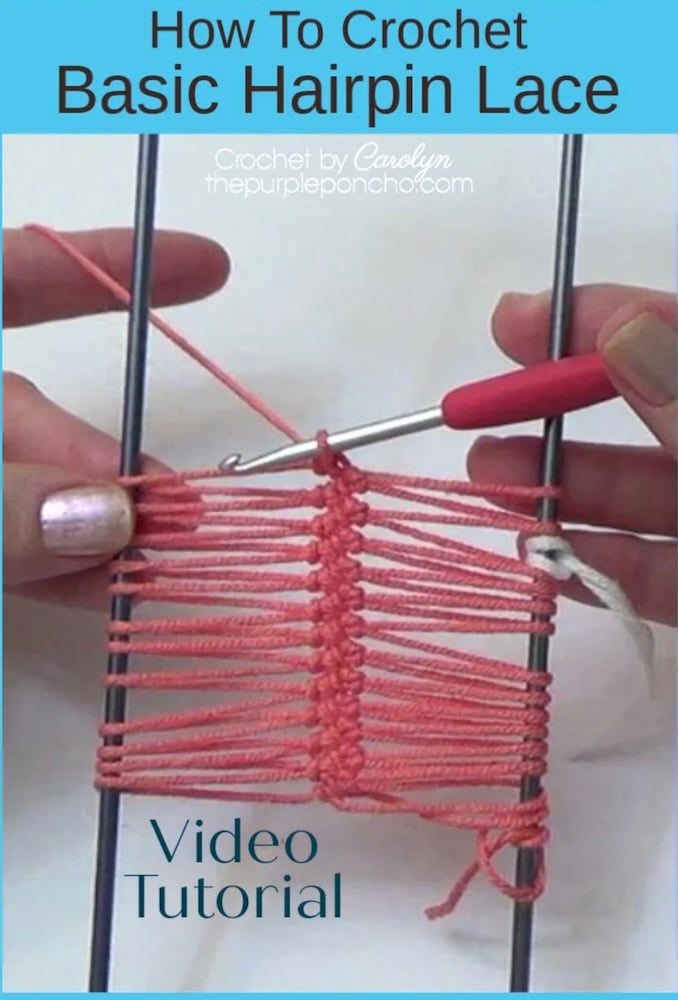
How To Crochet Basic Hairpin Lace by The Purple Poncho
The basic hairpin lace technique creates long, elegant strips of lace using a special loom, resulting in oversized loops connected by simple crochet stitches.
These loops form a striking, airy structure that feels both delicate and architectural, giving projects a unique, open look.
Once the strips are made, they can be joined together to create scarves, shawls, and other lightweight pieces with beautiful drape and texture.
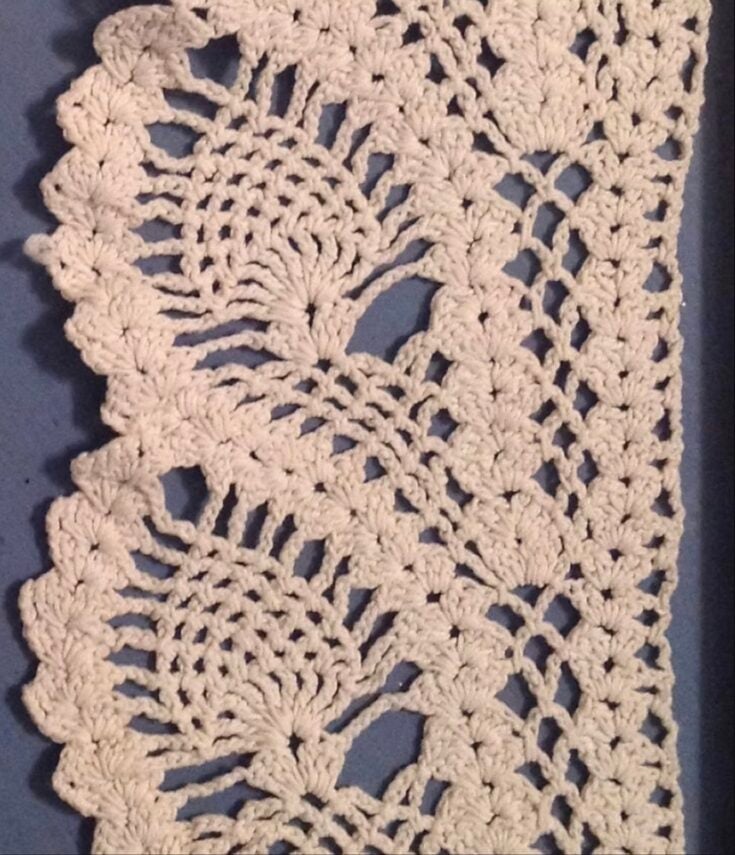
Great Grandma's Pineapple Lace by Suvi’s Crochet
The great grandma’s pineapple lace stitch is a delicate, heirloom-inspired design featuring classic pineapple motifs and fine openwork detail.
Originally recreated from a vintage piece of handmade lace, it combines shells, chains, and tall stitches to form an elegant, flowing pattern with a timeless feel.
Though intricate in appearance, it follows a structured repeat and is ideal for intermediate crocheters looking to create beautiful lace edgings, scarves, or decorative pieces with a traditional touch.

How To Crochet Diamond Mesh Stitch by Mama In A Stitch
The diamond mesh stitch creates a light, net-like fabric with open diamond-shaped spaces that give it a clean, modern look.
Made with simple stitches and chain loops, it works up quickly into an airy pattern that feels soft and breathable.
This easy-to-learn stitch is perfect for warm-weather projects like shawls, scarves, and cover-ups, especially when you want something lightweight with a relaxed drape.
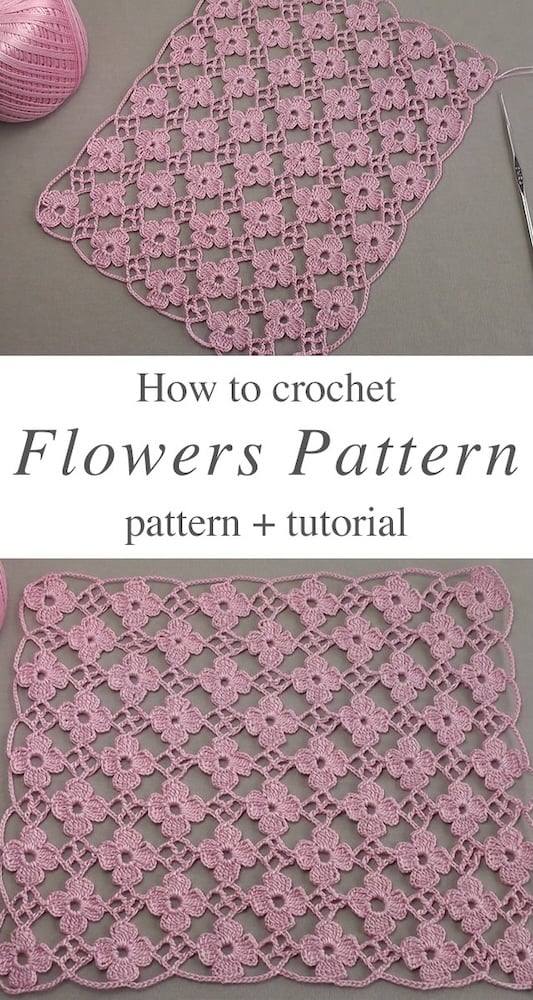
Crochet Lace Flower Pattern You Will Love by Crochet Beja
The crochet lace flower pattern features delicate floral motifs joined together to create a light, decorative fabric with a soft, elegant feel.
Using simple stitches, it builds a design that looks intricate while still being approachable for beginners.
This pattern is perfect for adding a charming, handmade touch to home décor pieces like table runners, doilies, or decorative accents.
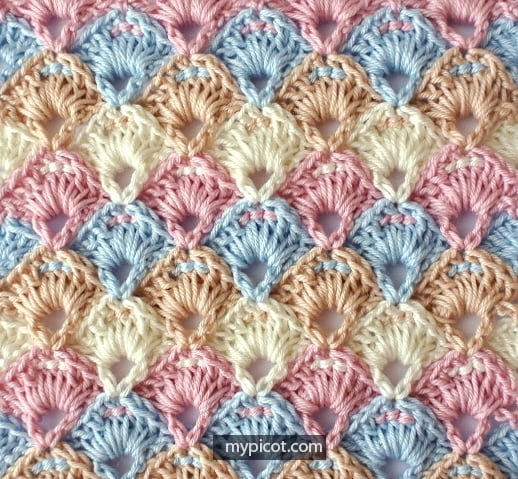
Diamond Shell Delight Stitch by My Picot
This crochet lace stitch pattern creates a detailed openwork design with a mix of shell elements and textured stitches that form a structured, decorative fabric.
The combination of post stitches, chains, and lace sections gives it a dimensional look while still maintaining an airy feel.
Often presented as a chart-based pattern, it’s a great option for crocheters who enjoy following diagrams and want to create intricate lace with a polished, professional finish.
Everything You Need To Know About Crocheting Lace
What is the best yarn weight for crochet lace stitches?
The best yarn weight for crochet lace stitches typically falls into the category of lace weight or light fingering weight yarn.
Lace-weight yarn is very fine and creates a delicate and airy lace fabric when crocheted using small hook sizes.
Light fingering weight yarn, which is slightly heavier than lace weight, can also work well for crochet lace projects, providing a balance between delicacy and visibility of the lace stitches.
Using finer yarn weights allows for more intricate and detailed lace patterns, showcasing the beauty of the stitches and creating a lightweight finished product.
When crocheting lace, it’s common to use a smaller crochet hook size than what is typically recommended for the yarn weight to achieve a tight, neat stitch formation.
Experimenting with different yarn weights and hook sizes will help determine the best combination for achieving the desired look and feel of the crochet lace project.
Helpful resources
What can you make with lace crochet stitches?
Beautiful lacy crochet stitches open up a world of creative possibilities for crafting elegant and intricate items.
Shawls + Wraps
One popular use of lace stitches is in creating beautiful shawls and wraps.
Crocheted lace shawls are lightweight and drape gracefully, making them perfect for layering over dresses or tops.
They can be adorned with floral motifs, scalloped edges, or geometric designs, adding a touch of sophistication to any outfit.
Scarves + Cowls
Scarves and cowls made with crochet lace stitch patterns are stylish accessories that can be worn year-round.
The delicate lacework adds texture and visual interest to these accessories, making them eye-catching and unique.
Additionally, a lacy stitch can be incorporated into a summer top as a detail. It’s a great way to add a fun twist to a simple project.
Home decor
Crochet lace stitch patterns are also well-suited for crafting decorative home items.
Doilies and table runners made with lace stitches can enhance the elegance of dining tables, coffee tables, or dressers.
These delicate designs can be customized with different patterns and sizes to match any decor style.
Additionally, crochet lace edgings can be added to pillowcases, towels, or curtains to create personalized and charming accents for the home.
Lace can even be incorporated into wall hangings or window coverings, providing a soft and romantic touch to living spaces.
Blocking lace 101
- Wet block (best for natural fibers like wool, alpaca, cotton, linen): Soak piece 15–20 min in lukewarm water with a little wool wash. Gently squeeze (don’t wring), roll in a towel to remove excess, then pin to measurements on blocking mats. Use blocking wires along straight edges for crisp lines; let dry completely.
- Steam block (fast method): Pin the dry piece to shape first. Hover a steam iron or garment steamer above (do not touch the fabric), allow the steam to relax the stitches, then let cool/dry fully.
- Acrylic caveat: Steam very lightly from a distance. Over-steaming can “kill” acrylic (flattening the texture and removing elasticity).
- Tools you’ll love: Foam mats, T-pins (rust-proof), blocking wires, tape measure, spray bottle.
Learn how to block crochet here. – How To Block Crochet (Beginner’s Guide)
Drape & gauge
- Swatch always: Lace opens up dramatically after blocking. Make a 15–20 cm (6–8″) swatch, block it, then measure gauge and assess drape.
- Hook size = openness: Going up 0.5–1.5 mm creates airier eyelets and fluid fabric; going down tightens the mesh for structure (good for borders/edgings).
- Fiber matters: Cotton/linen gives crisp stitch definition; wool/silk blends add flowy drape. Choose based on the look you want.
Lifelines & counting
- Lifeline (safety thread): After a successful repeat, run smooth contrasting waste yarn through every live stitch on your hook/needle row. If you make a mistake later, rip back only to the lifeline—no lost loops.
- When to place: Insert a lifeline every 2–4 pattern repeats or before complex rows.
- Mark the repeats: Use locking stitch markers at the start of each repeat/mesh unit; move them up every row to isolate errors early.
- Quick audit: At row ends, count eyelets/fans per repeat to catch drift before it grows.
Reading charts (mini guide)
- Symbols you’ll see (US terms):
- ch (small empty oval) = chain
- sl st (dot) = slip stitch
- sc (× or +) = single crochet
- hdc (T with one bar) = half double crochet
- dc (T with two bars) = double crochet
- tr (T with three bars) = treble crochet
- picot (small filled dot/triangle atop a chain loop)
Direction of reading:
- Rows worked flat: read odd-numbered rows right→left, even rows left→right.
- Rounds worked in the round: read every round right→left.
- Repeats & multiples: Brackets or colored frames mark repeats; arrows or start symbols show where to begin. Always check the stitch multiple (e.g., “multiple of 6 + 2”).
US ↔ UK terms (mini table)
- US sc = UK dc
- US hdc = UK htr
- US dc = UK tr
- US tr = UK dtr
- US dtr = UK ttr
Tip: Add a one-liner near the top of your post stating “All stitches use US crochet terms” (or UK) to prevent confusion.
Learn more about crochet abbreviations here. – Crochet Abbreviations (US + UK Terms) Free Printable
FAQs
1. Is it hard to crochet lace?
Crocheting lace can be challenging but rewarding.
It requires attention to detail and patience due to the intricate patterns and often delicate yarn or thread used.
Lace crochet involves working with fine stitches and sometimes complex stitch combinations, which can be more demanding compared to basic crochet projects.
Beginners may find it challenging to maintain consistent tension and follow intricate lace patterns accurately.
However, with practice and perseverance, crocheting lace becomes more manageable and allows crafters to create beautiful and elegant pieces.
Starting with simpler lace patterns and gradually advancing to more complex designs can help build skills and confidence in crocheting lace.
2. What is the easiest crochet lace stitch?
One of the easiest crochet lace stitches for beginners is the “chain space” lace stitch.
This beautiful stitch involves creating open spaces or “chains” within the fabric, which gives it a lacy and airy appearance.
To work this stitch, you typically alternate between making chains and working basic crochet stitches (such as single crochet, double crochet, or treble crochet) into these chain spaces.
3. How many lace crochet stitches are there?
There are numerous lace crochet stitches that crafters can explore to create beautiful lace patterns with intricate details.
Some popular lace crochet stitches include the shell stitch, pineapple stitch, fan stitch, cluster stitch, picot stitch, and V-stitch, among others.
Each of these stitches offers unique textures and patterns that can be used individually or combined to create intricate lace designs.
The variety of lace crochet stitches allows for endless creativity in crafting lace garments, accessories, baby blankets, and home decor items.
Crochet Lessons
If you are a new maker and need help with the crochet basics, or you need a refresher, check out the crochet lessons here – Crochet Lessons {With Video Tutorials}.
There, you will find tutorial posts for all the crochet techniques a newbie needs to know.
This includes how to make a slip knot, how to create foundation chain stitches (ch), and how to crochet the basic stitches, such as single crochet stitches (sc), half double crochet stitches (hdc), and double crochet stitches (dc).
It also includes how to make a single crochet decrease and all the crochet abbreviations (in UK and US terms) a maker needs to know.
And if you need more free video instructions, check out my YouTube channel here. – Handy Little Me – YouTube
You can also find us on Facebook, Pinterest, Etsy, and Ravelry.
Free Patterns
Check out the blog posts below to find your next crochet project.
- Free Crochet Easter Eggs Pattern
- Crochet Round Rug Pattern
- 35 Free Easter Crochet Patterns
- 35 Free Cotton Yarn Crochet Patterns
- Crochet Dishcloth Pattern Set
- Crochet Washcloth Pattern
- How To Crochet A Blanket
- 50 Stash Busting Crochet Patterns
- 40 Free Granny Square Crochet Patterns
- Crochet Blanket Sizes And How Much Yarn