What Is Bulky Weight Yarn? A Beginner’s Guide To Chunky Yarn
THIS ARTICLE CONTAINS AFFILIATE LINKS THAT SUPPORT HANDY LITTLE ME CONTENT AND FREE PATTERNS.Bulky weight yarn is a thick yarn used for cozy sweaters, warm accessories, blankets, and other projects with bold, easy-to-see stitches.
You may also know it as chunky yarn.
Its thickness means you can make steady progress with fewer stitches than you would need for the same-sized project in a finer yarn.
In this guide, you’ll learn how to identify bulky yarn, choose your needles or crochet hook, and find a yarn that suits your next project.
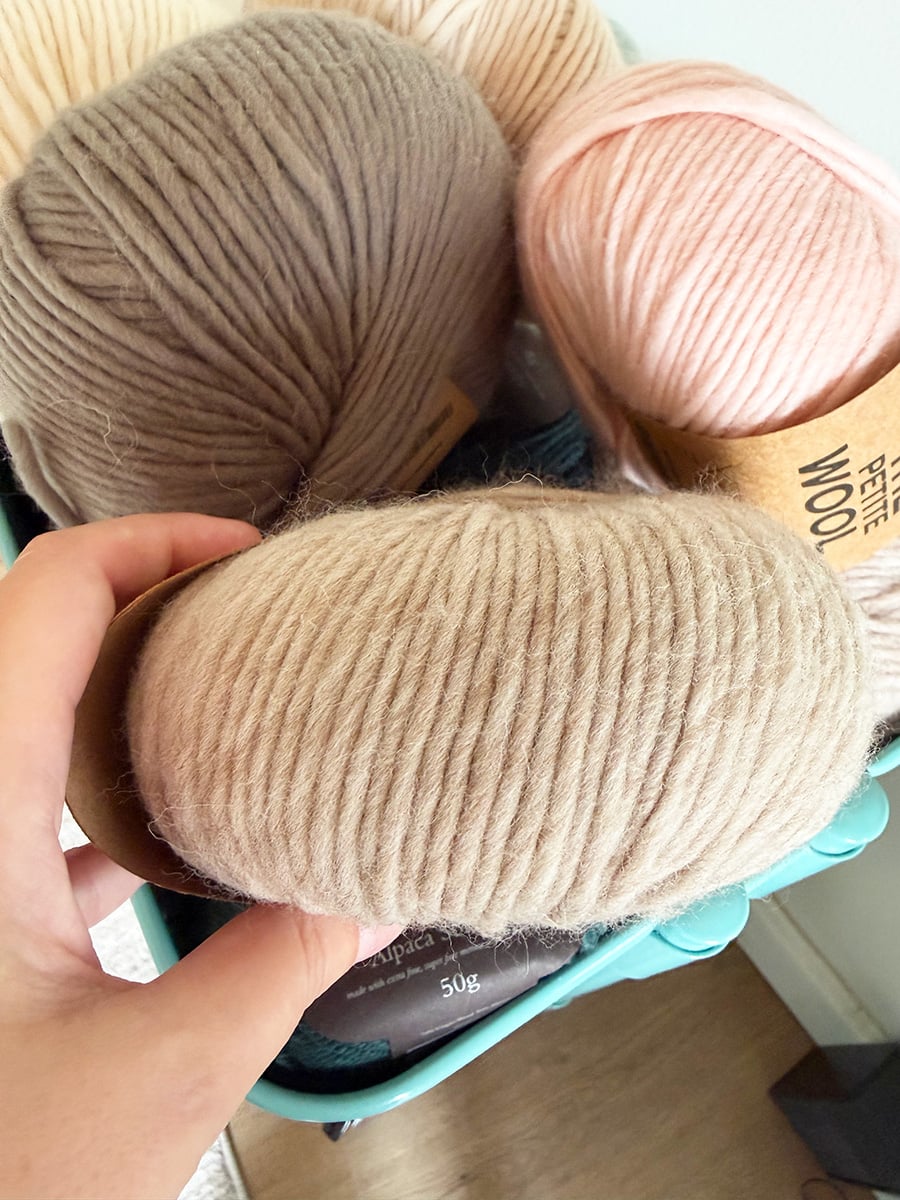
What Is Bulky Weight Yarn?
Bulky weight yarn belongs to Category 5: Bulky in the Craft Yarn Council’s standard yarn weight system.
This category includes yarns described as chunky, craft, and rug yarn.
Bulky yarn is generally thicker than worsted or Aran yarn and thinner than super bulky yarn.
However, yarns within the same category can still vary in thickness and construction.
Yarn weight describes the thickness of the strand—not how much the ball weighs in grams or ounces.
A 100g ball could contain fine yarn or thick yarn, so check the label for more information.
For an overview of the different categories, see my yarn weight guide for beginners.
Are Bulky And Chunky Yarn The Same?
Bulky and chunky commonly describe the same yarn weight.
“Bulky” is widely used in US patterns, while “chunky” is common in UK yarn names and patterns.
You may see both terms on the same label.
However, “chunky” is sometimes used more loosely to describe thick yarn, so check the manufacturer’s weight category and recommended gauge before choosing it for a pattern.
A yarn labeled super chunky is usually thicker than standard chunky yarn and should not automatically be treated as a substitute.
What Ply Is Bulky Weight Yarn?
In Australia and New Zealand, bulky or chunky yarn is often described as 12-ply.
This is a regional yarn weight name, rather than a guarantee that the yarn contains twelve strands.
Ply also describes the number of individual strands twisted together to make a yarn.
For example, Malabrigo Mecha is a bulky yarn with a single-ply construction. Its strand count does not make it a fine yarn.
When choosing yarn, use the weight category and gauge alongside the ply description.
How To Identify Bulky Weight Yarn
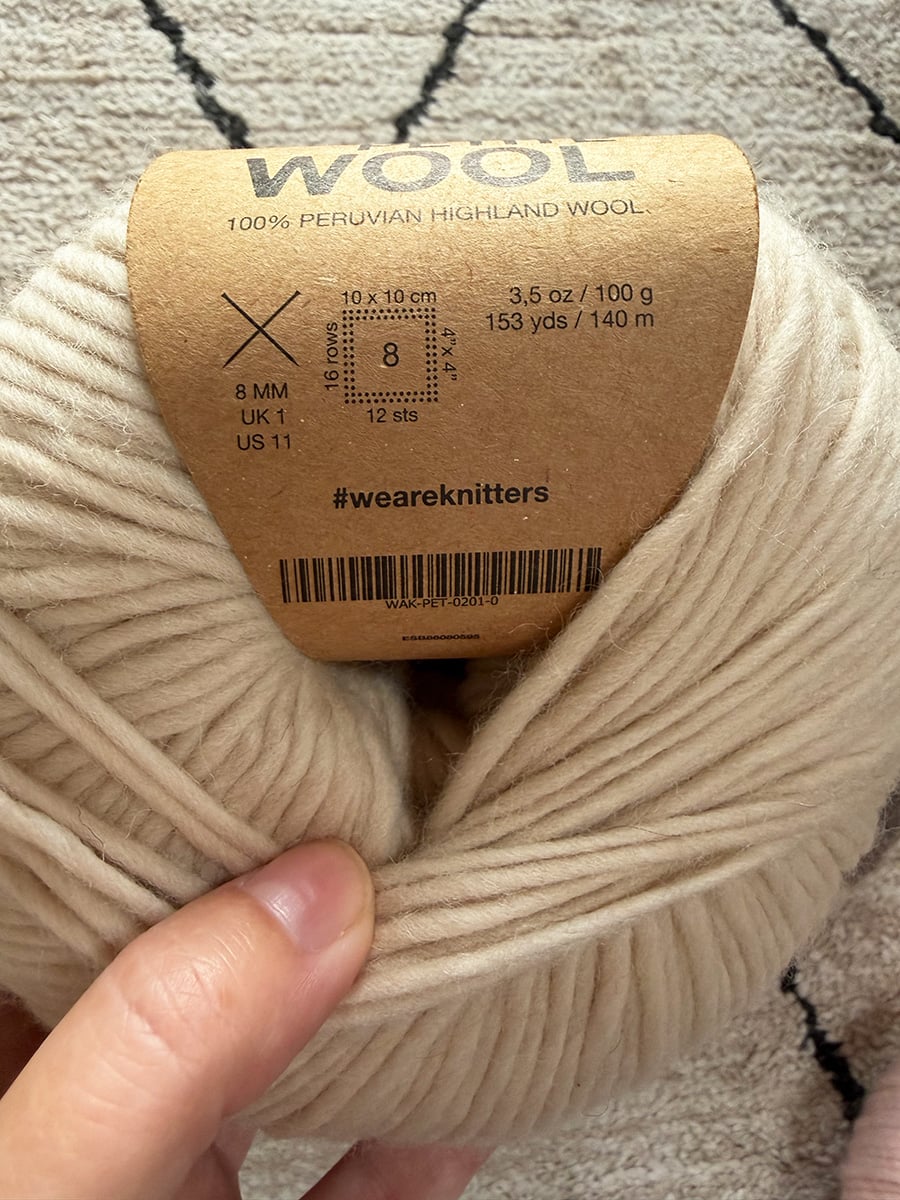
Start with the yarn label.
Look for:
- The weight category: a number 5 symbol or wording such as “bulky” or “chunky.”
- The recommended gauge: the number of stitches measured over a stated width.
- The suggested needle or hook size: a starting point for working with the yarn.
- The fiber content: this affects warmth, elasticity, drape, and care.
- The yardage or meterage: this helps you work out how much yarn to buy.
Some brands do not use numbered weight symbols. In that case, compare the yarn description, gauge, and tool recommendations with your pattern.
My guide to how to read a yarn label explains what these details mean.
What If Your Yarn Has No Label?
Compare it with a yarn you know is bulky, then make a swatch to see how it behaves.
Wraps per inch can help estimate thickness, but the result changes depending on how tightly you wrap the yarn and whether it is fluffy, textured, or easily compressed.
Treat these methods as clues rather than a definite identification.
If you know the yarn’s brand and product name, check the manufacturer’s specifications.
What Needle And Hook Sizes Do You Use?
These are general guidelines for Category 5 bulky yarn:
| Detail | General guideline |
|---|---|
| Knitting needle size | 5.5–8 mm / US 9–11 |
| Knitting gauge | 12–15 stitches per 4 inches / 10 cm in stockinette stitch |
| Crochet hook size | 6.5–9 mm / US K-10½ to M-13 |
| Crochet gauge | 8–11 single crochet stitches per 4 inches / 10 cm |
These ranges are starting points. Your pattern may use a smaller or larger tool to create the fabric it needs. Always follow the pattern’s gauge.
Smaller needles or hooks can create a firmer fabric, while larger sizes can give a looser result with more drape.
Before starting a fitted project, make a swatch and measure it after washing and drying it according to the yarn’s care instructions.
For help, see how to measure gauge in knitting.
Bulky Vs Worsted And Super Bulky Yarn
These yarn weights sit next to one another in the standard system:
| Yarn weight | Category | Relative thickness |
|---|---|---|
| Worsted / Aran | 4: Medium | Generally thinner than bulky |
| Bulky / chunky | 5: Bulky | Between medium and super bulky |
| Super bulky / super chunky | 6: Super Bulky | Generally thicker than bulky |
They are not interchangeable without checking gauge and fabric.
Bulky yarn is also not a fixed “double thickness” version of worsted yarn.
Using a thicker yarn can change the finished size, weight, and drape of a project.
If you are comparing yarns, my worsted weight yarn guide explains the medium category in more detail.
What Can You Make With Bulky Weight Yarn?
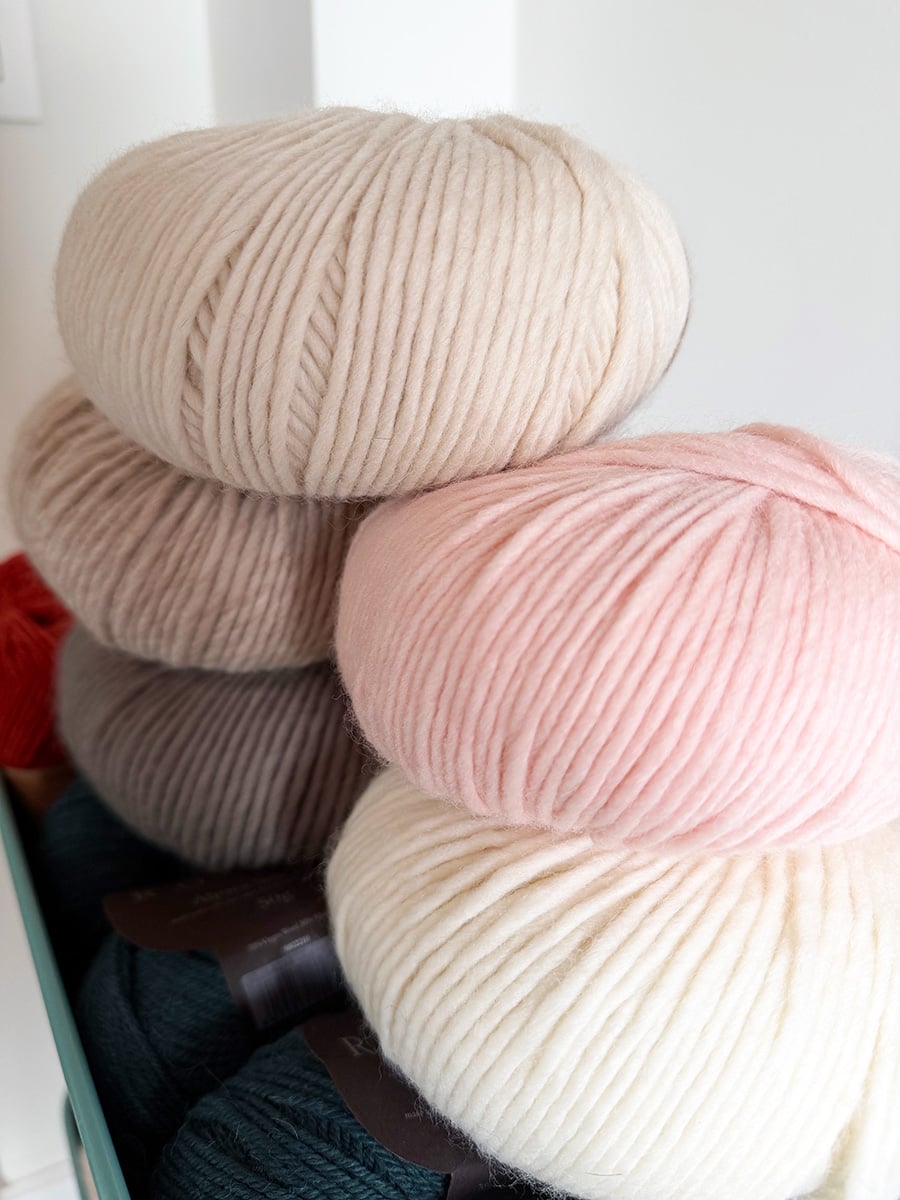
Bulky yarn works well for projects where you want substantial stitches and a cozy fabric.
You can use it for:
- Hats, scarves, and cowls.
- Sweaters and cardigans.
- Mittens and warm accessories.
- Blankets and cushion covers.
- Bags and baskets.
- Decorative projects, such as knitted pumpkins.
Choose the fiber and construction to suit the project.
A lofty wool yarn can make a warm accessory, while a firmer yarn may give a bag more structure.
For blankets and frequently worn garments, consider how easy the finished item will be to wash.
If you want a beginner knitting project, try my hat pattern worked on straight needles.
For crochet, my Claire’s Carolina shawl pattern creates a large triangle shawl with contrasting stripes.

Examples Of Bulky Weight Yarn
These yarns show some of the different fibers and constructions available within the bulky category.
Lion Brand Hue + Me
Lion Brand Hue + Me is a Category 5 bulky yarn made from 80% acrylic and 20% wool.
Each 125g skein contains approximately 137 yards / 125 meters.
It is an option for knitting and crochet projects such as sweaters, accessories, and blankets.
The manufacturer lists it as machine washable and machine dryable; follow the care directions on your label.
Malabrigo Mecha
Malabrigo Mecha is a bulky yarn made from 100% superwash merino wool.
Each 100g hank contains approximately 130 yards / 119 meters.
It has a single-ply construction with a slightly thick-and-thin texture.
It can work well for soft accessories and garments.
The manufacturer recommends gentle machine washing in cold water and drying flat.
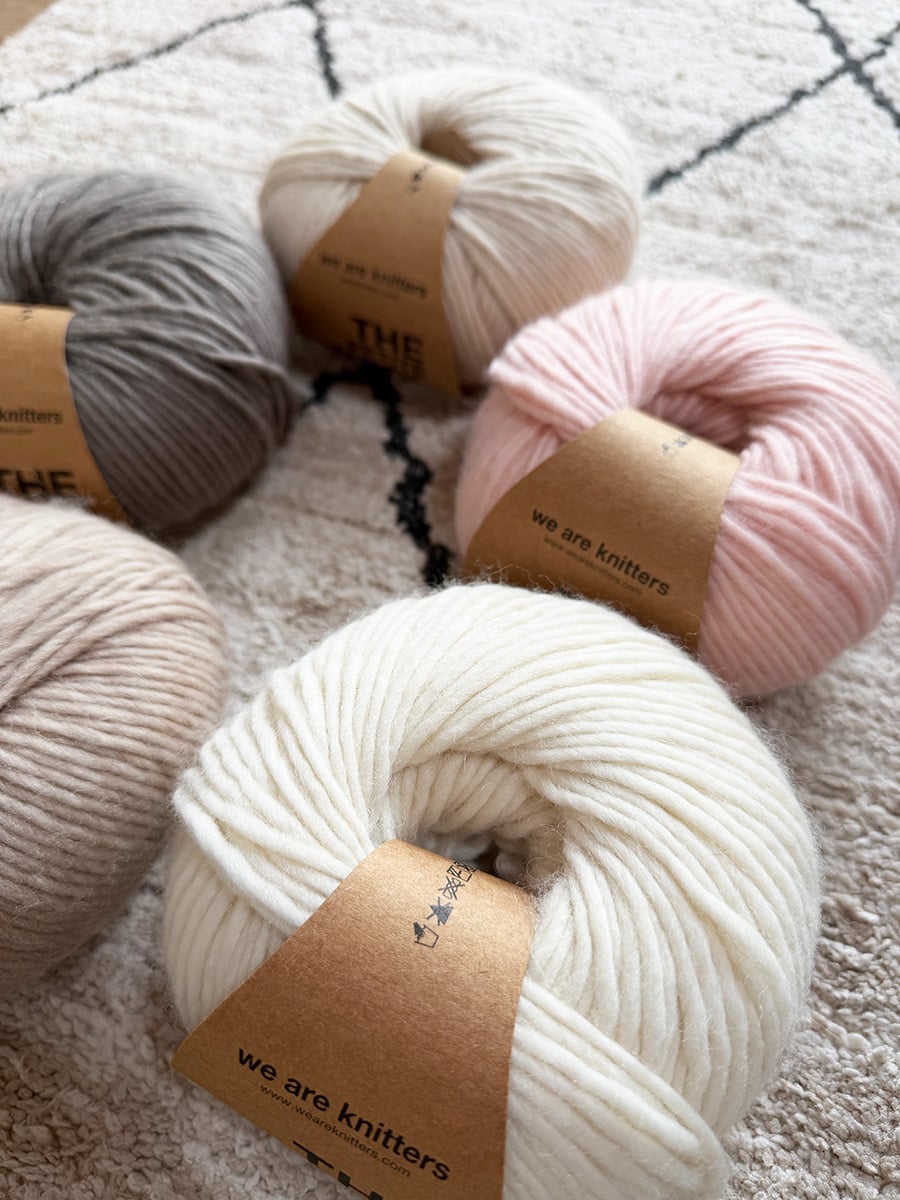
We Are Knitters Petite Wool
Petite Wool is a bulky yarn made from 100% wool.
Each 100g ball contains approximately 153 yards / 140 meters.
The manufacturer recommends 8 mm knitting needles as a starting point.
It is an option for warm hats, scarves, sweaters, and blankets.
Hand washing and drying flat are recommended.
Berroco Vintage Chunky
Berroco Vintage Chunky is a Category 5 yarn made from 52% acrylic, 40% wool, and 8% nylon.
Each hank contains approximately 136 yards / 124 meters.
It is an option for garments and accessories where you want a wool blend that can be machine washed. The manufacturer recommends cold water on a gentle cycle and drying flat.
Check the full product name, as the Vintage range includes several yarn weights.
How To Substitute Bulky Weight Yarn
Another bulky yarn can be a useful starting point, but matching the category alone does not guarantee the same finished project.
Compare:
- Gauge: can you match the pattern’s stitch and row gauge?
- Fiber content: will the yarn provide suitable warmth, stretch, and drape?
- Construction: is the yarn smooth, fluffy, firmly twisted, or loosely spun?
- Length: do you have enough total yards or meters?
- Care instructions: will the finished item be practical to wash?
Make a swatch in the stitch pattern requested, then wash and dry it as you intend to care for your project.
Check the measurements and the fabric.
A swatch that matches gauge but feels too stiff or too loose may still be unsuitable.
For more guidance, read how to substitute yarn in a knitting pattern.
Can You Hold Two Thinner Yarns Together?
Sometimes two thinner strands can produce fabric suitable for a bulky yarn pattern.
However, there is no combination that works for every yarn.
Two strands of one worsted yarn may behave differently from two strands of another.
Swatch with both strands held together and check the finished fabric before committing to the project.
Remember that each strand needs enough length to complete the pattern.
Is Bulky Weight Yarn Good For Beginners?
Bulky yarn can be helpful when you are learning to knit or crochet.
The larger stitches are often easier to see and count, and a small project can grow quickly.
Choose a smooth yarn in a light or medium solid color so you can follow your stitches more easily.
Very fluffy, furry, or heavily textured yarns can make it harder to spot mistakes.
Large needles and hooks may also feel awkward at first, so choose tools that feel comfortable in your hands.
A simple hat, scarf, or cowl can be a good place to begin.
Bulky Weight Knitting And Crochet Patterns
Explore these knitting and crochet patterns made with bulky weight yarn, from cozy accessories to larger projects.
Check each pattern’s yarn requirements, gauge, and skill level to find a project that suits you.

How To Knit A Hat With Straight Needles
Knit an easy hat with this free knitting pattern.
This pattern will show you how to knit a hat with straight needles for complete beginners, working flat, back and forth.
This is a good choice for anyone who is learning how to knit.

Corner To Corner Baby Blanket Pattern
Knit a new project with this super easy corner-to-corner baby blanket pattern.
The blanket is C2C meaning that you knit the blanket diagonally from corner to corner.
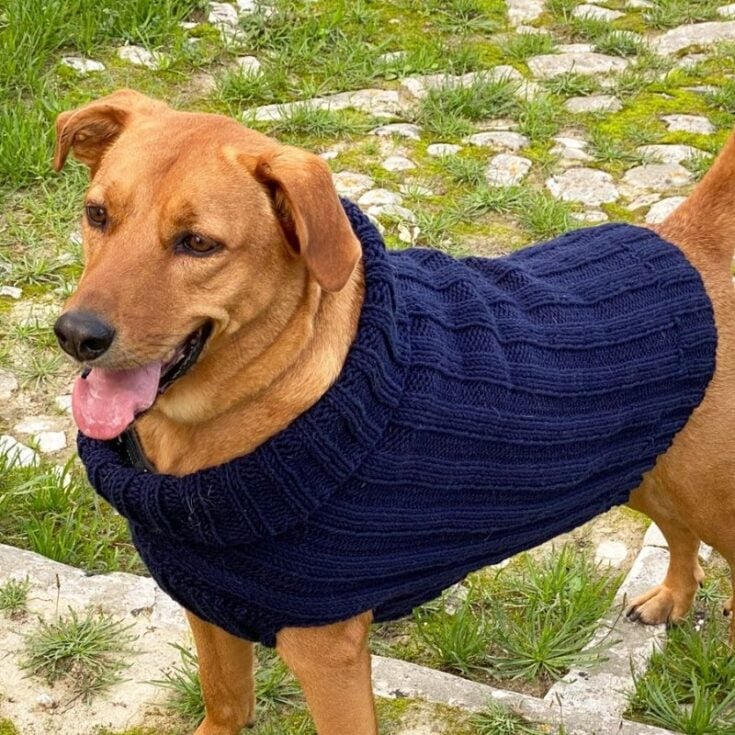
Knitted Dog Sweater Pattern (3 Sizes)
Make a cozy dog sweater with this free knitting pattern.
This knitted dog sweater pattern can be made in three sizes.
It is made in two pieces, knit flat on straight knitting needles, and then seamed.

Cardigan Knitting Pattern (Stay Home + Be Cozy)
Knit a cozy cardigan with this free knitting pattern.
This cardigan has an oversized fit, which makes it really soft and comforting to wrap yourself up in.
Wear it at home, with jeans, leggings, a lounge suit, or your PJs, anything goes really!

Striped Sweater Knitting Pattern {From Small to 3X}
Knit a stylish sweater for spring with this free knitting pattern.
This sweater is really soft and comforting, due to the drape and fit.
It’s designed to make you feel cozy and comfortable no matter where or when you wear it!

Men's Sweater Pattern {Garter Stitch}
Knit an easy garter stitch sweater with this free knitting pattern.
This taupe-colored sweater is a timeless design that can be worn repeatedly during the autumn.
Wear it with jeans, your favorite pair of boots, and a beanie or cap while going for a brisk walk with your dog.
Oversized and comfy, this sweater will feel extra cozy when there is a chill in the air.
A perfect project to use your thicker yarn and larger needles.

How To Knit An Easy Triangle Scarf
Knit an easy triangle scarf with this free knitting pattern.
This pattern will teach you to knit an easy triangle scarf, with its lightweight design and tape yarn, it is perfect for cool spring days.
The yarn can be substituted with bulky cotton yarn or other fibers making it a versatile project that you will love to wear!

Cable Knit Pumpkin Pattern
Knit a set of fall-perfect pumpkins with this free knitting pattern.
These pumpkins work up really quickly and can be a great way to use up leftover yarns in your stash.

Skye Boat Knitted Beret Pattern
Knit a cozy beret with this free knitting pattern.
The Skye Boat Knitted Beret Pattern will allow you to create a slouchy beret in the style of the MacKenzie clan grey berets seen worn in all seasons of the Outlander series.
This beret is knit flat – back and forth on straight needles.

Men's Turtleneck Sweater Knitting Pattern
Knit a trendy turtleneck sweater with this free knitting pattern.
This sweater is a timeless design that can be worn again and again during the autumn or winter months.
Wear it with jeans, your favorite pair of boots, and a beanie or cap while going for a brisk walk with your dog.
Oversized and comfy, this sweater will feel extra cozy when there is a chill in the air.

Outlander Shawl Crochet Pattern (Claire's Carolina)
Crochet a cozy shawl that's perfect for the colder months with this free crochet pattern.
This Outlander Shawl Crochet Pattern will allow you to create a large triangle shawl with stripes in the design.

Claire's Tassel Shawl Crochet Pattern
Crochet a beautiful shawl with tassels with this free crochet pattern.
The design of the shawl is made so that you can wear it as a huge shawl to keep you cozy in the fall.
Whether you are planning a warm hat or a cozy cardigan, bulky yarn gives you plenty of possibilities.
Choose your yarn with the finished project in mind, make a swatch, and enjoy watching those larger stitches grow.
More Yarn Resources
- What Is Lace Weight Yarn?
- What Is Fingering Weight Yarn?
- What Is Fine Weight Yarn? (Sport Weights Guide)
- What Is DK Weight Yarn? (Your Guide To Double Knitting Yarn)
- What Is Worsted Weight Yarn?
- What Is Super Bulky Weight Yarn?
- What Is Jumbo Yarn?
Thanks for this handy yarn weight guide. My sister and I are making hats to sell to raise money for the local secondary school that my nephew goes to. We have been knitters since children. We’ve raised money for the local primary school when our lad went there. Then one of his school pals wanted a mertail. She was mermaid mad, so I was approached. Now I’d never used circular needles, but I loved making not one but two for the same lady. Cos when the older sister got one, the younger wanted one too. Both were different, and buttons were chosen for each girl so they were unique. I posted pics on our knitters Facebook page. I had to use a yarn that could be washed in a normal wash and tumble dried in a low cycle. So the colours were chosen by us to compliment each girl. One of the. group asked for the pattern, I explained that I didn’t use the wool they suggested, so 3 months later, she sent me a picture of her tail. She’d washed it, tumbled dried it, only it was shrunk. So she used the yarn I used and it was fine. Since Covid we still knit, sew, diamond art and cross stitch. I’ve always got something to do. Thank you again,
Hello Jo,
I’m so happy you like the guide 🙂
A mertail sounds like a really fun project, I have not made one of those before.
Happy knitting!
Louise